

Why customizing cosmetic procedure plans matters
When you first start exploring cosmetic procedures, it is easy to feel torn between surgical and non surgical options. You might be wondering which choice is safer, which lasts longer, and what is realistic for your lifestyle. Customizing cosmetic procedure plans helps you turn that confusion into a clear, step by step path that fits your goals, your body, and your life.
Instead of asking “What is the best treatment?” you start asking “What is the best treatment for me, right now, and over the next few years?” That is the shift that makes customizing cosmetic procedure plans simple and effective. It becomes a long term strategy rather than a one time decision.
Personalized planning also helps you avoid overtreatment or procedures that are not suited to your skin, age, or health. Many practices now combine detailed clinical assessments with tools like advanced imaging and, in some settings, artificial intelligence to design targeted plans that aim for natural looking, age appropriate results [1].
If you want a broader overview of procedure types first, you may also find it helpful to review topics like non invasive vs invasive cosmetic procedures or surgical vs non surgical cosmetic procedures alongside this guide.
Understand what you want to change
Every customized plan starts with your priorities. Before you dive into specific procedures, it helps to map out what bothers you most and what “better” looks like in your mind.
You can start by asking yourself a few simple questions:
- What specific features or areas make you feel most self conscious?
- Do you want subtle refreshment, “next level” beautification, or a more dramatic change?
- Is your main goal to look less tired, less saggy, slimmer, smoother, or more defined?
- Are you aiming for a natural look or do you prefer a more noticeable aesthetic?
A global survey of patients having cosmetic injectables found that 84% were focused on a single feature they disliked, like lips or under eye bags, even though almost all also wanted to reduce signs of aging while “keeping it natural” [2]. This tendency to zoom in on one issue can make you overlook the way your whole face or body works together.
A good plan refocuses your attention from one “flaw” to your overall balance. As you move forward, you can use resources like which cosmetic procedure is right for me or how to compare cosmetic procedures to refine your thinking before you meet with a provider.
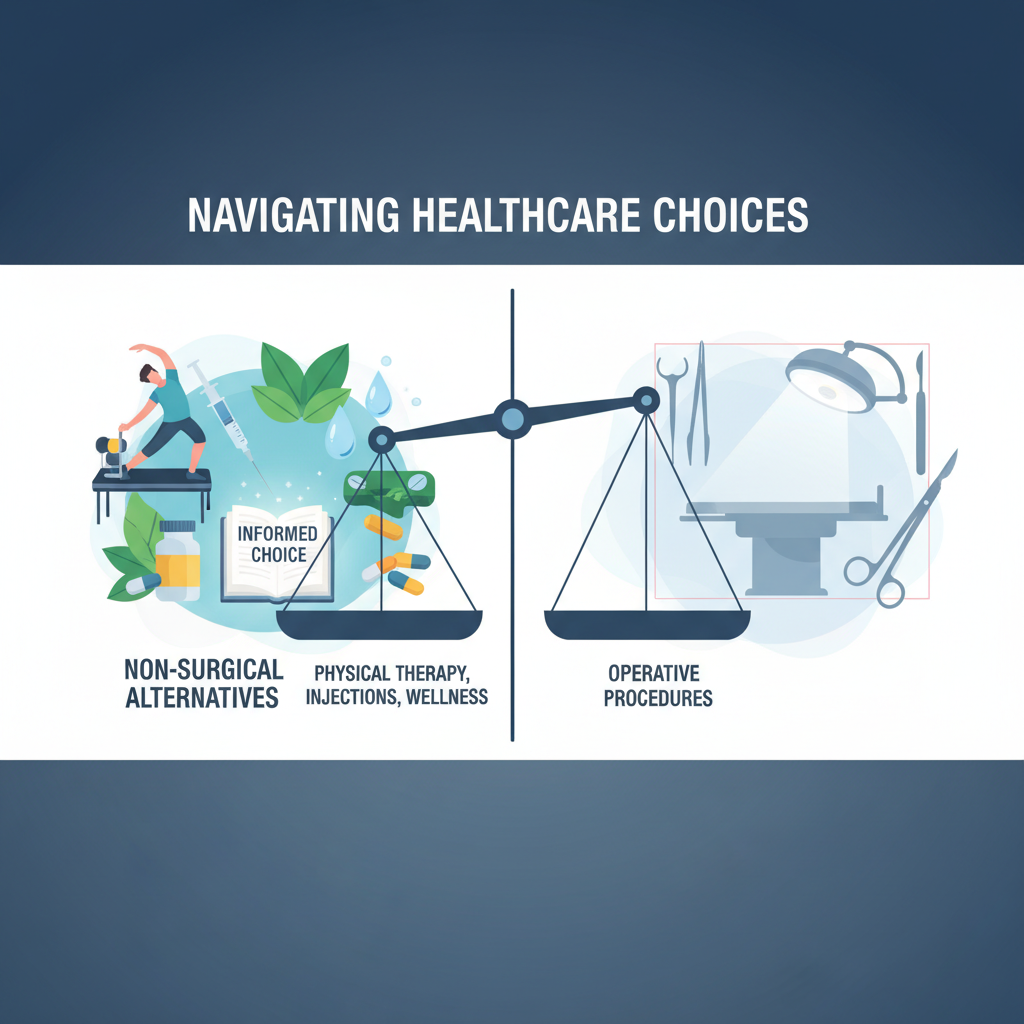
Compare surgical and non surgical paths
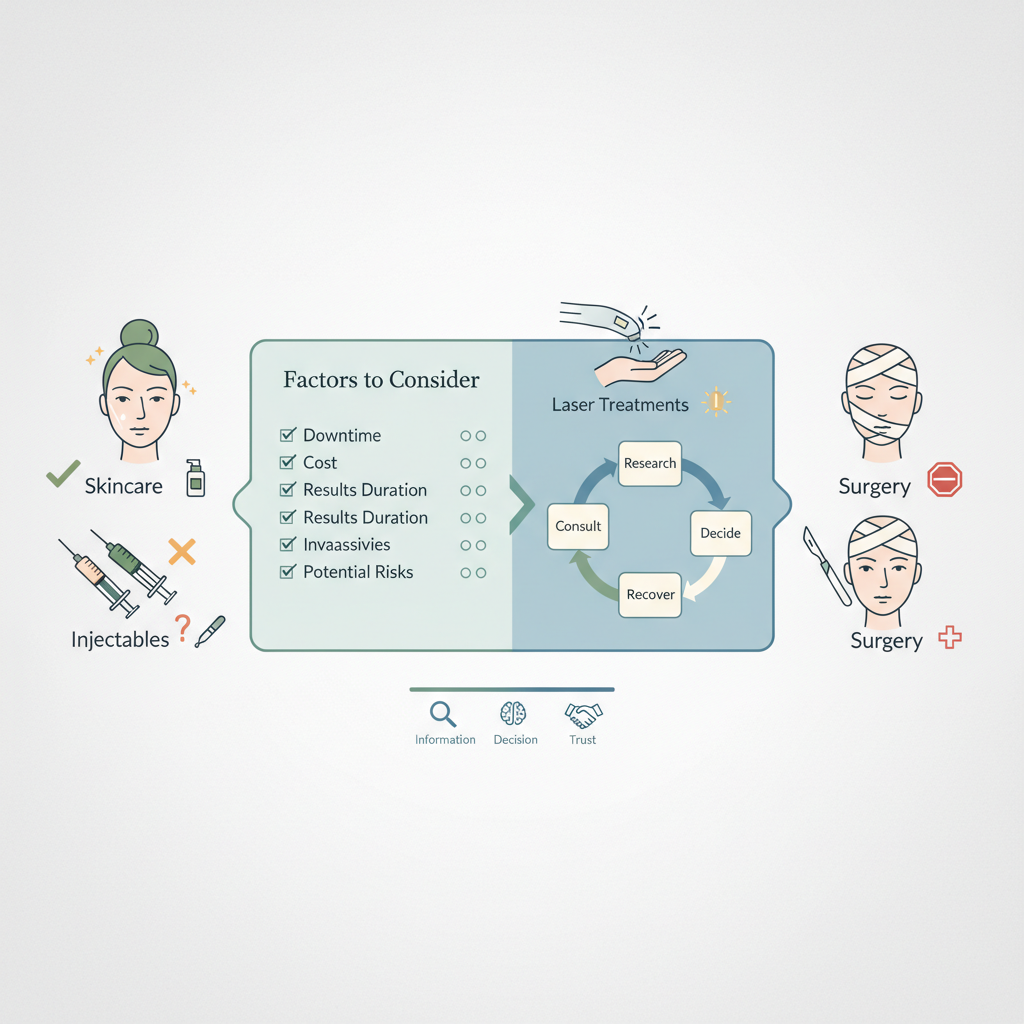
Once you are clear on your goals, you can start looking at whether surgery or non surgical treatments are a better starting point. Instead of asking which is “better,” it is more useful to compare them across a few key dimensions: invasiveness, recovery, longevity, and how dramatic the results can be.
Here is a simplified side by side comparison to frame your thinking:
| Factor | Surgical procedures | Non surgical procedures |
|---|---|---|
| Invasiveness | Involves incisions and anesthesia | Minimally or non invasive, often office based |
| Recovery | Days to weeks of downtime | Little to no downtime, mild temporary side effects |
| Longevity | Often many years or more | Months to a few years, usually need maintenance |
| Result strength | Can reposition and remove tissue, strong impact | Refines or enhances, usually more subtle |
| Cost pattern | Higher upfront cost, fewer repeat sessions | Lower per session, but repeated over time |
| Risk level | Higher medical and anesthesia risks | Lower risk but still potential complications |
This is where resources like benefits of surgical vs non surgical treatments or pros and cons of non surgical treatments can deepen your understanding. Your customized plan may lean strongly in one direction or combine both approaches over time.
Factor in age, skin, and anatomy
Customizing cosmetic procedure plans always starts with your baseline. Age, skin type, anatomy, and overall health all influence which options make sense, what level of change is realistic, and how your body will heal.
How age shapes treatment choices
Different life stages call for different strategies:
-
Teens and very young adults: Ethical surgeons are cautious about surgery for patients in their mid teens. They pay close attention to physical and psychological development and are more likely to recommend nonsurgical options or waiting, especially for issues driven by social media trends [3]. When surgery is considered, such as for functional concerns, parental consent and maturity assessments are essential.
-
Twenties and thirties: At this stage you may focus on prevention and subtle enhancement. Non surgical options like injectables, laser, and skincare are often prioritized. Planning typically centers on graceful aging and maintaining features you like, instead of changing your face or body completely [4].
-
Forties and fifties: Structural changes like volume loss, laxity, and deeper lines become more noticeable. Surgeons increasingly blend minimally invasive treatments with surgeries such as eyelid lifts or facelifts to refresh without erasing age entirely [3].
-
Sixties and beyond: Health status and skin elasticity play a larger role in customizing cosmetic procedure plans. A surgeon may adjust techniques, recovery protocols, and anesthesia choices to prioritize safety while still aiming for meaningful improvement.
Skin type, pigment, and lifestyle
Your skin and habits also shape planning. Factors like pigment variation, tendency toward redness or hyperpigmentation, wrinkle depth, and lifestyle all influence which treatments you can safely and effectively use and how often you might repeat them [5].
For example, if you have melanin rich skin, your plan might lean more toward radiofrequency microneedling and less aggressive lasers for texture and tightening. If you smoke or spend a lot of time in the sun, your provider may urge you to address those habits first to protect your investment and reduce complications.
Use the consultation to build your roadmap
Your initial consultation is the foundation of a customized plan. This is where your surgeon or aesthetic practitioner evaluates your anatomy, medical history, and mindset, and you clarify what you want and how far you are willing to go.
What a thorough consultation includes
A detailed, patient centered consultation typically involves:
- Review of your medical history and medications, sometimes with lab tests, to ensure safety and help choose the right techniques and anesthesia plan [6].
- Physical examination and facial or body measurements, often supported by digital imaging or 3D facial analysis, to understand your unique structure [7].
- Baseline photography and visualization of potential outcomes so you can see what subtle versus more dramatic changes might look like [2].
- Conversation about your motivations, mindset, and expectations. This helps your provider recognize red flags such as severe body image concerns and steer you toward appropriate support if needed [2].
Bringing photos of results you like can also help, as long as you treat them as inspiration rather than rigid templates. Surgeons often use similar cases from their own patients to explain what is realistic for your anatomy [6].
If you want to prepare in more detail, guides like what to consider before cosmetic surgery, how to decide on cosmetic surgery, or a broader cosmetic treatment planning guide can help you show up to your consultation with well formed questions.
Combine treatments strategically, not randomly
Customizing cosmetic procedure plans is less about picking a single “perfect” treatment and more about sequencing and combining options in a way that makes sense for your anatomy and goals. This is true for both facial and body concerns.
Facial rejuvenation combinations
Comprehensive plans often mix different technologies to target lines, pigmentation, laxity, and volume at the same time. For example, an aesthetic specialist might recommend a combination such as:
- Botox to relax movement lines
- Dermal fillers or fat restoration for volume
- Chemical peels or pigment lasers for uneven color
- CO2 laser or radiofrequency microneedling for texture and tightening
- PRP based procedures to support collagen and tissue quality
Careful sequencing is critical. For instance, deep microneedling or energy based tightening is usually done before fillers so that heat or remodeling does not break down newly placed product [8].
If you are weighing targeted volume restoration, you may also want to understand the difference between fillers and fat transfer as part of your planning process.
Body contouring and skin tightening
Body focused plans can also combine several approaches to shape, firm, and smooth at the same time. Effective customization often uses a mix of treatments that:
- Reduce localized fat
- Tone or stimulate muscle
- Tighten loose skin
- Smooth cellulite and texture
One example is pairing a fat reduction device with skin tightening and cellulite therapy for a more complete result [9]. As you compare options, it is useful to read up on non surgical vs surgical body contouring, as well as the non surgical alternatives to surgery explained.
If you are trying to choose between injectables and surgery for facial volume or contour, resources such as how to choose between fillers and surgery or when to choose surgery over fillers can help you see where each approach fits in your long term strategy.
Think in timelines, not single sessions
A customized cosmetic plan is less like a one time makeover and more like a roadmap that unfolds over months and years. Understanding longevity helps you set realistic expectations and decide how to balance surgical and non surgical options.
How long do results last?
In general:
- Surgical procedures often provide long lasting structural changes. A facelift or eyelid lift will not stop aging but the improvement usually lasts many years. You can explore this more in are surgical results more permanent and best option for long term aesthetic results.
- Non surgical treatments tend to offer shorter term results. Injectables may last months to a couple of years, and skin resurfacing improvements often need touch ups. You can get more detail from how long do non surgical treatments last and understanding treatment longevity aesthetics.
That does not make surgery automatically “better.” It simply means you need to weigh upfront recovery and risk against lifespan of results and your willingness to maintain them.
Aligning treatments with your calendar
Thoughtful planning also means organizing treatments around your real life. You might:
- Schedule more intensive procedures well before major events like weddings or reunions, so you have full healing time.
- Time injectables or lasers to refresh your look before busy social periods like holidays.
- Space out treatments so you can monitor how your face or body responds before adding new procedures.
Many practices intentionally sync treatment schedules with life events so that you look your best when it matters most, while still prioritizing safe intervals between sessions [10].
A useful rule of thumb: plan backward from important dates, leaving plenty of time for both healing and minor touch ups, instead of rushing into last minute procedures.
Leverage technology and long term follow up
Modern aesthetic care increasingly uses technology not only during procedures but in planning and monitoring your progress. This can make your customized plan more precise, safer, and easier to manage.
AI, imaging, and digital tools
Some practices now use artificial intelligence to analyze factors like age, skin type, medical history, and even genetic tendencies, then suggest highly tailored treatment paths and adjust them as your needs change over time [11]. AI assisted plans can:
- Predict how different procedures might interact on your unique skin
- Optimize treatment order and timing
- Flag potential risk factors early
Advanced imaging and 3D analysis also help your provider measure small changes over time, so your plan stays grounded in data and not just memory or impressions [7].
On the practice management side, specialty software such as CosmetiSuite gives clinics tools to build and track individualized procedure plans, manage pricing, and keep your records organized. Features like cosmetic specific quoting, integrated photo management, and patient portals can make it easier for your provider to refine your plan and for you to review it between visits [12].
At home care and lifestyle
Even the best in office plan is only as strong as your daily habits. Long term success depends heavily on:
- Consistent, targeted skincare, including sun protection and ingredients that support collagen, cell turnover, and acne or oil control as needed.
- Lifestyle choices, such as not smoking, moderating alcohol, prioritizing sleep, and maintaining a stable weight, especially after body contouring or weight loss procedures [9].
Your provider should give you clear guidance on what to do at home and how that ties into your office based treatments. This is part of treating your plan as a dynamic roadmap, rather than a fixed, one time set of instructions [5].
Make confident, individualized decisions
The most effective cosmetic procedure plan is not the trendiest or the most aggressive. It is the one that:
- Reflects your goals, values, and tolerance for downtime and risk
- Fits your age, anatomy, and health
- Uses the right mix of surgical and non surgical options
- Recognizes that your needs will evolve and leaves room for adjustment
As you move forward, it can help to revisit resources like how to choose the right aesthetic treatment or how to decide on cosmetic surgery when you are considering new steps.
You do not need to have every answer before you walk into a consultation. Your role is to be clear about what you want and honest about your lifestyle and concerns. Your provider’s role is to bring expertise, technology, and ethics to the table so you can customize a cosmetic procedure plan that feels simple, strategic, and truly yours.
References
- (DrFace, Delray Beach Plastic Surgery)
- (Aesthetic Surgery Journal)
- (American Society of Plastic Surgeons)
- (Bellasee)
- (Tannan Plastic Surgery, Bellasee)
- (Cosmetic Surgeons of Michigan)
- (DrFace)
- (Tannan Plastic Surgery, Amy Brenner, MD & Associates)
- (Amy Brenner, MD & Associates)
- (Tannan Plastic Surgery)
- (Delray Beach Plastic Surgery)
- (CosmetiSuite)