
Understanding if surgical results are more permanent
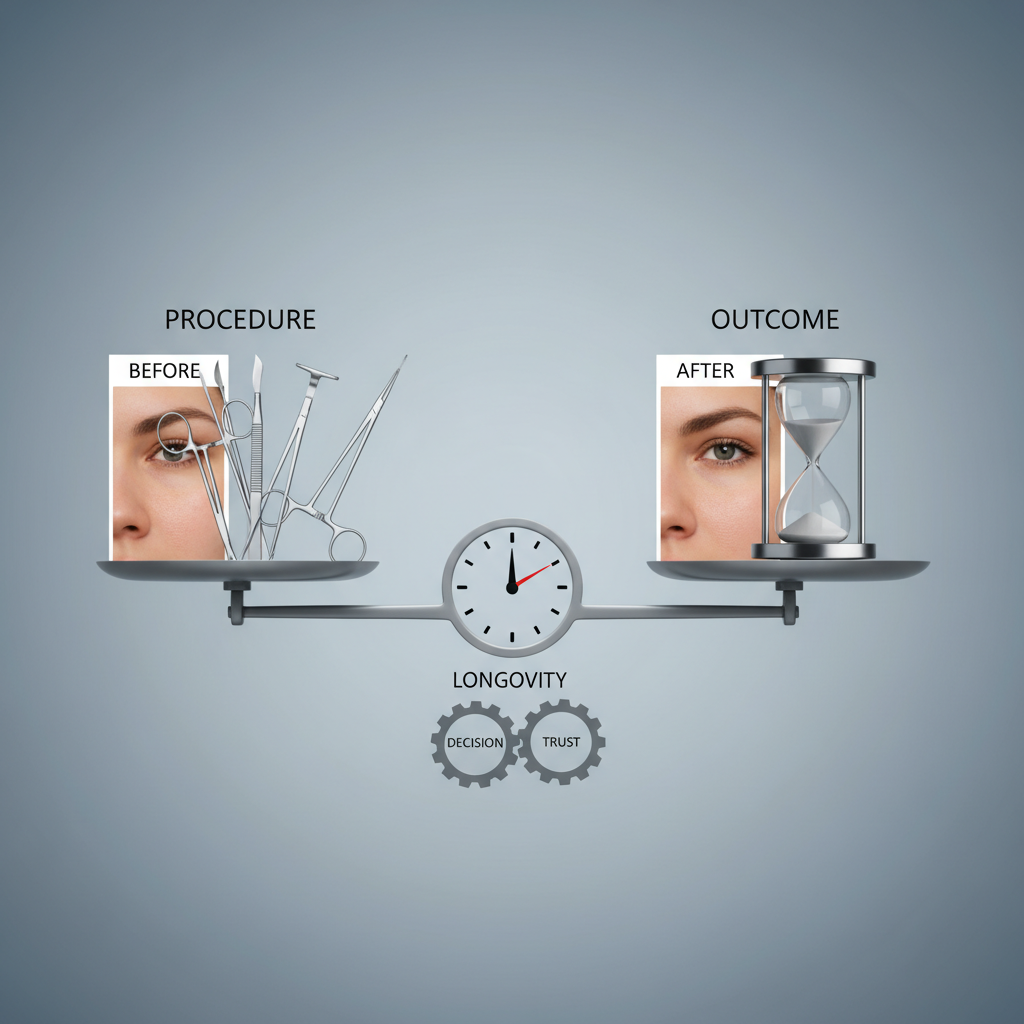
If you are comparing surgical and non surgical cosmetic treatments, one of your first questions is usually, “Are surgical results more permanent?” In general, surgical procedures do create more lasting structural changes than non invasive options. However, permanent does not mean unchanging, and not every concern requires surgery to achieve meaningful, long term improvement.
To decide what makes sense for you, it helps to understand how different treatments work, how long results typically last, and what trade offs come with greater permanence. You can also explore broader comparisons in surgical vs non surgical cosmetic procedures and non invasive vs invasive cosmetic procedures.
How surgical procedures create longer lasting change
Surgical cosmetic procedures physically alter tissue. Surgeons remove, reposition, or reshape skin, fat, muscle, or bone. Because you are changing the underlying structure, the improvement often lasts many years and sometimes for life.
Plastic Surgery Associates in Santa Rosa describe surgical treatments as providing “permanent alterations to the body or face,” while nonsurgical options are designed for rejuvenation without permanent structural change [1]. This is why procedures such as:
- Rhinoplasty reshape the nose cartilage and bone
- Breast augmentation or reduction change breast volume and position
- Liposuction or a Brazilian Butt Lift (BBL) change fat distribution
can have effects that persist even as you age or your weight fluctuates. In fact, certain procedures like a BBL permanently reshape your fat distribution and maintain altered proportions over time [2].
At the same time, no surgery can stop the natural aging process. You are changing the starting point, not pausing time. Skin will continue to lose elasticity, and gravity will still act on your face and body.
Why surgical results are not truly “forever”
You might hear surgery described as “permanent,” but it is more accurate to think of it as long lasting with limits. Several factors explain why.
Ongoing aging and environmental exposure
After a facelift, for example, your facial tissues have been tightened and repositioned. Yet gravity, sun exposure, environmental toxins, and intrinsic cellular aging continue to affect your skin. Lohner Plastic Surgery notes that a facelift is not permanent because these forces keep working on the face, even after surgery [3].
Over time you may see:
- New fine lines and wrinkles
- Gradual loosening of the skin again
- Volume shifts related to weight change or fat loss
The surgical improvement usually leaves you looking younger than you would have without surgery, even many years later, but you still move forward on the aging curve.
Healing, complications, and satisfaction
The way you heal also affects how “permanent” your result feels. Most patients report high satisfaction with surgical outcomes overall. In one hospital based study, about 91.5 percent of patients rated their surgical care highly, and 95 percent said they would recommend the surgical service [4]. However, patients who had complications or needed readmission within 30 days were significantly less satisfied, even when the underlying surgical problem was addressed [4].
This matters because permanence is not just about how long a result technically lasts. It is also about whether you feel the outcome meets your expectations. A technically lasting change that you are unhappy with does not feel like a positive long term result.
Longevity varies by procedure
Different surgeries have different durability profiles. For example:
- Structural changes like rhinoplasty or chin augmentation are often effectively lifelong, aside from gradual aging of skin and soft tissue.
- Body contouring after major weight loss can be long lasting if you maintain stable weight, but significant weight gain or loss can change your shape again.
- Facelift improvements are dramatic and long lasting, but not permanent. Schoemann Plastic Surgery emphasizes that all plastic surgery results are influenced by ongoing aging, even when they provide substantial long term transformation [2].
Understanding procedure specific longevity is a key step as you think about the best option for long term aesthetic results.
How non surgical treatments compare in longevity
Non surgical treatments tend to work through temporary mechanisms: neuromodulation, filler volume, collagen stimulation, or surface level skin changes. They can provide impressive improvements, but most are designed to fade or soften over time.
Fillers, for example, usually last from several months to a couple of years depending on the product and injection site. Neurotoxins soften lines for three to four months on average. Body sculpting devices can reduce fat pockets, but most rely on repeated sessions and lifestyle maintenance rather than a single permanent reshaping [1].
Nonsurgical options offer:
- Minimal or no downtime
- Gradual, buildable results
- The ability to adjust course or stop treatment if your preferences change
They rarely provide permanent structural change, which is why you usually see them positioned as part of a maintenance strategy. For more detail on duration, you can review how long do non surgical treatments last.
When more permanent results might be an advantage
There are situations where you may genuinely benefit from the stability that surgery offers.
Correcting structural issues
If you are trying to correct a prominent hump on the nose, significant eyelid hooding, or major breast asymmetry, non surgical methods cannot match the precision or permanence of a carefully planned operation. In these cases, pursuing a series of temporary treatments often costs more over time and still does not fully address the underlying structure.
Surgical reshaping can:
- Resolve the root anatomical concern in one procedure
- Provide a clearer “endpoint” instead of repeated maintenance every few months
- Improve function as well as appearance, for example in eyelid surgery that also helps vision
You can explore this reasoning in more detail in resources like how to choose between fillers and surgery and when to choose surgery over fillers.
Desiring a one time major change
If your goal is a significant, lasting transformation, such as a large breast reduction or a comprehensive facelift, a surgical plan may better match your expectations than slow, incremental non surgical treatments.
Schoemann Plastic Surgery explains that, although no procedure is truly permanent, surgery can provide dramatic, long lasting changes and meaningful confidence gains that nonsurgical treatments rarely equal on their own [2].
When less permanent options may be better for you
On the other hand, there are many cases when non surgical or minimally invasive treatments may be a better fit, even if they are not permanent.
You are testing your preferences
If you have never adjusted a feature before, you may prefer to “try on” a change. Treatments such as injectable fillers let you:
- Sample lip or cheek volume
- Refine your profile before considering fat transfer or implants
- Get comfortable with a new look knowing it will gradually fade if you do not want to maintain it
If you find a non surgical change really suits you, you can later consider a more permanent version. The difference between fillers and fat transfer is a useful example of this phased approach.
You want subtle, flexible maintenance
Non surgical treatments excel in maintenance and prevention. Regular neurotoxin treatments can slow the deepening of expression lines. Energy based devices can support collagen production and improve texture. Surface treatments can keep your skin clearer and more even.
Schoemann Plastic Surgery notes that BOTOX and fillers can play an important role in prolonging surgical results and supporting your appearance between larger procedures [2]. Lohner Plastic Surgery also highlights that nonsurgical boosters, such as fillers after a facelift, can help refresh volume or wrinkles without repeating surgery [3].
If you value flexibility, the ability to adjust or stop treatment, and minimal downtime, this less permanent path may align better with your lifestyle. You can learn more about the trade offs in pros and cons of non surgical treatments.
The trade offs that come with permanence
Pursuing more permanent results involves more than longevity. You are also making decisions about invasiveness, risk, cost, and recovery. Thinking about these factors together gives you a more accurate picture of whether surgery is right for you.
Many people discover that the best aesthetic plan blends surgical and non surgical treatments over time, carefully sequenced and tailored to their goals.
Recovery and downtime
Surgery usually requires anesthesia, incisions, and a structured recovery period. For some procedures, healing is relatively fast. For others, it is more involved and gradual.
Healthgrades data on common surgeries illustrates this variability:
- Cataract surgery often allows you to resume daily activities the next day, though full healing can take up to eight weeks [5].
- Hernia repair might allow light activity within 1 to 2 weeks for laparoscopic techniques, and up to 6 weeks for full recovery after open surgery [5].
- More complex operations, such as joint replacements or spinal fusion, can take several months to a year to fully recover [5] and [6].
In cosmetic surgery, recovery timelines will vary depending on the area treated, the technique used, and your overall health. A more permanent change often requires more healing time in the short term.
By contrast, many non surgical treatments let you return to normal activities the same day or within a couple of days [1]. The trade off is that you are likely to have multiple treatment sessions over months or years.
Risk profile and reversibility
Surgery carries higher medical risk than non invasive treatment, even when performed by an experienced, board certified surgeon. Complications can occur, and as the PubMed study shows, they significantly reduce reported satisfaction with the experience [4].
While most surgical risks are low in healthy patients who choose reputable surgeons, you cannot fully reverse many surgical changes. Revision procedures are possible, but they involve more surgery, more cost, and additional healing.
Non surgical treatments, on the other hand, are usually lower risk and highly reversible. You can wait for the effect to fade, change your maintenance schedule, or switch to a different approach entirely.
How surgeon skill and experience affect your long term results
When you choose surgery, you are not only choosing a procedure. You are also choosing a surgeon whose judgment and skill will have a direct impact on your outcome and its longevity.
Research on surgical practice outside aesthetics highlights a few key points:
- Patient reported outcomes in spine surgery were similarly durable across surgeons of different ages, but satisfaction and fulfillment of expectations were slightly higher with younger surgeons in one Canadian study [7].
- Surgical performance in minimally invasive procedures correlated with the number of operations a physician performed and with consistent weekly practice, showing that hands on experience supports more reliable, long term surgical quality [8].
For you, this underscores the importance of:
- Choosing a board certified plastic surgeon or facial plastic surgeon
- Asking about case volume and specific experience with the procedure you are considering
- Reviewing before and after photos of patients whose starting point is similar to yours
When you understand how surgeon expertise influences your result, you are better equipped for how to decide on cosmetic surgery in an informed way.
Maintaining and extending your surgical results
Even though surgery provides more structural change, your habits after treatment play a major role in how long your results remain at their best.
Lohner Plastic Surgery highlights several strategies that support facelift longevity, many of which apply broadly to other procedures as well [3]:
- Following post operative instructions carefully, including rest, head elevation, and avoiding overexertion
- Protecting your skin from the sun with daily SPF 30 or higher
- Maintaining a balanced diet, hydration, and healthy lifestyle to support collagen and elastin production
- Using non surgical treatments, such as injectables, to smooth new lines or restore subtle volume over time
Schoemann Plastic Surgery also notes that combining good recovery care with thoughtful non surgical maintenance helps you “enjoy the benefits of plastic surgery for a longer period” [2].
If you prefer a strategic, long horizon plan, you may benefit from a structured approach like a cosmetic treatment planning guide or customizing cosmetic procedure plans with your provider.
Comparing surgical and non surgical options side by side
While every procedure and person is different, it can help to see core differences in one view.
| Aspect | Surgical procedures | Non surgical procedures |
|---|---|---|
| Typical longevity | Years to lifelong structural change, but influenced by aging | Months to a few years, usually require repeat sessions |
| Invasiveness | Incisions, anesthesia, tissue removal or repositioning | Needles or devices, usually no incisions |
| Recovery | Days to months, activity restrictions common | Minimal downtime, often same day return to routine |
| Risk profile | Higher risk, potential complications, revision may be challenging | Lower risk, usually reversible or temporary |
| Cost pattern | Higher up front cost, fewer sessions | Lower per session, but ongoing maintenance costs |
| Ideal for | Structural changes and larger, long term transformations | Subtle tweaks, maintenance, and “testing” changes |
You can go deeper on this comparison in benefits of surgical vs non surgical treatments, non surgical alternatives to surgery explained, and non surgical vs surgical body contouring.
Making a personalized, strategic decision
Ultimately, the question is not simply “are surgical results more permanent,” but “which approach aligns with your goals, timeline, and risk comfort.”
You can bring structure to your decision by considering:
-
Your primary goal
Do you want a dramatic, long term change in a specific area, or are you more focused on gradual refinement and maintenance? -
Your tolerance for downtime and risk
Are you able and willing to take time off work and social activities for a surgical recovery in exchange for fewer repeat treatments? -
Your openness to ongoing maintenance
Are you comfortable returning for injections or device treatments every few months, or would you rather have fewer, larger interventions? -
Your long term aesthetic plan
Would a combined approach serve you best, for example surgery at a key milestone such as after children or major weight loss, then non surgical support around it?
If you want help organizing these factors, resources like which cosmetic procedure is right for me, how to choose the right aesthetic treatment, and how to compare cosmetic procedures can be useful starting points.
Next steps as you explore your options
Your decision between surgical and non surgical treatments does not have to be rushed. You can:
- Clarify your top one or two priorities, for example neckline, eyelids, or midface volume.
- Read about specific options for those areas and how long they last. The overview in understanding treatment longevity aesthetics can help.
- Schedule consultations with qualified providers, ideally both surgical and non surgical specialists, and bring your questions about permanence, maintenance, and recovery.
- Ask each provider to outline a short term and long term plan so you can compare paths and see which feels right.
By approaching your decision as a personalized, strategic process rather than a one time yes or no to surgery, you give yourself room to choose the level of permanence, flexibility, and investment that matches your life right now. Over time, you can adjust that plan as your goals and circumstances evolve.