
Understanding non invasive vs invasive cosmetic procedures
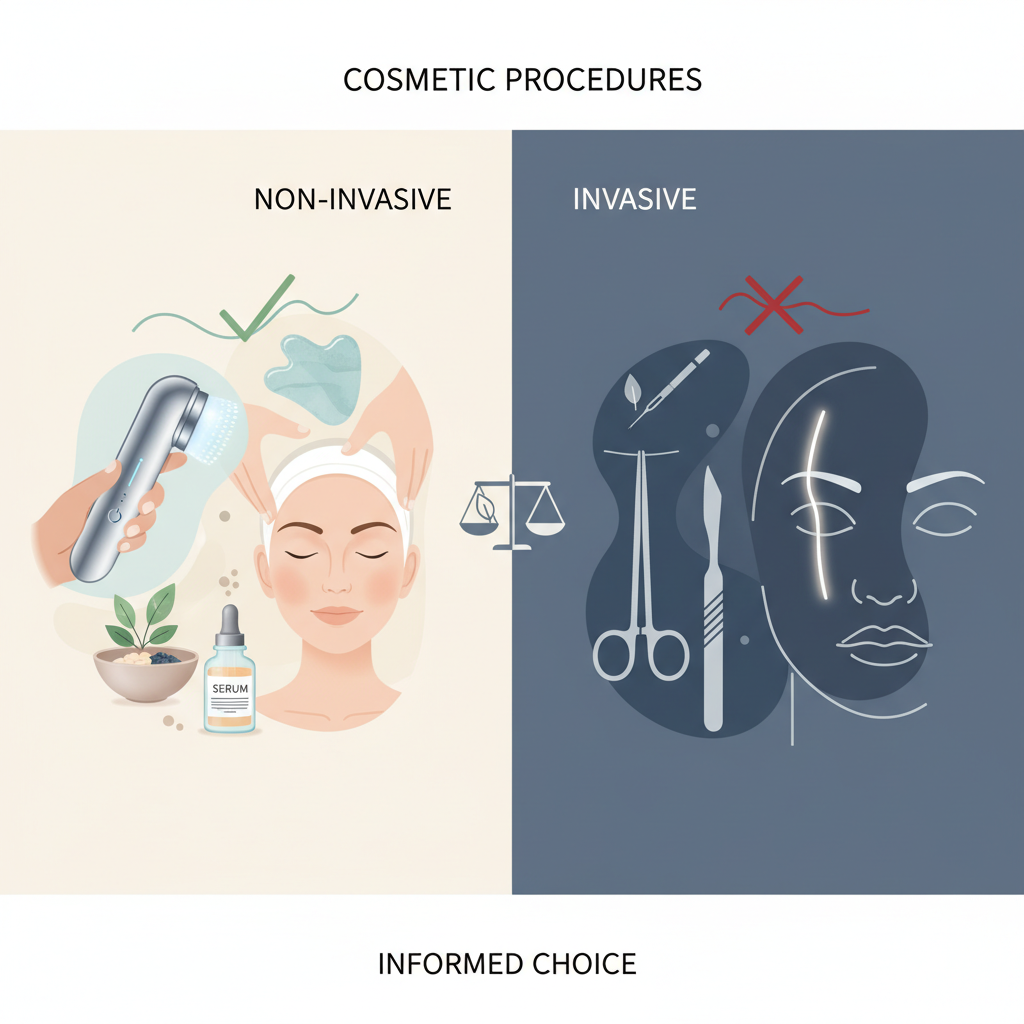
When you compare non invasive vs invasive cosmetic procedures, you are really deciding between two very different paths to aesthetic change. Invasive cosmetic procedures involve cutting the skin or entering the body with instruments, and they are usually performed by a board certified surgeon in an operating room setting [1]. Non-invasive procedures do not require incisions and are typically performed in an office setting with little to no downtime [2].
Between 2000 and 2016 the number of invasive cosmetic procedures fell slightly, while non-invasive and minimally invasive procedures increased by 180 percent, reflecting a strong patient shift toward less disruptive options [2]. Even with this trend, surgery still plays a crucial role, especially when you want more dramatic or long lasting results. Your decision is not about which category is “better”. It is about which approach fits your goals, lifestyle, and tolerance for recovery and risk.
What counts as invasive vs non invasive
You will see different terms used in consultation and online research. It helps to group them clearly so you know what your surgeon or injector is talking about.
Invasive cosmetic procedures
Invasive cosmetic procedures:
- Break the skin with incisions or instruments
- Often require operating room environments
- Typically involve anesthesia and a formal recovery period
Examples include:
- Facelift and neck lift
- Eyelid surgery
- Breast augmentation, reduction, or lift
- Tummy tuck and other body contouring surgeries
- Surgical liposuction
These operations reposition or remove tissue, and can restore or create volume in deeper layers of the body [3]. Results often last more than ten years and in some cases a lifetime.
Non invasive and minimally invasive procedures
Non-invasive and minimally invasive options do not involve traditional surgical incisions. There is still a spectrum.
- Moderately invasive nonsurgical procedures, such as injectable fillers and neuromodulators, use needles but not surgical cuts. They offer temporary improvements that last from a few months to several years, with little recovery time [3].
- Minimally invasive nonsurgical treatments, including many laser procedures and light based therapies, work on the skin’s surface or slightly below it. These often require a series of sessions and provide gradual improvement in skin tone and texture [3].
- Noninvasive nonsurgical cosmetic procedures such as facials, cellulite wraps, and deep tissue massages are designed to revitalize the skin and temporarily reduce blemishes without significant medical risk [3].
Common non-invasive options include Botox and other wrinkle relaxing injections, dermal fillers, chemical peels, spider vein treatment, laser resurfacing, and fat freezing technologies like CoolSculpting [2]. These procedures usually cost less per session than surgery and allow you to return quickly to normal activities [4].
Comparing invasiveness, recovery, and risks
When you decide between non invasive vs invasive cosmetic procedures, you are weighing how much disruption you are willing to accept in exchange for the type of change you want.
Invasiveness and what it really means
Invasive surgery involves incisions that can leave scars and usually requires sutures and bandages while you heal [1]. You might need general anesthesia or deep sedation, and your surgeon will perform the procedure in a fully equipped surgical setting.
By contrast, non-invasive procedures typically:
- Avoid cuts and stitches
- Use topical numbing or no anesthesia at all
- Take place in an office based treatment room
This lower level of invasiveness is a major reason minimally invasive cosmetic procedures have increased by more than 200 percent over the past two decades [5].
Recovery timelines: what to expect
Surgical recovery is measured in weeks, not days. For example:
- Surgical liposuction generally involves about six weeks of recovery, although many people return to work in two to three weeks [6].
- A tummy tuck may require three weeks for initial recovery and up to six months for full healing, with many patients able to go back to desk work in about two weeks [6].
- Breast procedures often take six to eight weeks for full recovery, even if you return to work after around a week [6].
Non-surgical treatments are far lighter in this respect. Injectables, laser treatments, and similar procedures usually involve little to no downtime, and you often resume daily activities immediately or within a day [5]. Body contouring technologies such as CoolSculpting and EMSCULPT typically require a series of sessions, but you can return to work right away [6].
Risk profile and complications
Every cosmetic procedure carries some level of risk.
Invasive cosmetic surgeries can involve:
- Infection and wound healing problems
- Bleeding or hematoma
- Blood clots and thromboembolic events
- Skin or fat necrosis
- Fat embolism or visceral injury, depending on the procedure
- Anesthesia related complications
These complications are serious and usually require prompt medical attention [7]. Infection is especially notable, with reported rates up to 35 percent in some breast surgeries and lower but real rates in liposuction and abdominoplasty [7].
Non-invasive procedures avoid surgical cuts but still have risks. Injectables and other nonsurgical treatments can cause:
- Swelling, redness, and bruising
- Pain or tenderness at injection sites
- Foreign body reactions or granulomas after some filler injections, which can appear months or years later and may require steroids or surgical removal [7]
Even minimally invasive liposuction techniques like tumescent liposuction use high doses of local anesthetic, which carry a risk of systemic toxicity if not handled properly [7].
The key difference is that serious, life threatening complications are significantly more likely with invasive surgery than with most non-invasive procedures [4]. However, both categories require qualified providers and appropriate safety protocols.
Longevity and impact of results
How long you want your results to last is often what ultimately points you toward surgery or nonsurgical care.
How long non surgical results last
Injectable treatments and other non-surgical procedures usually give you temporary improvements:
- Neuromodulators like Botox can smooth dynamic wrinkles for several months
- Dermal fillers can restore volume for several months to a few years, depending on the product and area
- Laser and light based therapies gradually improve tone and texture, but you often need maintenance sessions
- Non-surgical body contouring can shrink fat pockets, yet your long term result still depends on weight stability and occasional touch ups
These options are ideal if you want subtle, natural looking enhancements and you are open to repeating treatments periodically [5]. You can explore more detail on duration in resources like how long do non surgical treatments last and understanding treatment longevity aesthetics.
How long surgical results last
Surgical cosmetic procedures involve structural changes that can last many years or even a lifetime. A facelift that repositions deeper tissues, or a tummy tuck that removes excess skin and tightens muscles, does not simply “wear off” in a few months. Instead, you continue to age on top of a new baseline result.
Invasive procedures typically:
- Create more noticeable and longer lasting changes
- Require fewer touch ups over time
- Are especially effective for significant sagging or larger volume changes such as breast surgery or major body contouring [8]
If you are primarily interested in longevity and transformational change, it can help to review resources like are surgical results more permanent and best option for long term aesthetic results.
Cost, convenience, and lifestyle fit
You probably need your aesthetic plan to fit both your budget and your calendar.
Non-surgical treatments generally have:
- Lower upfront cost per session
- Short appointments that fit easily into a workday
- Minimal recovery, so you avoid long breaks from work or caregiving responsibilities
Because the results are temporary, you need maintenance over time, and the cumulative cost can eventually rival or exceed a one time surgery [9]. However, the ability to spread that cost over months or years can be appealing.
Surgical procedures usually:
- Involve a larger single payment
- Require you to schedule time off work and arrange support at home
- Deliver results that last far longer, so you are not paying for the same change again and again
If you are trying to evaluate these trade offs more systematically, it can help to review guides like benefits of surgical vs non surgical treatments and pros and cons of non surgical treatments.
A useful way to look at cost is not just “What does this treatment cost today?” but “What will this change cost me over the next five to ten years, including maintenance and time away from work?”
Matching procedure types to common goals
Different concerns tend to respond better to specific categories of treatment. You are not deciding between “all injections” and “all surgeries.” You are choosing targeted tools for each goal.
Facial aging and contour
For early signs of facial aging such as fine lines or mild volume loss, non-surgical options are often the first line. Neuromodulators, fillers, and skin resurfacing can provide meaningful improvement without surgery and with minimal downtime [5].
As sagging becomes more pronounced, injections alone may no longer match your expectations. Facelift or eyelid surgery can reposition tissues instead of only filling or relaxing them, which can create a more natural and lasting result in advanced aging.
If you are specifically weighing fillers against surgical changes, resources like how to choose between fillers and surgery, when to choose surgery over fillers, and difference between fillers and fat transfer can help clarify the pros and cons for your situation.
Body contouring and fat reduction
Non-surgical body contouring methods such as CoolSculpting or EMSCULPT are best suited for mild to moderate fat pockets in people close to their ideal weight. You usually need multiple treatments, but you can stay fully active during the process [6].
Surgical liposuction or a tummy tuck may be more appropriate if you:
- Have larger or more resistant fat deposits
- Have significant loose skin or muscle separation
- Want a single, comprehensive change rather than gradual small shifts
You can explore this decision more deeply through resources such as non surgical vs surgical body contouring.
Skin quality, tone, and surface concerns
When your main concerns are pigmentation, fine lines, mild scars, or dullness, non-surgical skin treatments are usually the logical starting point. Chemical peels, laser therapies, and other light based options are designed specifically to improve skin surface and tone [3].
Surgery does not directly change the quality of your skin, although tightening can make it appear smoother. In most cases you will still use skincare and non-surgical treatments before or after surgery to refine the surface.
How to decide what is right for you
Choosing between non invasive vs invasive cosmetic procedures is less about memorizing definitions and more about making a structured decision that matches your life.
Clarify your priorities
You can start by answering a few key questions:
- How dramatic do you want your change to be?
- How long do you want your results to last before you consider another treatment?
- How much downtime can you realistically take from work, family, and other commitments?
- What is your comfort level with surgery, anesthesia, and scars?
- Are you more comfortable with a single, larger investment or smaller recurring ones?
If you find it helpful, you might use tools like how to compare cosmetic procedures or cosmetic treatment planning guide to organize your answers.
Use non surgical options strategically
Many people start with non-surgical treatments for good reasons. They are:
- Lower risk
- Easier to fit into a busy schedule
- Reversible or adjustable over time
Non-surgical care is especially useful if you are exploring what you like aesthetically or you are preparing for an upcoming event and want a quick refresh. Guides like non-surgical alternatives to surgery explained and how long do non surgical treatments last can help you map out realistic expectations.
Recognize when surgery is the better tool
There is a point where adding more filler or more sessions does not create the same quality of result as a well planned surgery. You might be ready to consider an operation if:
- You feel that injectables or devices are no longer keeping up with your concerns
- You are paying for frequent maintenance but still feel underwhelmed
- Skin laxity, muscle separation, or large volume changes are your main issues
If you are at this stage, you may want to explore how to decide on cosmetic surgery, when to choose surgery over fillers, and what to consider before cosmetic surgery.
Work with qualified professionals
Both invasive and non-invasive procedures require expertise. Kessel Dermatology and others emphasize the importance of consulting trained and qualified medical professionals so your treatment plan is aligned with your goals and safety needs [2]. Surgical procedures should be performed by board certified plastic surgeons, and even non-surgical treatments are best handled by clinicians with in depth training in facial and body anatomy [1].
You can use resources such as how to choose the right aesthetic treatment, which cosmetic procedure is right for me, and customizing cosmetic procedure plans to prepare for a more productive consultation.
Putting your decision into a plan
Once you are clearer on your preferences, you can think in terms of building a personalized roadmap rather than choosing a single “perfect” procedure.
For many people the best approach combines both sides:
- Non-surgical treatments to maintain skin health and refine details
- Strategic surgery at key points in life to address structural concerns or major changes
Over time you can adjust your plan as your anatomy, lifestyle, and goals evolve. If you want a structured way to map that out, you may find surgical vs non surgical cosmetic procedures and benefits of surgical vs non surgical treatments helpful.
You do not need to have every answer before you speak with a specialist. Your role is to be clear about what you want your life and appearance to look like on the other side of treatment. Your provider’s role is to match that vision with the right blend of non invasive and invasive options, at the right time, in a way that is medically safe and sustainable for you.