

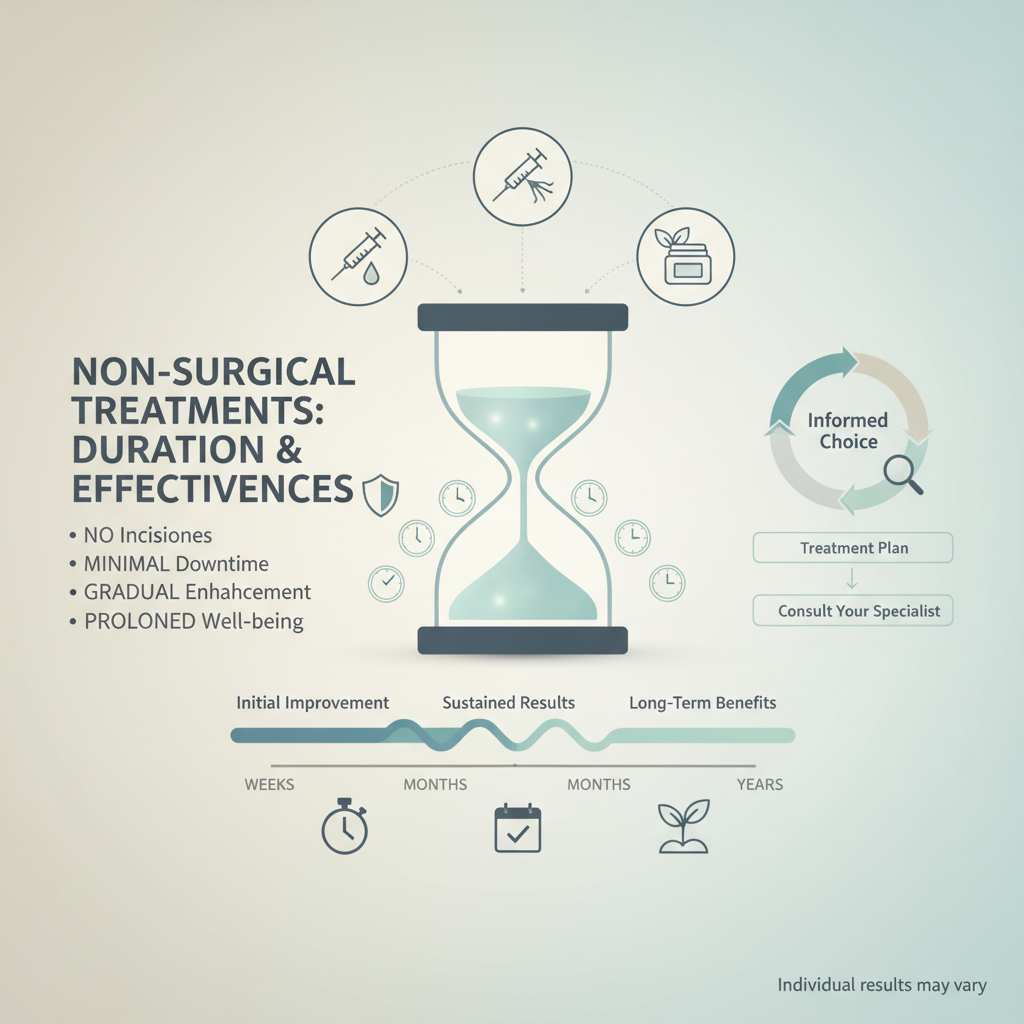
Why treatment longevity matters when you plan
When you ask yourself how long do non surgical treatments last, you are really asking a bigger question: how long will your results last compared with surgery, and what kind of maintenance are you signing up for.
Non surgical cosmetic treatments can be an excellent way to refresh your appearance with minimal downtime. However, most of them are designed to be temporary or semi permanent. Understanding that lifespan upfront helps you compare them fairly to surgery, budget realistically, and avoid disappointment.
You do not have to choose all or nothing. Many people use non invasive treatments to delay or complement surgery. The key is to know what each option can and cannot do, how long it lasts, and how that fits into your long term plan. Resources like surgical vs non surgical cosmetic procedures and which cosmetic procedure is right for me can help you frame those choices as you read.
Key factors that affect how long results last
Before you look at specific procedures, it helps to understand why two people can have the same treatment and get very different durations of effect.
Your biology and lifestyle
Your body is constantly breaking down and rebuilding tissue. That is why no injectable or device based treatment is literally permanent.
Several variables matter:
- Metabolic rate and circulation
- Skin quality, thickness, and elasticity
- Age and hormonal status
- Sun exposure and smoking history
- Daily skin care and diet
For example, botulinum toxin like Botox or Dysport typically lasts 3 to 4 months in most people, but someone who is very athletic or who has very strong facial muscles may notice it wears off faster because their body clears the product more quickly. This pattern is reported across multiple practices that use these medications regularly [1].
The product or technology itself
Different categories of treatments are engineered to last for different time frames:
- Botulinum toxin is designed to temporarily relax muscles
- Hyaluronic acid fillers are gradually broken down by your body
- Biostimulatory fillers, PRP, and radiofrequency rely on your own collagen response
- Energy devices like lasers or ultrasound trigger tissue remodeling over time
Understanding which category you are considering helps you set realistic expectations. For example, Sculptra, which stimulates collagen, can last up to 2 years, while a traditional hyaluronic acid lip filler may last only 6 to 12 months according to long standing clinical use data [2].
Treatment technique and dosage
How the treatment is done is just as important as what is used. That includes:
- Depth and placement of injections
- Total dose used
- Choice of product for a specific area
- Number and spacing of sessions
For example, the proprietary Jawsome jawline contouring protocol is reported to last several years, which is significantly longer than standard jawline fillers that typically last 12 to 18 months. The reason is a combination of specialized materials and deeper, structural placement rather than superficial filling [3].
How long common non surgical facial treatments last
When you look at facial rejuvenation, you will usually encounter four main categories: botulinum toxin, dermal fillers, skin tightening devices, and regenerative injectables. Each has its own maintenance pattern.
Wrinkle relaxers like Botox and Dysport
Botulinum toxin type A treatments such as Botox, Dysport, and Xeomin temporarily block nerve signals to specific muscles, which softens dynamic wrinkles like frown lines, crow’s feet, and forehead lines.
Across different practices and summaries you see a consistent pattern:
- Botox typically lasts about 3 to 4 months for most people [4]
- Some clinics quote a broader range of 3 to 6 months, which reflects individual variability [2]
- Dysport may last a bit longer in some patients, roughly 6 months to 1 year, although this can vary and is often influenced by age and muscle activity [5]
You usually see the lines start to return gradually rather than all at once. If you want a consistently smooth look, you are typically looking at repeat treatments 3 or 4 times per year.
When you think about whether that is worthwhile compared with surgery, consider what you are trying to fix. Wrinkle relaxers are ideal for movement related lines and for preventing deeper creases, not for lifting sagging skin. Procedures like eyelid surgery or brow lift sit at the “surgical” end of what non invasive vs invasive cosmetic procedures can achieve.
Dermal fillers for volume and contour
Fillers restore volume to areas like cheeks, lips, and temples, or they can sharpen features such as the jawline or chin. Their longevity depends on both the material and where they are placed.
Based on clinical experience across several practices:
- Standard hyaluronic acid fillers such as Juvederm or Restylane often last 6 to 12 months in dynamic areas
- Thicker or more cross linked fillers, such as those used for cheeks or chin, can last up to 18 to 24 months in some patients [6]
- Juvederm Voluma XC for cheek augmentation has data supporting results up to 2 years [2]
- Some Restylane formulations are reported to last up to 1 year [5]
- Biostimulatory fillers such as Sculptra can last close to 2 years because they encourage collagen production rather than simply occupying space [6]
Specialized approaches, such as the Jawsome protocol for the jawline, can extend results into the several year range by working at a deeper, structural level [3].
If you are comparing fillers with more permanent options such as fat transfer or surgical implants, it is worth reading about the difference between fillers and fat transfer and how to choose between fillers and surgery. You might decide to use fillers as a “test drive” or to refine results after surgery, or you might prefer a one time more permanent solution.
Skin tightening and collagen stimulating devices
Non surgical tightening and resurfacing treatments aim to improve laxity, texture, and fine lines by heating deeper layers of skin or by creating controlled micro injury that triggers collagen remodeling.
Protocols vary, but the patterns are broadly similar:
- Radiofrequency (RF) skin tightening usually requires an initial series of 4 to 6 sessions spaced every 2 to 4 weeks, followed by periodic touch ups to maintain the effect [7]
- High intensity focused ultrasound (HIFU) and similar technologies can show early tightening within weeks, with gradual improvement for several months and maintenance every 6 to 12 months depending on the device and your skin [3]
- Microneedling with platelet rich plasma (PRP) or growth factors usually involves 3 to 6 sessions spaced about 4 weeks apart, with results building cumulatively and then maintained periodically [7]
These treatments do not stop time but they can slow visible aging by continuously boosting collagen. If you are someone who prefers gradual, subtle change over a one time dramatic shift, this kind of maintenance plan can be appealing.
At the same time, if your main concern is significant sagging rather than texture, you may eventually reach the limits of what devices can do. Comparing options through resources like when to choose surgery over fillers and best option for long term aesthetic results can help you decide when a lift or structural surgery makes more sense.
Injectable skin boosters like Profhilo
Skin boosters are designed to improve hydration and elasticity rather than create volume or lift. Profhilo is one example that has clear treatment guidance.
As of mid 2024, a typical Profhilo protocol includes:
- Two sessions spaced 4 weeks apart for the initial course
- Maintenance treatments every 6 months to sustain the skin quality improvements [7]
With these treatments, you are not looking for a sudden dramatic change. Instead, you see more subtle improvements in glow and elasticity that fade gradually if you stop maintaining them.
Non surgical body treatments and their longevity
Facial treatments get most of the attention, but many non surgical options target body contouring and hair as well. Here is how long those typically last and how they compare with surgical versions.
Laser hair removal
Laser or intense pulsed light (IPL) hair removal targets hair follicles in their growth phase to reduce hair over time.
Typical patterns include:
- An initial series of 6 to 10 sessions, generally spaced 4 to 6 weeks apart
- Around 80 to 90 percent long term hair reduction in many patients
- One or two maintenance sessions per year to maintain results [8]
Most of the hair removed is permanently gone, but hormone changes, medications, or new hair growth cycles can bring some hair back. Compared with surgical options, which are rarely used for hair removal, this is essentially a long term non surgical solution.
Non surgical fat reduction like CoolSculpting
Treatments like CoolSculpting use controlled cooling to damage fat cells, which are then gradually removed by your body.
Available data from clinical use suggest:
- You may see a visible change as soon as 3 to 4 weeks
- Full results often take 2 to 3 months as your body clears the treated fat
- Many patients see about a 25 percent fat reduction in the treated area per session
- The fat cells that are destroyed are gone permanently, although remaining fat cells can still enlarge with weight gain [2]
Non surgical body contouring can be a good option if you are near your goal weight but have localized bulges. If you want more dramatic reshaping, or if you prefer one major recovery rather than multiple sessions, it is worth comparing these treatments with liposuction through resources like non surgical vs surgical body contouring and benefits of surgical vs non surgical treatments.
Semi permanent “lifting” procedures
You might be wondering about treatments that sit somewhere between pure injectables and full surgery, such as thread lifts or structural decompression approaches for spinal issues. These illustrate how “non surgical” can still provide multi year benefits in the right context.
Thread lift facelifts
Thread lifts use fine sutures placed under the skin to create a subtle lift and stimulate collagen. They are usually categorized as minimally invasive rather than completely non invasive.
Reported longevity includes:
- An average lifespan of 3 to 5 years for many patients
- Some people report shorter or longer durations, from a few months to up to 10 years in rare cases [5]
Thread lifts can fill a gap for you if topical treatments and injectables are no longer enough, but you are not yet ready for a full surgical facelift. However, they still involve insertion of materials and carry their own risk and recovery profile, so they should be compared carefully with surgical options and not viewed as purely “lunchtime” procedures.
Spinal decompression and nerve procedures as non cosmetic examples
While the focus here is aesthetic, it can be helpful to look at how non surgical treatments behave in other fields because the same principles of maintenance and realistic expectations apply.
For example:
- Spinal decompression therapy for back pain can provide relief that lasts for months or years, especially if you follow a maintenance program such as monthly sessions or home exercises [9]
- Many patients notice improvement after 6 to 12 sessions, with total recommended sessions ranging from 18 for mild disc problems to 30 or more for severe cases [9]
- Nerve blocks for pain are usually temporary and are used strategically to confirm pain sources or to bridge to longer lasting treatments. Diagnostic blocks may only last hours, while therapeutic blocks can ease pain for days to months. Adding corticosteroids can extend that relief by controlling inflammation, and continuous infusion catheters can keep the block active for several days [10]
You see the same pattern you see with cosmetic treatments. Non surgical approaches often trade permanence for lower risk and shorter downtime. They are most effective when you view them as part of a longer term plan rather than one time fixes.
How non surgical treatments compare with surgery on longevity
If you are deciding between non surgical and surgical options, longevity is only one dimension. Still, it is a critical one.
In general:
- Most non surgical facial treatments last from a few months to a couple of years
- Some minimally invasive options, like thread lifts or structural protocols, can last 3 to 5 years or more for certain people
- Surgical procedures, such as facelifts or body lifts, do not last forever either, but their effects often extend 7 to 10 years or longer, and aging continues from a “reset” baseline
For a more structured comparison, resources like are surgical results more permanent and understanding treatment longevity aesthetics can help you compare time frames side by side.
When you read outcomes data for conditions like lumbar spinal stenosis, you see a similar pattern. Surgical decompression often gives stronger early improvements in pain and function compared with non surgical management, although over five or more years outcomes can converge somewhat, and nearly half of non surgical patients still maintain meaningful benefit [11]. That does not mean surgery is “better” for everyone. It means the right choice depends on your goals, tolerance for risk and downtime, and how you value gradual versus decisive change.
You face a similar balancing act with aesthetic decisions. Articles like non surgical alternatives to surgery explained and pros and cons of non surgical treatments can help you map out what trade offs feel right for you.
In general, you trade some longevity for lower invasiveness with non surgical treatments. The right choice depends on whether you prefer to commit to regular maintenance or to one larger procedure with longer recovery.
Building a realistic maintenance plan
Once you know how long different treatments last, you can create a plan that fits your life instead of chasing quick fixes.
Think in multi year timelines, not single sessions
Instead of asking whether a single injector session will fix something, ask how you want to look and feel over the next 3 to 5 years. That shift helps you combine options more strategically.
For example, you might:
- Use botulinum toxin every 3 to 4 months to soften dynamic lines
- Maintain filler structure every 12 to 24 months, possibly less often for deep structural work
- Schedule annual or semi annual skin tightening or Profhilo sessions to maintain collagen and glow
- Revisit larger decisions, such as whether to move from fillers to surgery, every few years with the help of guides like how to decide on cosmetic surgery and what to consider before cosmetic surgery
Planning this way also lets you budget for maintenance instead of being surprised when effects naturally fade.
Use professional guidance to avoid over treatment
There is a temptation to chase results as soon as you notice them softening. However, over treatment can lead to an overfilled or unnatural look or to unnecessary exposure to procedures.
Experienced providers emphasize:
- Individualized maintenance intervals rather than rigid schedules
- Conservative dosing, especially at the beginning
- Allowing treatments time to work before adding more
This measured approach is highlighted in guidance that stresses customized treatment intervals and careful maintenance to prevent over treatment, while still preserving long term results [3].
If you want to see how to structure that kind of long range thinking, tools like a cosmetic treatment planning guide, how to compare cosmetic procedures, and customizing cosmetic procedure plans can help you outline a plan to discuss with your provider.
Turning information into a decision that fits you
Knowing how long non surgical treatments last gives you a clearer picture, but it is only one part of your decision. You also need to weigh:
- Invasiveness and recovery
- Cost over time versus one time surgery costs
- Your comfort with needles or devices
- How you feel about subtle incremental change versus dramatic results
A practical next step is to clarify your priorities using resources like how to choose the right aesthetic treatment and how to compare cosmetic procedures. Once you have that clarity, you can walk into a consultation with specific questions, a realistic sense of how long results will last, and a plan to maintain them.
You are not choosing between “quick fix” and “forever.” You are choosing the combination of treatments and timelines that best supports how you want to look and feel over the long term.
References
- (Epione Beverly Hills, Dr Aesthetica)
- (Plastic Surgery Specialists)
- (Epione Beverly Hills)
- (Epione Beverly Hills, Dr Aesthetica, The Plastic Surgery Center)
- (The Plastic Surgery Center)
- (Epione Beverly Hills, Plastic Surgery Specialists)
- (Dr Aesthetica)
- (Dr Aesthetica, Plastic Surgery Specialists)
- (Nashville Disc Center)
- (OrthoRepair)
- (PubMed)