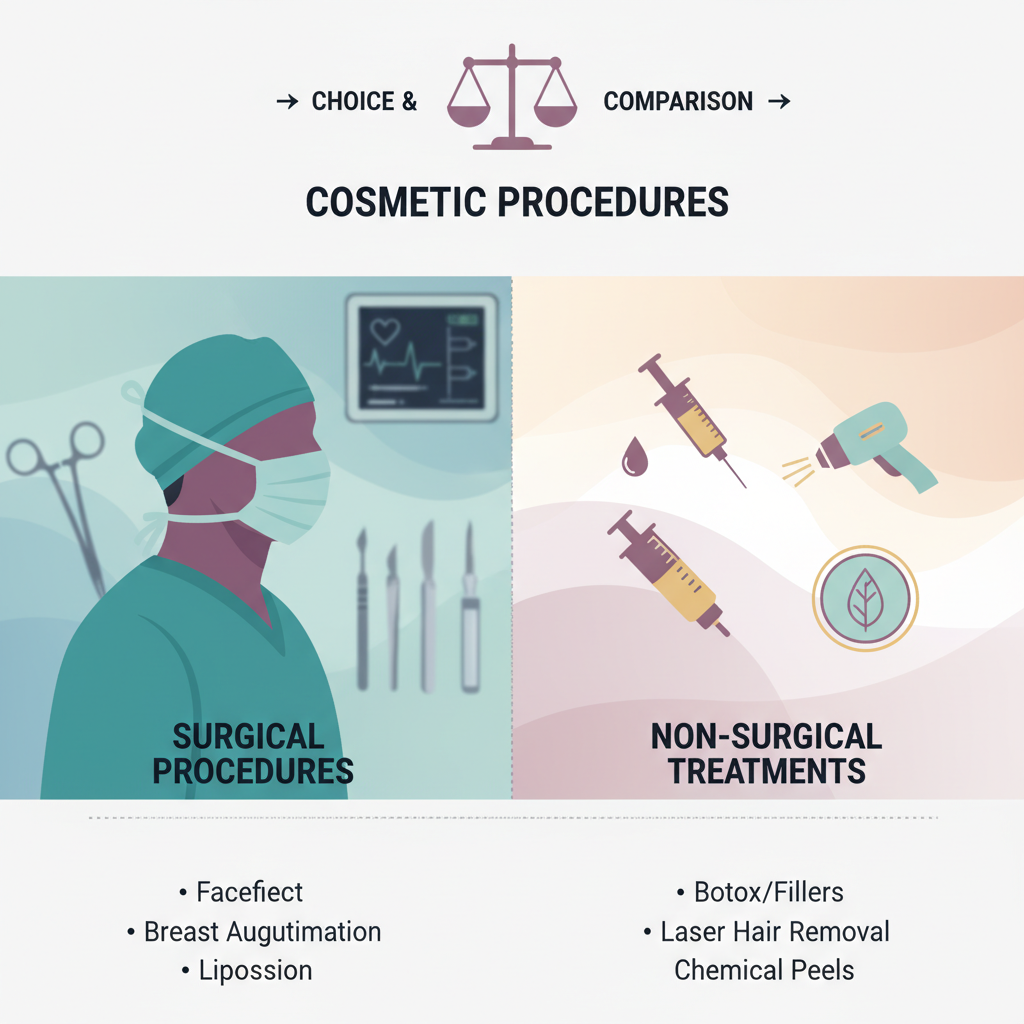
Understanding surgical vs non surgical cosmetic procedures
When you start comparing surgical vs non surgical cosmetic procedures, it is easy to feel pulled in two directions. Surgical options promise dramatic, long lasting change. Non surgical treatments promise quick improvements with little to no downtime. The right choice depends less on what is popular and more on your goals, timeline, risk tolerance, and budget.
Both approaches can be safe and effective when you work with a qualified provider. Your task is to understand what each path offers, where it falls short, and how to match those realities with what you want for your face or body. Thinking of this as a strategic decision, not a one time impulse, will help you make a choice you feel good about now and later.
What counts as surgical vs non surgical
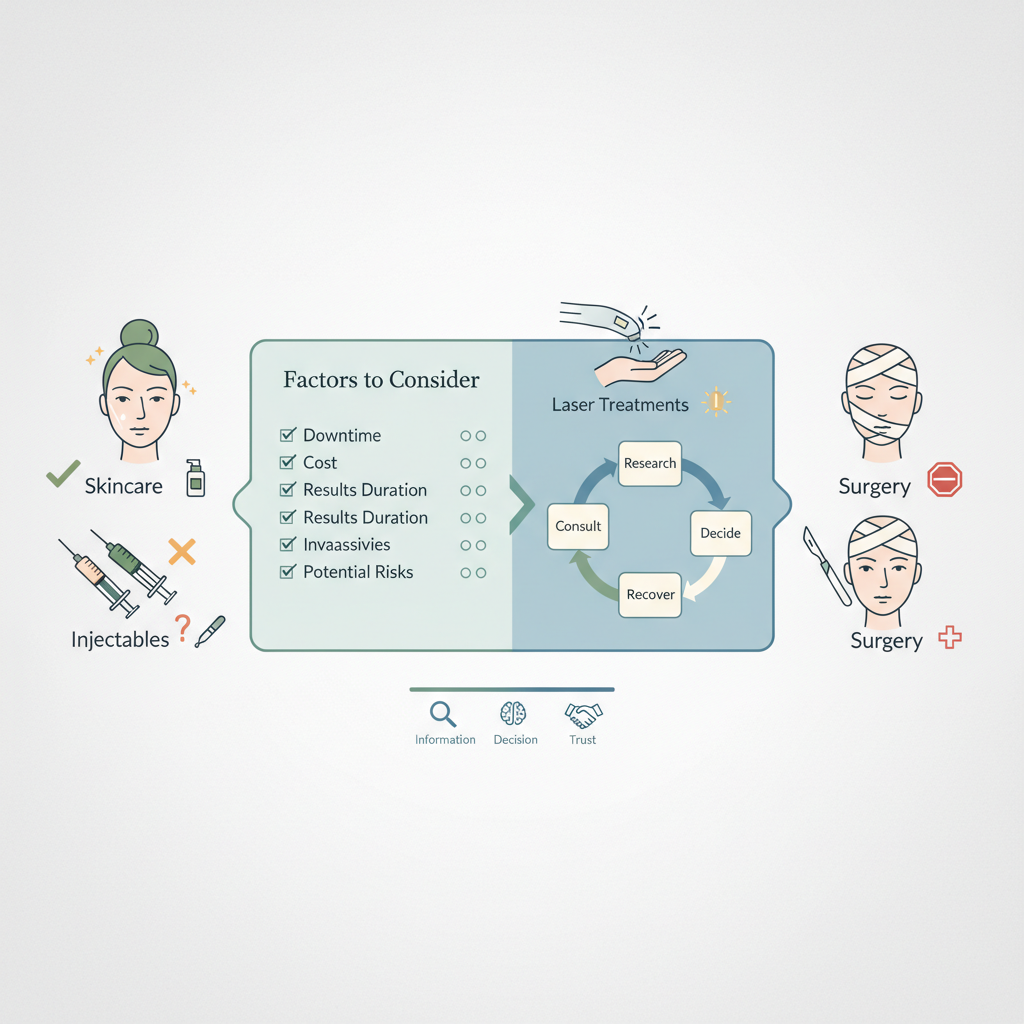
Cosmetic treatments fall along a spectrum from minimally invasive to fully surgical. Knowing where a procedure sits on that spectrum helps you anticipate recovery, results, and cost.
Surgical cosmetic procedures
Surgical cosmetic procedures involve incisions, anesthesia, and a formal operating room setting. Common examples include:
- Facelift and neck lift
- Rhinoplasty
- Breast augmentation or reduction
- Tummy tuck (abdominoplasty)
- Liposuction and body lifts
- Eyelid surgery
These operations usually require general anesthesia or deep sedation, a dedicated recovery period, and some degree of scarring. In exchange, you typically receive more dramatic and longer lasting changes. Facelifts, tummy tucks, and similar surgeries can keep improving your appearance for many years or even decades when performed well and when you maintain a stable lifestyle [1].
Non surgical cosmetic procedures
Non surgical cosmetic procedures are minimally invasive and do not require large incisions or general anesthesia. They are usually performed in the office and rely on needles, energy based devices, or topical solutions. Examples include:
- Injectables like Botox and dermal fillers
- Laser and light treatments
- Microneedling and radiofrequency microneedling
- Chemical peels
- Non surgical body contouring such as CoolSculpting or EMSCULPT
These treatments typically have minimal downtime and lower immediate risk of infection, scarring, or blood loss since there are no large surgical wounds or general anesthesia [2]. You can often return to daily activities the same day or within 1 to 2 days [3].
For a broader overview of where different options fall on this spectrum, you can also review the concept of non invasive vs invasive cosmetic procedures.
Comparing results and longevity
One of the most important differences between surgical vs non surgical cosmetic procedures is how long results last and how dramatic they can be.
How dramatic can results be
Surgical procedures are designed to reshape or remove tissue. A facelift tightens underlying muscles and removes excess skin. A tummy tuck can remove significant loose tissue and tighten the abdominal wall. Because surgery changes structures, it can deliver more comprehensive and dramatic transformations, particularly when you have significant sagging, large volume changes, or long standing structural concerns [1].
Non surgical treatments work with existing structures. Fillers add volume, Botox relaxes muscles, lasers refine surface texture, and non surgical body contouring reduces small to moderate fat pockets. These approaches excel at subtle to moderate improvements for mild to moderate aging or contour concerns. They cannot duplicate the degree of tightening or lifting you see with procedures like facelifts or neck lifts, especially when sagging is advanced [4].
If you are deciding between injectables and an operation for facial aging, resources like how to choose between fillers and surgery and when to choose surgery over fillers can help you refine this choice.
How long results typically last
Surgical procedures usually provide long term or even near permanent improvements, although normal aging and gravity continue. For example, facelifts often maintain visible benefits for 10 years or longer, and tummy tucks or breast surgeries can last decades if your weight stays relatively stable [5].
Non surgical treatments are inherently temporary:
- Botox usually lasts around 3 to 4 months
- Most dermal fillers last 6 to 18 months
- Many non surgical facial rejuvenation sessions offer benefits that need refreshing every 6 to 18 months
[6]
Body contouring technologies like CoolSculpting and EMSCULPT can permanently affect fat cells, but your long term shape still depends on lifestyle and weight changes [7].
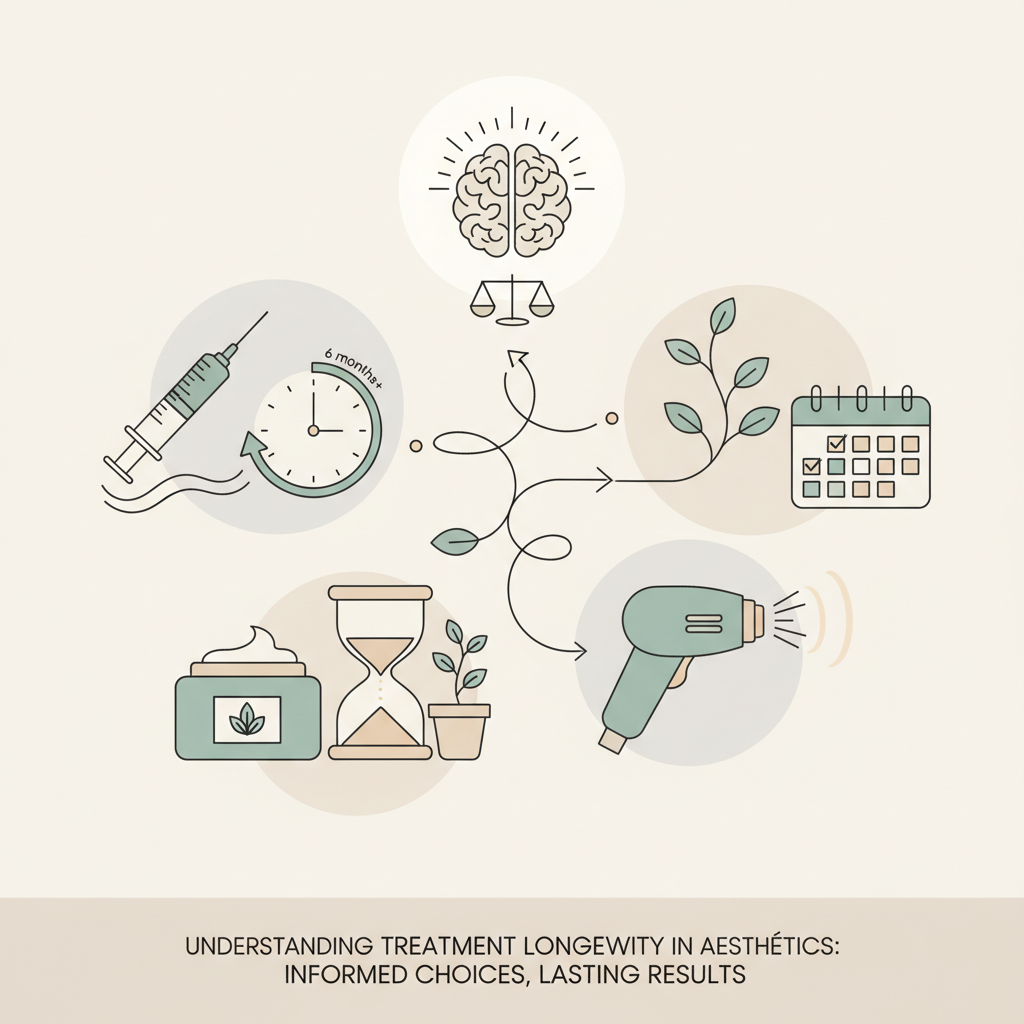
If you want to dive deeper into the timeline for non operative options, you can review how long do non surgical treatments last and for surgery focused questions, are surgical results more permanent.
Recovery, downtime, and lifestyle fit
Your schedule, responsibilities, and tolerance for downtime should strongly influence whether you lean surgical or non surgical.
Recovery after surgical procedures
Surgical procedures require more planning. You need time off for healing, support at home, and patience while swelling and bruising resolve. Recovery timelines vary by procedure:
- Liposuction typically needs about 6 weeks for full recovery, with return to work often in 2 to 3 weeks
- Tummy tuck has an initial recovery of around 3 weeks and can take up to 6 months for full healing, many return to work in about 2 weeks if their job is not physically demanding
- Breast augmentation and related surgeries often involve 6 to 8 weeks of recovery, though many patients resume work after about 1 week of initial rest
[7]
Facelifts and other facial operations often involve several weeks of swelling and bruising, which can affect how soon you feel comfortable in social or professional settings [8].
Recovery after non surgical treatments
Non surgical procedures are generally more compatible with full schedules and caregiving or career responsibilities. Botox, fillers, laser skin treatments, and non surgical rejuvenation often involve:
- Little to no downtime
- Mild swelling or redness that improves quickly
- Ability to return to work or childcare tasks the same day or the next day
[9]
Non surgical body contouring, such as CoolSculpting and EMSCULPT, typically has no formal downtime, although you usually need multiple sessions and results appear gradually over weeks to months [7].
If you are focused on reshaping your figure, comparing non surgical vs surgical body contouring can clarify what kind of recovery and schedule demands to expect.
Risk, safety, and medical considerations
Every cosmetic intervention carries some degree of risk. The question is not whether there is any risk, but what type of risk you are comfortable accepting.
Risks of surgical procedures
Surgical cosmetic procedures involve incisions, anesthesia, and longer operative times, so they carry higher rates of:
- Bleeding or blood clots
- Infection
- Scarring
- Nerve injury or changes in sensation
- Anesthesia related complications
These risks are well known and are one reason you are encouraged to work with board certified surgeons in accredited facilities [10]. Recovery downtime can range from several weeks to several months depending on the procedure and your health [11].
At the same time, many surgical cosmetic procedures have very high satisfaction rates. Breast augmentation, for example, has satisfaction above 95 percent, although a small percentage of people remain unhappy with their outcomes [12].
Risks of non surgical procedures
Non surgical treatments avoid general anesthesia and large incisions, so the risk of major infection, extensive scarring, or serious blood loss is usually lower [2]. However, they are not risk free. You can still experience:
- Bruising, swelling, or tenderness
- Allergic reactions
- Uneven results or overcorrection
- Temporary nerve irritation or pigment changes with some devices
Most side effects are mild and temporary, but complications that need follow up care or even correction are possible [8]. It is important to choose experienced providers for injectables and device based treatments, even though these services are not performed in an operating room.
For some patients, non surgical treatments feel like a safer way to start improving their appearance, especially when they have anxiety about anesthesia or scars. A 2023 study found that people choosing nonsurgical facial rejuvenation often did so because of concerns about surgery risks, downtime, cost, and scarring, and they valued the ability to spread treatments over time [13].
Cost and long term financial planning
Cost is not only about the price tag of a single visit. To compare surgical vs non surgical cosmetic procedures realistically, you need to think in terms of both short term affordability and long term maintenance.
Upfront costs
On a single visit basis, surgery is more expensive. For example:
- Traditional surgical facelifts often range from 7,000 to 15,000 dollars depending on surgeon expertise and complexity
- Non surgical facelift style treatments, using fillers and lasers, typically cost 1,500 to 4,500 dollars per session
[8]
Fillers themselves often fall in the 600 to 1,500 dollars per syringe range, and a full facial session might total 1,500 to 4,500 dollars depending on how many areas you treat [14].
Surgical procedures usually require paying for surgeon fees, anesthesia, facility costs, and postoperative care. Non surgical visits often involve only the product or device fee and the provider’s time. Insurance rarely covers either type of cosmetic procedure, so you should plan to pay out of pocket [12].
Long term cost comparison
Non surgical treatments are less expensive per visit, but they are temporary and require repeat sessions. Botox every 3 to 4 months and fillers every 6 to 18 months add up over five or ten years. One analysis estimated that combined filler and nonsurgical rejuvenation could easily total 15,000 to 30,000 dollars over 5 years and more than 40,000 dollars over a decade if you maintain regular sessions [14].
By contrast, a surgical facelift might cost 15,000 to 20,000 dollars in total and deliver over 10 years of results in a single operation [14]. When you spread those costs over a decade, surgery can actually become the more cost effective option for long term facial rejuvenation, even though the upfront investment is higher.
If long term value is one of your priorities, it can be useful to explore the best option for long term aesthetic results as part of your planning.
When you compare costs, think in 5 to 10 year windows, not just what fits on a single credit card swipe.
Matching procedures to your goals
The right choice depends on what you want to change, how quickly you want to see it, how long you want it to last, and how comfortable you are with surgery.
When non surgical options may fit best
Non surgical procedures often make sense if you:
- Want a subtle, natural looking refresh rather than a big change
- Have mild to moderate wrinkles, volume loss, or small contour concerns
- Need to avoid extended downtime due to work or caregiving
- Are preparing for a specific event and want improvements quickly
- Prefer to try something reversible or temporary before committing to surgery
Many people use nonsurgical treatments as a first step. A 2023 survey found that almost half of patients seeking total nonsurgical facial rejuvenation had already considered facelift surgery, and 44 percent still expected to consider a facelift later in life. This suggests that non surgical treatments are often seen as a temporary bridge, not a permanent substitute [13].
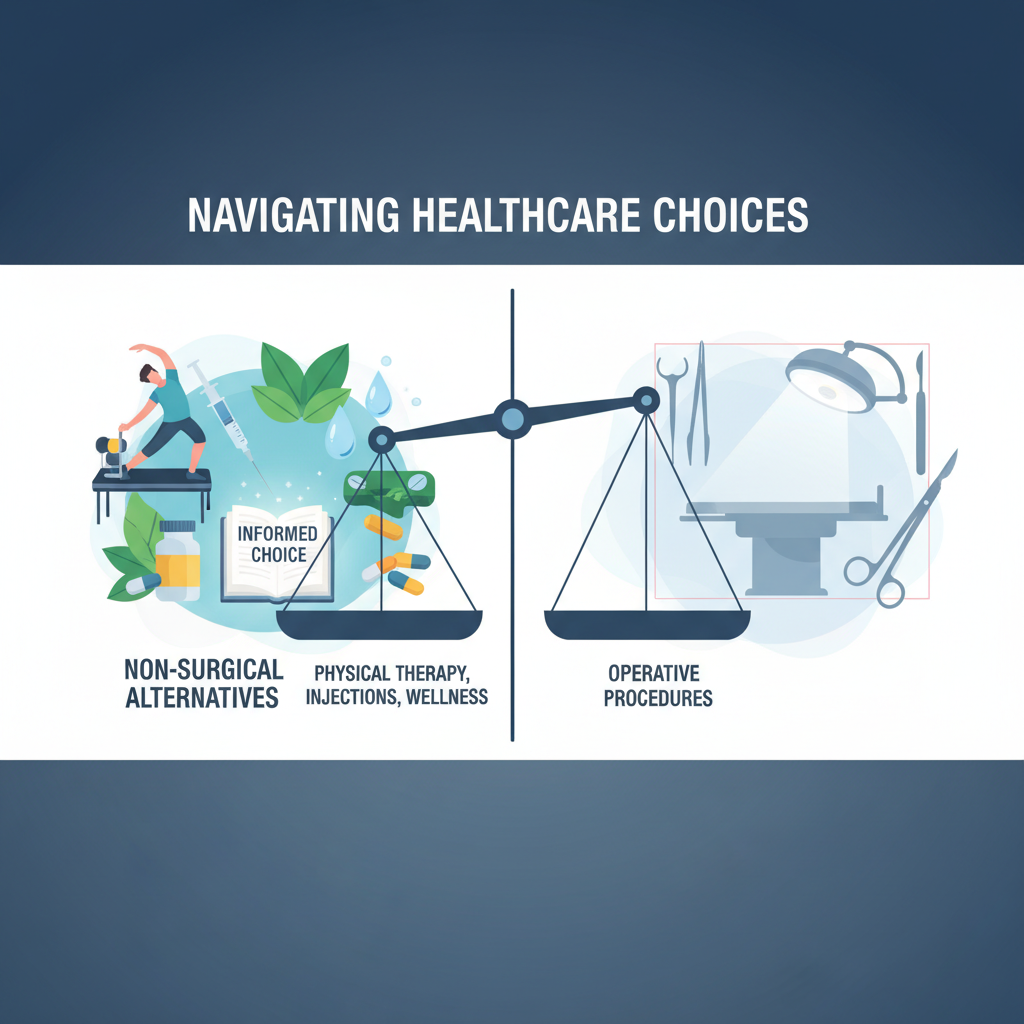
You can explore a range of non surgical alternatives to surgery explained if you are not ready to commit to the operating room.
When surgery may be the better choice
Surgery may align better with your needs if you:
- Have significant skin laxity, deep sagging, or strong jowls
- Want a major and lasting change in one procedure
- Are ready to accept several weeks of healing
- Prefer a one and done approach instead of ongoing maintenance visits
- Are comfortable with scars that are placed discreetly
For example, a facelift or neck lift can provide lifting and tightening that non surgical methods cannot fully reproduce, especially when aging is more advanced [4]. Over a decade, surgery often becomes more cost effective and delivers higher satisfaction for major facial rejuvenation [14].
For structured decision making around operations, you may find resources such as how to decide on cosmetic surgery and what to consider before cosmetic surgery especially useful.
Considering combination plans
You are not limited to choosing only surgery or only non surgical treatments. Many patients combine both approaches. It is common to have a facelift for comprehensive lifting and then use non surgical skin rejuvenation and injectables to maintain and refine results over time [2].
In fact, by 2025, about 78 percent of people undergoing surgical facelifts had a history of multiple years of non surgical facial treatments. Over a decade, those who eventually have surgery often discover that surgery provides more lasting value than continuing nonsurgical sessions alone [14].
The key is strategic planning. A well designed cosmetic treatment planning guide can help you map how non surgical steps, such as injectables or skin tightening devices, fit into a longer timeline that may also include surgery later on.
Comparing common scenarios
Different aesthetic goals lend themselves to different types of treatment. Here is a quick way to think through several common situations.
| Your main concern | Likely better starting point | Why |
|---|---|---|
| Early fine lines, mild volume loss | Non surgical | Botox, fillers, and lasers offer quick, subtle improvements with minimal downtime [3] |
| Deep jowls, heavy neck, significant sagging | Surgical | Facelift and neck lift can reposition deeper tissues in a way non surgical cannot long term [8] |
| Small pocket of stubborn fat, close to ideal weight | Non surgical body contouring | CoolSculpting or similar offer targeted fat reduction with no downtime but multiple sessions [7] |
| Large areas of excess fat or loose skin after weight loss | Surgical body contouring | Liposuction, tummy tuck, or body lift provide more comprehensive reshaping and skin removal [2] |
| Desire for permanent or decade long facial change | Surgical | A facelift or eyelid surgery can maintain improvements for many years [1] |
To go deeper into procedure comparisons, see how to compare cosmetic procedures and benefits of surgical vs non surgical treatments.
Planning with your provider
Plastic surgery and aesthetic medicine are not one size fits all. Working closely with a qualified professional helps you build a plan that respects both your goals and your future options.
Choosing the right specialist
Plastic surgeons are trained in both reconstructive and cosmetic procedures. Dermatologists, facial plastic surgeons, and other specialists also perform many cosmetic treatments. Whatever path you choose, look for:
- Board certification in a relevant specialty
- Experience with the specific procedure you are considering
- Before and after photos of patients with similar concerns
- A clear explanation of risks, benefits, and alternatives
Board certified surgeons are generally recommended to help maintain safety and quality outcomes [11].
Thinking ahead about future surgery
If you expect that you might want surgery later, discuss that possibility at the time you start non surgical treatments. Prior fillers, threads, and certain biostimulant products can increase tissue scarring and make later facelift procedures more difficult and potentially more risky [13].
Surgeons increasingly emphasize the importance of counseling patients about how early nonsurgical choices could affect future operations, so your treatment plan does not limit your options later in life [13]. Tools like understanding treatment longevity aesthetics and customizing cosmetic procedure plans can help you frame these conversations.
Bringing it all together
Choosing between surgical vs non surgical cosmetic procedures is not about deciding which category is better in general. It is about which approach fits your anatomy, your goals, your schedule, your risk comfort, and your long term plans.
If you want subtle, flexible changes with little downtime, non surgical treatments may be an excellent starting point. If you are seeking significant and long lasting transformation, surgery may better align with what you hope to achieve, even if it requires a larger upfront investment and more recovery. Many people ultimately benefit from a combination, using non surgical options to maintain and refine surgical results over time.
To continue narrowing your choices, you can explore which cosmetic procedure is right for me or how to choose the right aesthetic treatment. Taking the time to understand your options now gives you the best chance of choosing treatments that support your confidence and well being for years to come.
References
- (DrMonhian.com)
- (Arria MedSpa)
- (NOVA Plastic Surgery)
- (NOVA Plastic Surgery; Maryland Center for Facial Plastic Surgery)
- (DrMonhian.com; Maryland Center for Facial Plastic Surgery)
- (Arria MedSpa; NOVA Plastic Surgery; Esthetica Orange County)
- (capeplasticsurgery.com)
- (Maryland Center for Facial Plastic Surgery)
- (NOVA Plastic Surgery; DrMonhian.com)
- (Cleveland Clinic; Sanchez Plastic Surgery)
- (Cleveland Clinic)
- (Sanchez Plastic Surgery)
- (Plastic and Reconstructive Surgery Global Open)
- (Esthetica Orange County)