
What laser skin resurfacing facial really does
If you are exploring a laser skin resurfacing facial, you are probably looking for smoother texture, fewer lines, and a more even tone without committing to major surgery. Laser resurfacing uses focused light energy to remove or heat the outer layers of your skin and stimulate new collagen growth underneath. Over time, this helps soften wrinkles, refine scars, fade sun damage, and give your skin a tighter and more refreshed appearance [1].
It is a powerful treatment, but it is not magic. Recovery is real, results build gradually, and not every laser is right for every skin type. Understanding what truly happens during and after a laser skin resurfacing facial helps you set realistic expectations and choose the approach that fits your goals and your lifestyle.
Types of laser resurfacing you might be offered
When you come in for a consultation, you will hear different terms for laser skin resurfacing facials. All of them use energy to improve texture and tone, but they work at different depths and have different recovery profiles.
Ablative vs non ablative lasers
Most options fall into two broad categories:
- Ablative lasers remove a portion of the outer skin layer, or epidermis, and heat the deeper dermis to trigger collagen rebuilding. This approach creates more visible change but also demands more downtime and aftercare [2].
- Nonablative lasers keep the surface mostly intact and deliver heat into the deeper layers through controlled micro‑injury. They are gentler, usually involve less recovery time, and often require a series of treatments for best results [2].
Both ablative and nonablative techniques can use fractional technology, which treats microscopic columns of tissue instead of the entire surface. Fractional devices have become widely preferred because they shorten recovery and lower the risk of side effects while still improving texture and tone [2].
CO2, erbium, and fractional options
Within those categories, you will commonly see three laser types:
-
CO2 laser resurfacing
CO2 lasers have been used for years to treat deeper wrinkles, scars, warts, and some birthmarks. They typically require up to two weeks of healing after a full‑field treatment and can create significant tightening and texture change [1]. Fractional CO2 divides the beam into columns, which allows your skin to heal faster, but still comes with a meaningful recovery period. -
Erbium laser resurfacing
Erbium lasers are usually chosen for superficial to moderately deep wrinkles and surface irregularities. They tend to cause less swelling and redness compared with traditional CO2 and have a shorter recovery time, often about one week [1]. Erbium lasers can also be a better choice if you have a darker skin tone. -
Fractional nonablative lasers
Fractional nonablative lasers create narrow columns of controlled injury while leaving surrounding tissue intact. This pattern allows faster healing and can tighten skin with a lower risk of complicated healing or scarring [1]. You typically need several sessions, spaced weeks apart, to achieve a meaningful change [2].
During your visit, your provider will walk through which category aligns with your goals, your tolerance for downtime, and whether you are combining laser with other advanced skincare aesthetic services.
What a laser resurfacing facial can and cannot do
A laser skin resurfacing facial is one of the most effective non surgical tools for improving the look and feel of your skin, but it has clear limits. Going into treatment with an accurate picture of what it can achieve will help you feel more confident about your decision.
Improvements you can realistically expect
Laser resurfacing targets several common concerns at once. Depending on the laser type, treatment settings, and your skin condition, you may notice:
- Smoother fine lines and some deeper wrinkles
- Softening of acne scars and other shallow scars
- More even pigmentation and fewer age spots or sun spots
- Reduced roughness and “crepey” texture
- A subtle tightening effect on mildly lax skin [3]
As your skin heals and collagen remodels, your complexion usually looks brighter and more refined, and makeup goes on more smoothly. Many patients describe their face as looking more refreshed and youthful rather than “operated on,” which makes laser resurfacing a strong foundation for non surgical facial rejuvenation.
Limitations you should know about
Although the word “resurfacing” sounds comprehensive, lasers do not correct everything. It is important to know that:
- Lasers cannot fix major sagging or jowling. Significant skin laxity usually requires surgical procedures like a facelift or neck lift. Laser resurfacing can complement, but not replace, those surgeries [4].
- Very deep folds, such as pronounced nasolabial creases, may need fillers or fat transfer in addition to resurfacing.
- If your skin is very dark (Fitzpatrick types 5 or 6), your risk of post‑inflammatory discoloration and keloid scarring is higher, so many aggressive ablative lasers are not recommended [5]. Alternative options like radiofrequency skin tightening treatment, microneedling with prp therapy, or chemical peel for acne scars may be safer and better suited to your skin.
Having a board‑certified plastic surgeon oversee your non surgical plan gives you an honest assessment of when lasers will help and when surgical or injectable options will deliver a better outcome [6].
Are you a good candidate
You may be a strong candidate for a laser skin resurfacing facial if you have:
- Fine lines or moderate wrinkles around your eyes, mouth, or forehead
- Mild to moderate acne scarring or textural acne changes
- Sun damage with blotchy tone or age spots
- “Crepey” or rough skin texture that does not improve with skincare alone
- Residual surface irregularities after a facelift or eyelid surgery [5]
You need to be in good general health, free of active skin infections, and prepared to follow detailed aftercare instructions. If you have a history of keloids, very dark skin, or certain autoimmune or connective tissue disorders, your provider may suggest gentler resurfacing or a different modality.
During your consultation, you can also discuss how laser fits into a larger custom facial rejuvenation program that might include prp and exosome facial enhancement, collagen stimulating facial therapies, or skin tightening without surgery.
What happens during the procedure
Most laser skin resurfacing facials are performed in an outpatient setting. The exact steps depend on the laser type and treatment depth, but you can expect a structured process from preparation through treatment.
Before your appointment
You will typically receive guidance that may include:
- Pausing certain topical products such as retinoids and strong acids
- Avoiding tanning and rigorous sun exposure for several weeks
- Stopping smoking if possible, since it impairs healing
- Adjusting certain medications, under your physician’s direction, if they affect bleeding or healing
You may also be pretreated with antiviral medication if you are prone to cold sores, since lasers can trigger flares.
Day of your laser facial
On the day of treatment, your skin is cleansed thoroughly and protective eye shields are placed. For lighter nonablative or fractional treatments, a topical numbing cream is usually sufficient. Deeper ablative resurfacing may use injected local anesthesia, oral medications, or even sedation in a controlled setting, depending on the extent of treatment.
The procedure itself can take anywhere from 30 minutes to about two hours. Ablative full‑face resurfacing tends to be on the longer end, while more focused or fractional nonablative sessions are shorter [2].
You will feel heat and sometimes a mild stinging sensation as the laser pulses across your skin. Cooling devices, air flow, and post‑treatment soothing products are used to improve comfort.
The first 24 to 72 hours after laser
The most significant part of laser skin resurfacing facial recovery is in the first few days. Your skin will not look like it did after a facial at a spa, so it is important to be prepared.
Immediate sensations and appearance
Right after treatment, your face usually feels like it has a moderate to intense sunburn. It may be:
- Red or pink
- Swollen
- Warm or hot to the touch
- Itchy or slightly stinging [7]
With more aggressive ablative treatments, your skin can appear raw in some areas and may ooze a yellowish fluid that then forms a crust. Blistering can occur, especially at higher settings [7]. It is crucial not to scratch, pick, or peel crusts, because that can lead to scarring or infection.
Early home care
You will be given specific instructions, but in general you can expect to:
- Clean the treated areas several times a day with a gentle solution
- Apply prescribed ointments or occlusive moisturizers to keep the surface from drying out
- Use cold compresses as recommended to reduce heat and swelling
- Sleep with your head elevated for a day or two to help swelling resolve
Nonablative or fractional sessions usually involve less dramatic changes. You may see redness and mild swelling that resemble a sunburn for a few hours to a couple of days [2].
Healing timelines for different lasers
Your recovery time depends on the device, the settings used, and your own healing response. Knowing typical time frames can help you plan time away from work and social events.
In many cases, your skin will be covered with new tissue within 7 to 10 days, but the deeper healing and color changes can continue for weeks to months [8].
Ablative and fractional ablative recovery
For traditional full‑field CO2 resurfacing, healing usually takes up to two weeks for the surface to re‑epithelialize, meaning new skin covers the treated areas [9]. Erbium laser resurfacing typically requires about one full week for initial recovery [1].
Fractional CO2 treatments often heal a bit faster, sometimes in about a week, because untreated skin between the microscopic columns helps speed repair [1].
Even after the surface closes, your skin can remain pink or red for two to three months and in some cases longer. If you have very fair hair or skin, redness can persist up to a year before fully normalizing [7].
Nonablative fractional recovery
Nonablative fractional lasers usually involve much shorter downtime. Swelling and color changes can last from a few hours to a couple of days, and many people are comfortable returning to work within 24 to 48 hours [2].
Since they are gentler, these lasers typically require a series of two to four sessions spaced weeks apart to reach a similar endpoint, but the tradeoff is a softer, more flexible recovery schedule [2].
Long term aftercare and sun protection
How you care for your skin in the weeks and months after a laser skin resurfacing facial can influence your final result as much as the procedure itself.
Protecting new skin
Newly resurfaced skin is more vulnerable to irritation and sun damage. For at least several weeks, you should:
- Avoid direct midday sun and seek shade whenever possible
- Wear a broad‑brimmed hat and UV protective clothing when outside
- Use a broad‑spectrum SPF 30 or higher sunscreen every day once your provider clears you to apply it, and reapply regularly [5]
- Stay away from tanning beds and self‑tanners unless your provider approves specific products
You will also be advised to avoid harsh scrubs, retinoids, and strong acids until your skin is fully healed. Gentle, fragrance‑free cleansers and moisturizers are usually best.
Managing color changes
Redness and mild hyperpigmentation or hypopigmentation are common during early healing. In most cases, color gradually normalizes over two to three months, although subtle changes can take longer, especially after deeper ablative work [7].
If you have a history of melasma or post‑inflammatory pigmentation, your provider may recommend preventative topical treatments or schedule adjunctive therapies, such as ipl photofacial treatment for pigment or hydrafacial brightening treatment and oxygen facial for skin renewal for ongoing support.
Risks, side effects, and how they are managed
Every medical procedure carries some risk, and laser resurfacing is no exception. Understanding potential side effects will help you know what is normal and when to contact your provider.
Common and expected short term effects include:
- Redness, swelling, itching, and a “sunburned” feeling
- Crusting or oozing with more aggressive treatments
- Peeling and flaking for up to 21 days as damaged skin sheds [10]
Less common but more serious complications can include infection, scarring, persistent changes in skin color, and prolonged redness. Your risk is influenced by your skin type, the laser used, your medical history, and how closely you follow aftercare instructions.
Working with a board‑certified plastic surgeon and a medically supervised medspa team helps you weigh these risks properly and have a clear plan to minimize them [6].
Costs, treatment series, and how long results last
The cost of a laser skin resurfacing facial varies by device, treatment depth, and geographic region. In 2020, the average cost in the United States was approximately 2,509 dollars for ablative procedures and 1,445 dollars for nonablative treatments, and these numbers do not usually include facility or anesthesia fees [5]. Because the procedure is considered cosmetic, insurance typically does not cover it unless it is used for medically indicated scar revision or removal of precancerous growths.
You may need only a single ablative session for a major improvement because it penetrates deeply and triggers strong collagen remodeling [2]. Fractional nonablative and fractional ablative treatments usually require two to four sessions, spaced weeks or months apart, to build results gradually [2].
Once collagen has remodeled, your improvements can last for years. However, your skin will still age and respond to sun and environmental exposure. Consistent sunscreen use, a medical‑grade skincare routine, and periodic maintenance treatments like dermaplaning and exfoliation service, skin renewal and hydration facial, or light medical grade chemical peel treatment can help you preserve your investment.
Integrating laser with medspa and surgical care
If you are considering laser in the context of cosmetic surgery, timing and coordination matter. Laser resurfacing can refine the surface of your skin after procedures such as facelifts, eyelid surgery, or fat transfer, but it needs to be integrated carefully into your overall plan.
You might use laser:
- Before surgery, to improve texture and pigmentation and give your surgeon healthier tissue to work with
- After surgery, once incisions are fully healed, to smooth residual fine lines and sun damage that surgery alone cannot correct
- Instead of surgery, when your main concerns are superficial rather than structural
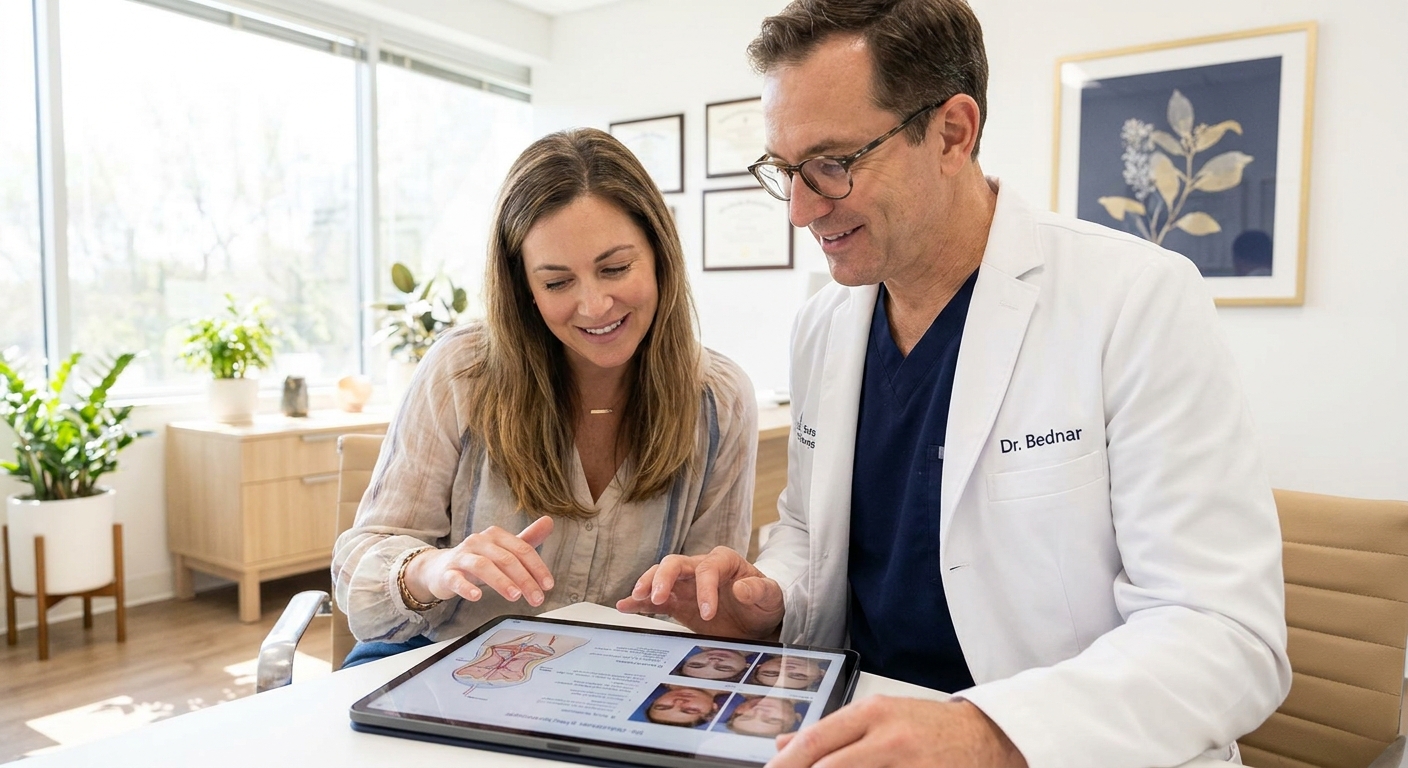
Dr. Bednar’s medspa division is designed to bridge this gap. You can combine laser resurfacing with complementary options such as non surgical body contouring, facial contouring non surgical options, or anti aging medspa services to create a cohesive skin resurfacing and restoration strategy that fits your goals, your schedule, and your tolerance for downtime.
Choosing between laser and other non surgical options
Laser resurfacing is one part of a broader toolkit for non surgical rejuvenation. In some situations, another treatment may better fit your needs, or a combination may give you the most balanced result with manageable recovery.
You might lean toward:
- Laser resurfacing, if texture, wrinkles, and sun damage are your primary concerns and you are able to accept some downtime
- Microneedling with prp therapy, if you want collagen stimulation and scar improvement with minimal recovery and have a darker skin tone
- Radiofrequency skin tightening treatment, if mild to moderate laxity bothers you more than surface pigment or fine lines
- Ipl photofacial treatment, if you are mainly concerned about redness and brown spots and prefer a gentler approach
- Hydrafacial brightening treatment or oxygen facial for skin renewal, if you want a no‑downtime refresh and ongoing maintenance rather than a single intensive procedure
In many cases, layering treatments over time as part of a thoughtful custom facial rejuvenation program gives you a more natural result than relying on any single procedure.
Putting it all together
A laser skin resurfacing facial is a sophisticated medical treatment that can significantly improve wrinkles, scars, and sun damage by precisely removing or heating the outer skin layers and stimulating new collagen [1]. Recovery can range from a few hours of redness to two weeks or more of healing, followed by months of gradual color normalization, so planning and realistic expectations are essential [7].
By working with a board‑certified plastic surgeon and an integrated medspa team, you can decide whether an ablative, fractional, or nonablative approach is right for you, how to coordinate laser with any surgical procedures, and which supportive treatments from our non surgical facial rejuvenation menu will help you heal well and maintain your results. With the right plan, laser resurfacing becomes not just a one‑time event, but a strategic step in your long term skin health and aesthetic goals.
References
- (Cleveland Clinic)
- (Mayo Clinic)
- (American Society of Plastic Surgeons, Cleveland Clinic)
- (Mayo Clinic, American Society of Plastic Surgeons)
- (WebMD)
- (American Society of Plastic Surgeons)
- (American Society of Plastic Surgeons)
- (American Society of Plastic Surgeons, Mayo Clinic)
- (Cleveland Clinic, American Society of Plastic Surgeons)
- (American Society of Plastic Surgeons, WebMD)