
Understanding skin resurfacing and restoration
If you are looking for a noticeable refresh without surgery, skin resurfacing and restoration treatments can help you smooth texture, even pigment, and soften fine lines. These techniques target the outer and sometimes deeper layers of your skin to remove damage and stimulate new collagen so your complexion looks firmer and more radiant.
Medical authorities describe laser skin resurfacing as a procedure that uses concentrated beams of light to remove damaged outer skin, normalize pigmentation, and trigger new collagen and elastin production in the dermis for smoother, brighter skin without incisions or stitches [1]. Many of the same goals can be achieved with chemical peels, microneedling, microdermabrasion, and other medspa services, which are especially helpful if you want non surgical or preventive care.
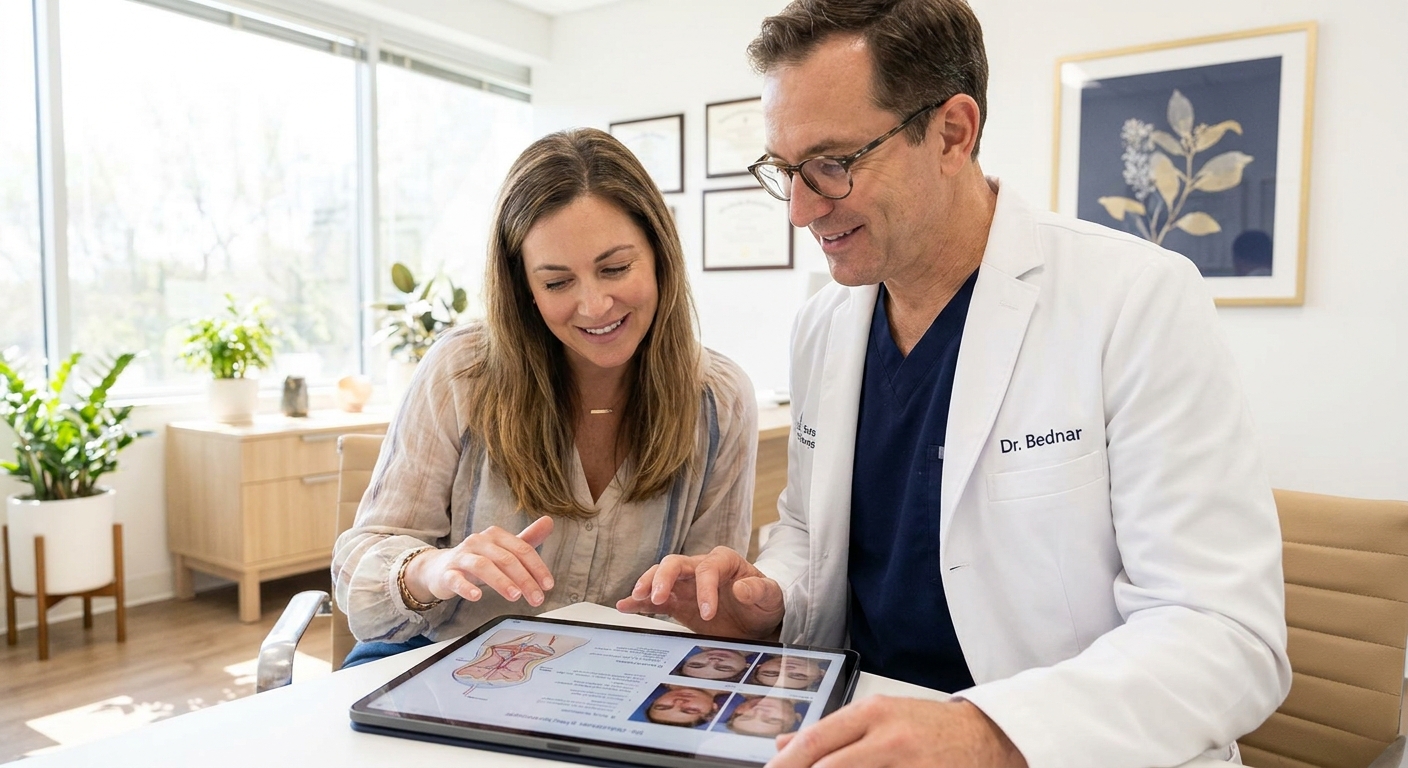
At Dr. Bednar’s medspa, non surgical treatments like laser rejuvenation, microneedling, and radiofrequency skin tightening are designed to complement and maintain surgical results, or to stand alone when you want improvement without downtime. Understanding your options helps you choose the right combination for your skin and your timeline.
How resurfacing fits your aesthetic plan
Skin resurfacing and restoration can support different stages of your cosmetic journey. You might use these treatments to prepare your skin before surgery, to enhance and maintain a surgical result, or to delay surgery altogether by focusing on quality, tone, and texture.
Resurfacing focuses on issues like fine lines, discoloration, enlarged pores, and mild to moderate acne or surgical scarring. It does not replace procedures that correct significant sagging or volume loss, since energy devices and peels cannot lift tissues in the same way as surgery [2]. For that reason, your ideal plan often combines high quality skin treatments with structural procedures when needed.
You also have preventive options. A thoughtful schedule of anti aging medspa services can slow visible aging, help you protect your investment in cosmetic surgery, and keep your skin healthier long term.
Laser skin resurfacing options
Laser technologies are among the most powerful tools for skin resurfacing and restoration. They use energy to remove or heat targeted layers of your skin, which encourages collagen remodeling and new cell growth.
Ablative vs non ablative lasers
Laser resurfacing treatments are broadly divided into ablative and non ablative approaches.
Ablative lasers remove the epidermis and heat the underlying dermis. This stimulates collagen production and can dramatically smooth wrinkles and scars with a single session in many cases [2]. CO2 and erbium lasers are the most common types. Ablative procedures usually involve more downtime but also more dramatic improvement.
Non ablative lasers do not remove the skin surface. Instead, they heat the deeper tissue to stimulate collagen growth with little to no peeling. Results build gradually over a series of sessions, with very short recovery times and milder side effects [2]. These are often a good fit if you want subtle improvement and minimal interruption to your routine.
Fractional technology, used in both ablative and non ablative devices, treats microscopic columns of skin while leaving surrounding tissue intact. This approach shortens healing time and reduces the risk of side effects, which is why fractional lasers are widely preferred today [2].
CO2, erbium, and fractional CO2
CO2 lasers target deeper concerns like pronounced wrinkles, scars, warts, birthmarks, and certain growths, with typical recovery of up to two weeks for full healing [3]. Fractional CO2 devices create narrow columns of injury that contract collagen and tighten skin while leaving untreated skin in between, which allows faster healing, but they can still carry a higher risk of complex healing and scarring in some patients [3].
Erbium laser resurfacing is often used for superficial to moderately deep lines and wrinkles. It causes less thermal injury to surrounding tissue, which means fewer side effects such as swelling and redness and a shorter recovery of about one week. Erbium can also be more suitable for darker skin tones in many cases [3].
If you are interested in a focused facial treatment, a laser skin resurfacing facial can be tailored to the depth of correction you need and the time you have for healing.
What you can expect from laser resurfacing
Ablative laser sessions usually last 30 minutes to two hours depending on the treatment area [2]. After the procedure, your skin typically looks and feels sunburned. New skin covers the treated area in about 7 to 10 days, and complete healing can take at least a month. Redness may linger, especially with deeper treatments, and sun protection is critical throughout this period.
Non ablative and fractional non ablative treatments involve mild swelling or color changes that often resolve within hours, with little to no downtime [2]. To achieve a visible improvement, you usually plan a series of 2 to 4 sessions, spaced weeks or months apart.
Across laser modalities, early improvement is often visible soon after your skin heals, with continued collagen remodeling for up to a year and benefits that can last several years when you protect your skin from the sun [3].
Chemical peels for texture and tone
Chemical peels are a cornerstone of skin resurfacing and restoration. A carefully chosen solution is applied to your skin to dissolve controlled layers of damaged tissue so that fresher, more even skin can replace it.
According to the American Board of Cosmetic Surgery, light peels remove portions of the epidermis with mild acids and usually involve minimal or no downtime. Medium and deep peels penetrate into the dermis to address more stubborn wrinkles, marked sun damage, and significant acne scars. These deeper treatments often require anesthesia and several days of healing time [4].
If acne marks are one of your main concerns, a chemical peel for acne scars can be selected to specifically soften post inflammatory pigmentation and shallow pitted scars. For broader rejuvenation, a medical grade chemical peel treatment can be customized to your skin type and goals.
Peels are especially effective when you are seeking to improve:
- Fine lines around the eyes and mouth
- Irregular pigmentation and sun spots
- Mild to moderate acne and post acne discoloration
- Overall dullness and rough texture
Your provider can also integrate peels into a custom facial rejuvenation program so that they coordinate with other treatments like microneedling or light based therapies.
Microneedling and collagen stimulation
Microneedling is another highly versatile option for skin resurfacing and restoration. Using a device with very fine needles, your provider creates microscopic channels in your skin that stimulate natural healing responses. This process increases collagen and elastin production and encourages new, healthier skin cells to replace damaged ones.
The American Board of Cosmetic Surgery notes that microneedling is safe for all skin types, including darker tones, and does not require a peeling period or formal downtime, although multiple sessions are usually needed for optimal results [4]. It can soften fine lines, mild acne scars, and textural irregularities while maintaining your regular schedule.
When platelet rich plasma or regenerative exosomes are added, the growth factors further amplify healing and collagen synthesis. You can explore these options through microneedling with prp therapy and prp and exosome facial enhancement.
Microneedling fits particularly well into a plan that aims for steady, natural change. It is also one of the most adaptable collagen stimulating facial therapies, and it pairs effectively with energy based modalities and peels for comprehensive results.
Radiofrequency and non surgical tightening
If mild laxity is one of your concerns, radiofrequency devices can help tighten and firm your skin without incisions. These treatments deliver focused heat to the deeper dermis, causing collagen fibers to contract and signaling your body to build new collagen over time.
Radiofrequency is part of a larger category of skin tightening without surgery. It offers gradual improvement in jawline definition, neck firmness, or crepey skin on the body. You can learn more about these options through radiofrequency skin tightening treatment.
This same technology forms an important bridge between purely cosmetic spa facials and surgical tightening. A thoughtful plan may use radiofrequency to maintain the result of a facelift or body lift or to postpone the need for surgery when your laxity is still mild.
If you have concerns about body contour as well as skin quality, you can also explore non surgical body contouring, which targets stubborn fat while many tightening devices focus on the overlying skin.
Light based treatments for pigment and redness
Intense pulsed light and similar technologies are especially valuable when your primary goals relate to uneven pigment, sun damage, or visible vessels rather than deeper wrinkles or laxity.
IPL is not a laser, but it delivers pulses of broad spectrum light that target redness and brown spots. This improves overall color and clarity and can support your resurfacing results by treating pigment that may not respond as directly to structural procedures. Fractional lasers and non ablative resurfacing are also effective for many types of discoloration [2].
If you want focused work on sun spots, broken capillaries, or diffuse redness, an ipl photofacial treatment can be incorporated into your plan. It is often performed as a series and has little to no downtime, which makes it easier to maintain regularly.
Gentle exfoliation and hydrating facials
Not every step in skin resurfacing and restoration has to be aggressive. Consistent, gentle treatments help you maintain results from more intensive procedures and keep your skin barrier healthy.
Options such as:
- Dermaplaning and exfoliation service to remove dead cells and fine vellus hair
- Hydrafacial brightening treatment to cleanse, exfoliate, and infuse targeted serums
- Oxygen facial for skin renewal to support circulation and radiance
- Skin renewal and hydration facial for barrier support and moisture balance
all work together to preserve your investment in more advanced procedures. They can also serve as an introduction to professional care if you are not ready for lasers or peels but want more than topical products.
When you combine these services within advanced skincare aesthetic services, you create a maintenance framework that keeps your skin resilient between larger interventions.
Post treatment care and recovery essentials
Regardless of which skin resurfacing and restoration method you choose, your aftercare has a major impact on your final result and on how smoothly you heal.
Dermatology sources emphasize several consistent principles:
- Follow the specific post procedure instructions your provider gives you. This is critical for optimal healing after lasers, peels, or microdermabrasion [5].
- Keep the treated area clean with gentle cleansers to help prevent infection and support your skin barrier [5].
- Use fragrance free moisturizers with soothing ingredients such as hyaluronic acid, glycerin, and ceramides. This restores moisture and calms sensitivity as you heal [5].
You should avoid harsh products containing retinoids, alpha hydroxy acids, alcohol, fragrances, or strong exfoliants until your provider clears you, since they can trigger irritation or delay healing [5]. This includes peels, waxes, or additional laser sessions for at least two weeks while the skin is inflamed [6].
Makeup and heavy topical creams can clog pores and further irritate newly treated skin. If you must use them, apply sparingly and monitor for any reaction [6].
Sun protection is non negotiable
After any resurfacing or restoration procedure, your skin is more vulnerable to UV damage. You should:
- Avoid direct sun exposure for at least seven days while the barrier is compromised
- Apply broad spectrum sunscreen with SPF 30 or higher every day
- Reapply frequently, even during brief outdoor exposures
- Use hats, clothing, and shade for extra protection
These steps help prevent pigmentation changes, slow down aging, and preserve the improvement you gain from your treatments [7].
Consistent, gentle aftercare often makes as much difference as the procedure itself in how your skin ultimately looks and feels.
Creating your personalized rejuvenation plan
The most effective approach to skin resurfacing and restoration is individualized. Your age, skin type, pigment pattern, medical history, and tolerance for downtime all influence which options are appropriate.
A board certified dermatologist or experienced aesthetic physician can evaluate not only cosmetic concerns like wrinkles or scars, but also underlying issues such as early skin cancers or chronic sun damage. This level of assessment allows you to address medical and aesthetic needs at the same time, which is more thorough than spa based treatments alone [6].
Within Dr. Bednar’s medspa division, your plan can include:
- Non surgical resurfacing, such as non surgical facial rejuvenation
- Targeted structural enhancements through facial contouring non surgical options
- Ongoing support via a custom facial rejuvenation program
These services are designed to integrate seamlessly with surgical procedures when needed. For example, you may undergo laser resurfacing to refine fine lines after a facelift or choose radiofrequency tightening to maintain lift and contour. You may also decide to start with medspa services alone to improve your skin now and keep future surgical options open.
If you want a comprehensive approach, you can also explore bundled advanced skincare aesthetic services that combine several modalities into a structured pathway. This helps you move from corrective work to maintenance in a clear and predictable way.
By aligning your resurfacing choices with your lifestyle, tolerance for downtime, and long term goals, you can build a plan that keeps your skin healthier, smoother, and more luminous over time.