

Understanding microneedling with PRP therapy
If you are looking for a non surgical way to refresh your skin, microneedling with PRP therapy can be a powerful option. Sometimes called a “vampire facial,” this treatment combines collagen induction microneedling with your own platelet rich plasma to support natural healing and rejuvenation.
Microneedling uses tiny, sterile needles to create controlled micro injuries in the skin. These channels stimulate your body to produce new collagen and elastin, which are the structural proteins that keep your skin firm, smooth, and resilient [1]. When your provider adds PRP, they apply a concentrated layer of your own platelets and growth factors over the microneedled skin, which can further encourage tissue repair and regeneration.
You can use microneedling with PRP therapy as a standalone treatment or as part of a broader plan that may include options such as laser skin resurfacing facial or radiofrequency skin tightening treatment. This makes it a flexible choice whether you are preparing for cosmetic surgery, maintaining your results afterward, or simply trying to slow visible signs of aging.
How microneedling and PRP work together
The microneedling component
On its own, microneedling, also known as collagen induction therapy, relies on a simple principle. By creating many tiny, controlled punctures with needles that typically range from 0.5 to 1.5 millimeters in length, your provider triggers a wound healing cascade in the skin. This process stimulates fresh collagen and elastin production and supports dermal remodeling, which can improve texture, fine lines, and scars [2].
Microneedling has been used to address:
- Acne scarring
- Sun damage and photodamage
- Surgical or traumatic scars
- Enlarged pores
- Fine lines and wrinkles
- Stretch marks and textural irregularities
Because microneedling does not use heat, it is considered safe across all skin colors and types, and it does not affect pigment the way some light or energy based devices can [2].
The role of PRP
Platelet rich plasma therapy is a way of concentrating and reusing your own blood components to support healing. Your provider draws a small amount of blood, places it in a centrifuge, and separates out the platelet rich fraction. These platelets are packed with growth factors that signal cell repair and new tissue formation. When applied to microneedled skin, PRP can accelerate the healing response and enhance collagen production [1].
PRP is used in many areas of medicine and aesthetics, including facial rejuvenation, improvement of acne scars, and treatment of some types of hair loss. Since it comes from your own blood, PRP tends to carry a low risk of allergic or immune reaction, although it is still important to confirm that you are a good candidate and to review your medical history carefully [3].
Why combining microneedling with PRP is powerful
When you combine microneedling with PRP therapy, you are pairing mechanical stimulation of the skin with a concentrated supply of your own healing signals. The microchannels created by the needles provide direct access for PRP to reach deeper layers of the dermis, where it can interact with fibroblasts and other cells involved in collagen and elastin production.
Multiple studies and clinical reports suggest that microneedling with PRP often produces more significant improvements in texture, scars, and pigmentation than microneedling alone. For example, one study of patients with acne scars found that microneedling with distilled water improved scars by about 46 percent, while microneedling with PRP improved them by roughly 62 percent, with no lasting side effects reported [4].
For you, this synergy can translate into smoother skin, more even tone, and a firmer overall appearance in fewer sessions, particularly if you have more pronounced texture concerns.
Skin concerns microneedling with PRP can address
Microneedling with PRP therapy is considered a versatile treatment. If you are trying to decide whether it could be helpful for your specific concerns, it may be useful to look at the range of issues it can target.
Acne scars and surgical scars
Atrophic acne scars, such as boxcar and rolling scars, form when collagen is lost in the healing process, leaving depressions in the skin. Microneedling encourages new collagen to fill in these areas. Adding PRP can enhance this effect and may speed your response over a series of treatments [2].
Surgical or traumatic scars can also respond to the same remodeling process. While no treatment can erase a scar completely, you may see it blend more smoothly with the surrounding skin and become less noticeable over time.
If you are comparing options for scar treatment, you might also want to review chemical peel for acne scars or broader skin resurfacing and restoration services to understand how each approach fits your skin type and recovery goals.
Fine lines, wrinkles, and early laxity
As you age, collagen and elastin production naturally decline. This leads to fine lines, creases, and a subtle loss of firmness. Microneedling with PRP can help by signaling your skin to build new support structures. Patients often report improvements in:
- Crow’s feet and under eye lines
- Fine lines on the cheeks and forehead
- Lip lines and early perioral wrinkles
If you are working on a comprehensive anti aging plan, you can combine microneedling with PRP with other collagen stimulating facial therapies or anti aging medspa services, depending on how aggressive you would like to be and what kind of downtime you can accommodate.
Pigmentation, sun damage, and overall tone
Sun exposure can create uneven tone, brown spots, and a dull or leathery texture. By promoting cell turnover and dermal remodeling, microneedling with PRP may soften the appearance of sun damage and mild hyperpigmentation, especially when paired with a medical grade skincare routine. Some patients will also consider treatments such as ipl photofacial treatment or hydrafacial brightening treatment for a more pigment focused approach.
Pores, texture, and stretch marks
If you are frustrated by enlarged pores or a rough texture that makes makeup sit unevenly, microneedling with PRP can gradually smooth the skin surface. The same principles apply to some types of stretch marks and textural changes on the body, though your provider will need to assess whether your specific areas and skin type are suitable for treatment.
For overall refinement and glow, you may also benefit from pairing microneedling with dermaplaning and exfoliation service or oxygen facial for skin renewal in a staged plan.
What to expect during the procedure
Understanding what happens during microneedling with PRP therapy can help you feel more comfortable when you arrive for your appointment.
Step 1: Consultation and treatment planning
Before your first session, you will typically meet with a provider to review your medical history, medications, and specific concerns. This is the time to discuss any conditions that might affect your candidacy, including recent isotretinoin (Accutane) use, active infections, bleeding or clotting disorders, certain cancers, or pregnancy and breastfeeding, since these can make PRP or microneedling unsuitable for you [5].
If you are also considering other non surgical options such as skin tightening without surgery or non surgical facial rejuvenation, this consultation is a good opportunity to map out the sequence of treatments so they support each other instead of overlapping.
Step 2: Numbing and blood draw
On the day of treatment, a topical numbing cream is applied to the area that will be treated. While this is taking effect, a small blood sample is drawn from your arm, similar to a standard lab draw. The blood is processed in a centrifuge to separate and concentrate the platelet rich plasma.
Most patients describe the numbed microneedling sensation as feeling like sandpaper moving across the skin, with some areas more sensitive than others [3].
Step 3: Microneedling and PRP application
Once your skin is numb and the PRP is ready, your provider will:
- Cleanse your skin thoroughly.
- Apply PRP to the treatment area.
- Use a microneedling device to move systematically across your face, neck, or other targeted regions.
The microneedling pen or roller creates micro channels while helping to push PRP deeper into the skin. In some protocols, additional PRP is layered onto the surface after microneedling. In others, PRP may also be injected more deeply into specific areas such as the tear troughs or cheeks.
Many practices add LED light therapy at the end of the session to further support healing and collagen stimulation [6].
A typical appointment lasts 30 to 60 minutes, depending on the area treated and the specific protocol your provider uses [7].
Step 4: Immediate recovery
Right after treatment, your skin will look red and may feel warm or tight, similar to a sunburn. Mild swelling and pinpoint bleeding can occur, especially in sensitive areas. Most patients describe several hours of stinging or heat, followed by a few days of dryness and flaking as the skin begins to repair itself [6].
Most people can return to work or normal light activities within a day, as long as you are comfortable with some temporary redness. More intensive exercise, heat exposure, and direct sun should usually be avoided for several days based on your provider’s instructions [7].
Results, timing, and treatment series
Microneedling with PRP therapy does not offer an instant change in the way that fillers or neuromodulators can. Instead, it encourages gradual remodeling from within, which tends to look natural and continues to improve over time.
You can typically expect:
- Early improvements in texture and brightness within 2 to 3 weeks
- More noticeable changes in tone, fine lines, and acne scars by 4 to 6 weeks
- Continued subtle gains for several months, particularly for scar remodeling [8]
Most treatment plans involve a series spaced 4 to 6 weeks apart. A common framework is:
- 2 to 3 sessions for mild texture concerns and early aging changes
- 3 to 6 sessions for more significant scarring or deeper lines [2]
Results are not permanent, since collagen continues to break down naturally with age. Maintenance treatments every several months can help you preserve the improvements you see [9]. Integrating microneedling with PRP into a broader custom facial rejuvenation program often yields the most consistent long term outcome.
Used strategically, microneedling with PRP can act as a bridge between basic skincare and more aggressive procedures, and it can also extend and enhance the results of cosmetic surgery or energy based treatments.
Safety, risks, and how to protect yourself
Any procedure that breaks the skin carries some level of risk, even when it is minimally invasive. Being aware of these possibilities allows you to make a more informed decision.
Common and expected side effects
Typical and temporary effects after microneedling with PRP include:
- Redness and mild swelling
- Warmth or stinging similar to a sunburn
- Minor bruising, especially near injection sites
- Dryness, flaking, or light peeling several days later
Most of these resolve within 3 to 5 days for facial treatments, depending on needle depth and your skin’s sensitivity [4].
Less common but important risks
Less frequent complications that have been reported with microneedling and PRP include:
- Post inflammatory hyperpigmentation, especially in darker skin types, if aftercare and sun protection are not followed carefully
- “Tram track” or linear scarring from improper needle angle or excessive pressure
- Local or systemic allergic reactions related to topical agents or needle materials, such as nickel sensitivity
- Infection if equipment is not sterile or if aftercare instructions are not followed adequately [10]
Adverse events with PRP are usually mild, such as transient pain, redness, swelling, itching, or bruising. Severe complications are very rare, but there are isolated reports of serious events when PRP is injected in high risk anatomical areas by non expert providers, which underscores the importance of training and safety protocols [10].
FDA guidance and why provider choice matters
The United States Food and Drug Administration has cleared certain microneedling devices for improving facial acne scars, facial wrinkles, and abdominal scars in adults. However, no devices are specifically cleared for use in combination with PRP or other topical products, and the safety and effectiveness of these combinations have not been formally evaluated by the agency [11].
Because of this, the FDA recommends that you:
- Choose a healthcare provider who is specially trained in microneedling
- Make sure sterile, single use needles and appropriate infection control measures are used
- Discuss all products that will be applied during and after treatment
- Report any unexpected or serious side effects through the FDA MedWatch program if they occur [11]
Taking the time to verify your provider’s credentials and experience is one of the most effective ways to reduce your risk and improve your results.
How microneedling with PRP fits into your overall plan
Microneedling with PRP therapy does not occur in isolation. You will usually see the best outcome when it is integrated into a coordinated approach to skin health.
Before and after cosmetic surgery
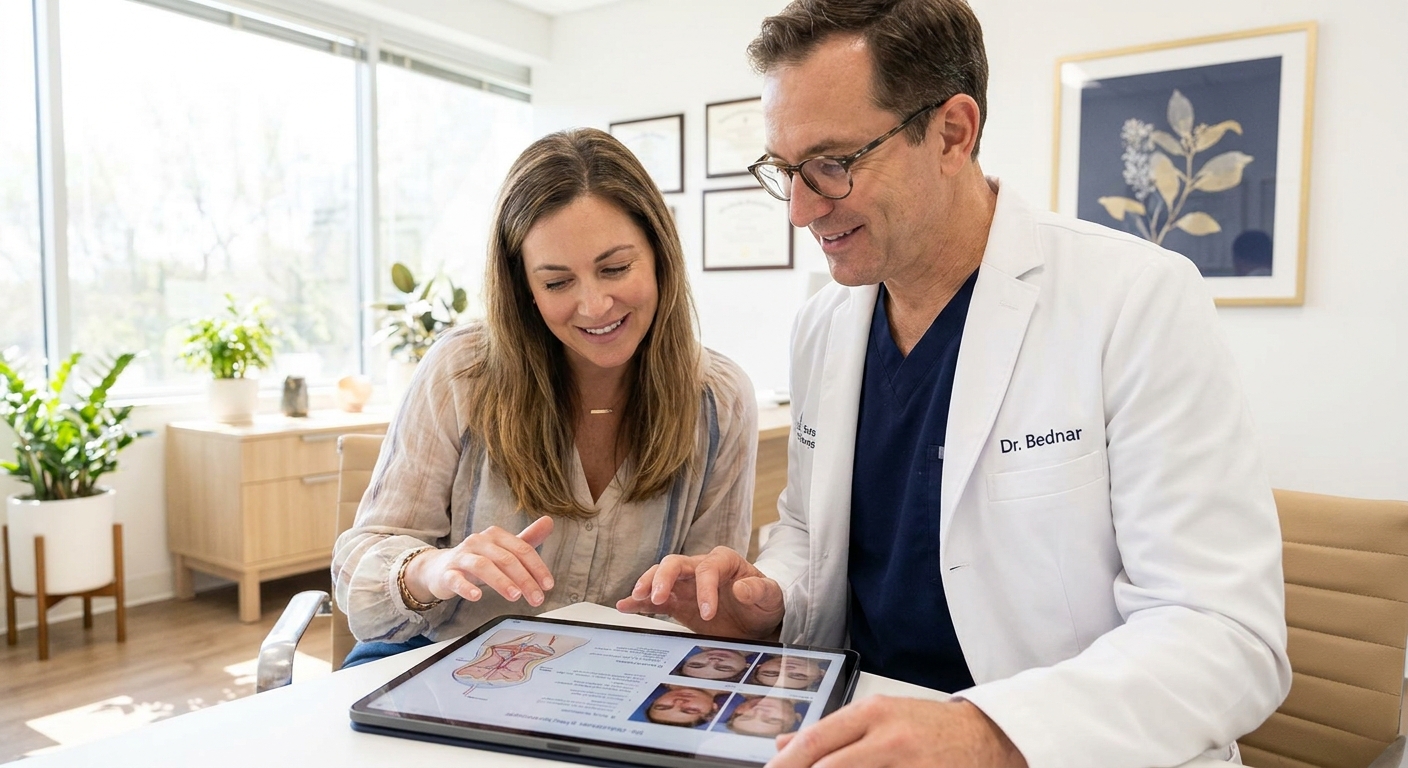
If you are planning or have recently had a facial procedure with Dr. Bednar or another surgeon, microneedling with PRP can often be scheduled in a way that supports your results. Before surgery, it can improve skin quality and elasticity, which can help your tissues respond better to surgical manipulation. After surgery, once cleared by your surgeon, it can maintain texture, limit fine lines, and address scars in a gradual and controlled way.
Your medspa team can tailor a protocol that complements your procedure and timeline, rather than competing with it.
Combining with other non surgical treatments
Many patients combine microneedling with PRP with selected medspa services to target different layers of aging and skin quality. Depending on your skin and goals, you might consider:
- Radiofrequency skin tightening treatment or skin tightening without surgery for deeper collagen contraction and lift
- Laser skin resurfacing facial or skin resurfacing and restoration for more intensive correction of lines and pigmentation
- Hydrafacial brightening treatment or skin renewal and hydration facial for maintenance between more intensive sessions
- PRP and exosome facial enhancement if you are exploring additional biologic therapies
If you are also addressing body contour or laxity, you may want to coordinate your facial plan with non surgical body contouring or facial contouring non surgical options for a more complete aesthetic result.
Choosing the right sequence
The ideal order and spacing of treatments will depend on:
- The primary issues you want to address first
- Your available downtime and schedule
- Any upcoming events or surgery dates
- Your tolerance for temporary redness or peeling
Working with a practice that offers a full range of advanced skincare aesthetic services allows you to build a stepwise, personalized plan instead of relying on a single modality.
Is microneedling with PRP therapy right for you?
Microneedling with PRP therapy can be a strong option if you:
- Want noticeable but natural looking improvement in texture and tone
- Prefer a minimally invasive procedure with relatively short downtime
- Are seeking to enhance or maintain surgical results
- Have realistic expectations about gradual, cumulative change rather than instant transformation
It may not be appropriate if you are pregnant or breastfeeding, have certain medical conditions, active skin infections, or a history of abnormal scarring or wound healing. A consultation with a qualified provider, ideally one familiar with both surgical and non surgical rejuvenation, is the best way to determine your candidacy [12].
If you are ready to explore how microneedling with PRP could fit into your own custom facial rejuvenation program, you can start by outlining your top concerns and your timeline. This gives your provider a clear framework to design a plan that respects your goals, schedule, and comfort level while making full use of the medspa treatments available to you.
References
- (Vitalogy Skincare)
- (Advanced Dermatology & Skin Surgery)
- (Beauty Boost Med Spa)
- (Medical News Today)
- (Advanced Dermatology & Skin Surgery, Medical News Today)
- (Byrdie)
- (Vitalogy Skincare, Surgical Associates)
- (Vitalogy Skincare, Advanced Dermatology & Skin Surgery, Surgical Associates)
- (Surgical Associates)
- (Plastic Surgery Key)
- (FDA)
- (Medical News Today, Advanced Dermatology & Skin Surgery)