
Exploring fat transfer refinement
As you explore fat transfer post liposuction refinement, you are considering a procedure that combines targeted fat removal with autologous fat grafting to sculpt and rejuvenate your silhouette. This approach not only slims trouble spots but also redeploys your own fat cells as natural filler, offering a smoother, more balanced contour. Pioneered by Dr. Bednar and perfected through his proprietary AlloClae techniques, this regenerative fat transfer procedure exemplifies safety, artistry, and lasting benefits.
In this article, you’ll learn what to expect before, during, and after refinement with fat grafting. We’ll cover candidacy criteria, surgical steps, recovery phases, expected outcomes, potential risks, and the advantages of choosing Dr. Bednar’s AlloClae solutions.
Evaluating candidacy criteria
Ideal candidate profile
Not everyone is an immediate candidate for refinement with fat grafting. Generally, you should:
- Be in good overall health, with stable weight and realistic expectations
- Have sufficient donor fat in areas such as the abdomen, hips, or thighs
- Avoid smoking or commit to quitting before and after surgery
- Be free of uncontrolled diabetes or other conditions that impair healing
Board-certified cosmetic surgeons assess your goals and anatomy to confirm adequate fat reserves. Candidates must be in general good health and have enough fat for the desired transfer [1].
Preoperative considerations
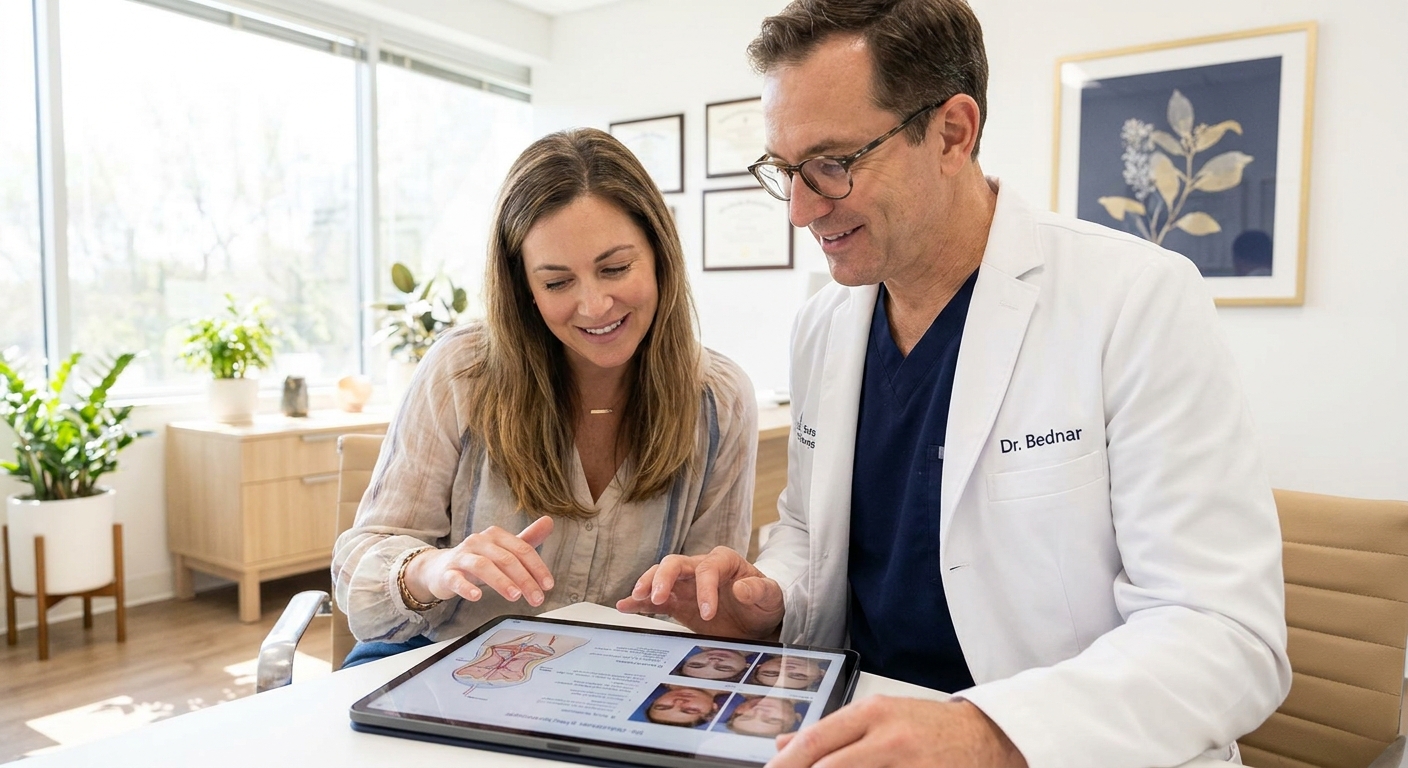
During your consultation, Dr. Bednar’s team will:
- Review your medical history and previous surgeries
- Perform a physical exam to identify suitable harvest and recipient sites
- Discuss any prior liposuction, which can affect donor areas [2]
- Outline preparation steps, such as lab tests, medication adjustments, and lifestyle changes
By planning carefully, you and your surgeon create an individualized plan that maximizes safety and results.
Detailing procedural steps
Preoperative preparation
Before surgery, you’ll receive clear instructions on:
- Fasting and medication management
- Avoiding blood thinners and certain supplements
- Arranging transportation and post-op care support
- Wearing loose clothing on the day of the procedure
Proper preparation lays the groundwork for a smoother operative and recovery experience.
Liposuction and fat harvesting
Using advanced liposuction techniques, Dr. Bednar removes fat deposits from areas such as the belly, thighs, or flanks to create a smoother, more contoured appearance. These methods minimize bleeding and scarring by employing the fat equalization technique, which reduces the risk of bumps, ripples, or contour irregularities [3].
Fat purification and reinjection
Once harvested, your fat is purified through gentle centrifugation or filtration to isolate healthy fat cells. The purified fat is then carefully injected into target areas—such as the buttocks, face, or décolletage—to restore volume and define contours. This minimally invasive reinjection creates balanced, natural-looking results without synthetic implants.
AlloClae proprietary approach
Dr. Bednar’s AlloClae regenerative filler treatment builds on standard fat grafting by:
- Using specialized tools to preserve cell viability
- Applying patented techniques for precise placement and layering
- Customizing graft volumes for artful sculpting
This innovation enhances graft survival, reduces complications, and accelerates recovery compared with traditional methods.
Navigating recovery phases
Recovery from combined liposuction and fat transfer involves caring for both donor and recipient sites. Below is a typical timeline:
| Phase | Timeline | Care recommendations | Visible improvements |
|---|---|---|---|
| Immediate postoperative | Days 1–7 | – Wear compression garments 24/7 except bathing – Take prescribed pain and anti-inflammatory medications – Rest with treated areas elevated |
Swelling and bruising peak days 2–3 |
| Early healing | Weeks 2–6 | – Continue compression as directed – Gentle walking or stretching encouraged – Monitor for signs of infection |
Decrease in bruising; initial contour refinement |
| Integration period | Months 3–6 | – Gradually resume more vigorous exercise after clearance – Maintain stable weight and healthy diet – Follow up with surgeon for progress checks |
Final volume stabilizes; grafted fat integrates |
Compression garments support even healing and prevent fluid build-up at both harvest and injection sites [4]. Good nutrition, hydration, and smoking cessation further enhance graft survival [5].
Tips for optimal recovery
- Adhere strictly to post-op instructions
- Wear compression garments as recommended
- Eat a protein-rich, nutrient-dense diet
- Stay hydrated and avoid alcohol
- Track daily progress and report concerns promptly
Assessing long-term results
Permanence and maintenance
Surviving fat cells behave like native fat, expanding or shrinking with weight fluctuations. Final results typically appear by six months, though subtle improvements may continue up to a year [2]. Maintaining a stable weight and healthy lifestyle helps preserve your refined contours.
Comparing to implants and fillers
| Feature | Fat transfer | Silicone implants | Dermal fillers |
|---|---|---|---|
| Natural material | Yes | No | No |
| Allergenic risk | Low | Moderate | Moderate |
| Longevity | Permanent (partial resorption) | Long-term | 6–18 months |
| Invasiveness | Moderate | High | Low |
| Downtime | 1–2 weeks | 2–4 weeks | 1–2 days |
| Revision flexibility | High | Moderate | Moderate |
Fat grafting offers a natural alternative for procedures such as breast enhancement without implants or natural lip enhancement with fat transfer, reducing reliance on foreign materials.
Understanding potential risks
Common complications
While generally safe, refinement with autologous fat grafting carries possible complications:
- Hematoma or seroma formation
- Fat necrosis leading to lumps
- Infection or dermatitis
- Asymmetry, especially in larger graft volumes
- Minor contour irregularities
In a study of 396 patients undergoing facial and body fat grafting, 27.8 percent experienced complications, with 10.9 percent classified as major (including hematomas, fat necrosis, and infection) [6]. Most issues resolved with conservative management.
Risk reduction strategies
To minimize complications:
- Choose a board-certified surgeon with specialized expertise
- Follow pre- and post-operative guidelines meticulously
- Maintain stable weight and avoid smoking
- Attend all follow-up visits for early issue detection
Dr. Bednar’s decades of experience and the AlloClae platform further reduce risk by emphasizing surgical precision and regenerative principles.
Choosing AlloClae solutions
Dr. Bednar’s expertise
As a pioneer in autologous fat transfer and cellular rejuvenation, Dr. Bednar has:
- Developed proprietary AlloClae techniques for improved cell viability
- Published research on regenerative aesthetic applications
- Helped thousands achieve natural, harmonious refinements
His artistic eye ensures that each graft enhances your unique anatomy.
Regenerative filler innovations
AlloClae solutions go beyond conventional fat grafting by integrating:
- Advanced purification systems to preserve regenerative cells
- Precision fat grafting for volume loss correction [7]
- Donor fat filler restoration methods to address scars and depressions [8]
Whether you seek a regenerative fat transfer procedure for the face or body, AlloClae offers tailored approaches that support lasting restoration.
Planning next steps
Preparing for consultation
When you book a consultation with Dr. Bednar’s office:
- Compile a list of goals and questions
- Review your medical history and any prior procedures
- Bring photos of areas you wish to refine
Early planning ensures a focused, efficient discussion about treatments like autologous fat transfer procedure or fat transfer for surgical revision correction.
Additional resources
Explore these relevant topics to learn more about regenerative fat grafting:
- Fat grafting surgery for face
- Facial fat injection treatment
- Fat transfer breast augmentation
- Breast contouring with fat grafting
- Fat grafting for hands and décolletage
- Natural body contouring with fat grafting
- Fat transfer for scar repair
Taking these steps will help you feel confident and informed as you pursue a natural, regenerative approach to enhancing your appearance.
Choosing fat transfer post liposuction refinement with Dr. Bednar’s AlloClae platform offers a safe, artful path to long-lasting, natural results. Schedule your consultation today to discover how autologous fat grafting can transform your contours and support your aesthetic goals.