
You’re looking for a natural, long-lasting way to refresh your appearance—one that uses your own tissue rather than synthetic implants or temporary fillers. Donor fat filler restoration taps into your body’s regenerative power, harvesting excess adipose cells and reintroducing them to areas that need volume or contour. This approach not only offers biocompatibility and minimal allergy risk but also promotes cellular rejuvenation for youthful, authentic results.
In this article, you’ll learn how donor fat filler restoration works, why it may be right for you, and what to expect from consultation through recovery. You’ll also discover proprietary innovations from Dr. Bednar, a pioneer in autologous fat transfer, including the AlloClae system that maximizes cell survival and delivers refined shaping.
Understanding donor fat filler restoration
What is donor fat filler restoration?
Donor fat filler restoration—also known as autologous fat grafting or fat transfer—is a procedure where your own fat is harvested from one area of your body and injected into another to restore volume, smooth contours, or rejuvenate skin. Unlike synthetic fillers, this method uses 100 percent biocompatible fat cells, reducing risk of allergic reaction and ensuring a soft, natural feel.
How it differs from implants and fillers
You might compare donor fat filler restoration with traditional breast implants or hyaluronic acid injections. The table below highlights key distinctions:
| Feature | Fat transfer | Breast implants | Synthetic fillers |
|---|---|---|---|
| Material | Your own fat cells | Silicone or saline | Synthetic polymers or gels |
| Biocompatibility | 100 % | High but foreign body | Possible immune response |
| Longevity | Potentially permanent | 10–20 years (implant lifespan) | 6–18 months |
| Natural feel | Soft, integrated | Firmer shell | Variable |
| Procedure invasiveness | Minimally to moderately invasive | Surgical incision and pocket creation | Office-based injections |
Benefits of natural fat filler
Biocompatibility and safety
By using your own tissue, you eliminate risks associated with foreign materials. Fat grafting procedures have a minimal allergy profile and no immunogenic response. When performed by an experienced plastic surgeon, fat transfer is considered safe [1].
Longevity of results
Fat cells that successfully establish a blood supply can remain in place for years or even a lifetime. Research suggests that 50–70 percent of transferred fat survives long term, providing stable volume restoration [2]. Over time, your own aging process—rather than filler breakdown—becomes the only factor altering your appearance.
Fat survival rates
- 50–70 percent average survival
- Final volume apparent after 3–6 months
- Possibility of touch-up session for larger areas
Natural aesthetic outcomes
Fat transfer does more than fill hollows. In the face, it can improve skin tone and texture by delivering adipose-derived regenerative cells that secrete growth factors [3]. You’ll notice softer contours and a refreshed glow without the overfilled look of some synthetic injectables. Learn more about facial rejuvenation with our alloclae facial rejuvenation procedure.
Key fat transfer steps
Harvesting donor fat
Your surgeon selects a donor site—commonly the abdomen, inner thighs, or flanks—where you have excess adipose tissue. Two main techniques include:
- Manual aspiration liposuction (MAL)
- Power-assisted liposuction (PAL)
Both methods use microcannulas to gently extract fat while preserving cellular integrity [4].
Common donor sites
- Abdomen
- Inner thighs
- Flanks
Harvesting techniques
- MAL: Gentle suction for intact fat clusters
- PAL: Oscillating cannula improves efficiency
Fat processing and purification
Once harvested, the lipoaspirate is cleansed of blood, oil, and fluid using centrifugation or filtration systems. This purification step concentrates viable adipocytes and stromal vascular cells, key players in long-term fat survival.
Strategic reinjection
Your surgeon injects processed fat in microdroplets across multiple tissue planes to optimize blood supply. Overcorrection—adding slightly more volume—accounts for initial resorption. Precision techniques minimize trauma and ensure smooth, natural contours. Explore our regenerative fat transfer procedure for detailed protocol.
Assessing candidacy and suitability
Suitable profiles
Ideal candidates for fat transfer:
- Have sufficient donor fat reserves
- Seek natural, minimally invasive enhancement
- Maintain stable weight
- Understand realistic outcome expectations
You may consider fat grafting for:
- Facial volume restoration [5]
- Breast contouring without implants [6]
- Body contouring enhancements [7]
Health assessment
Prior to treatment, your surgeon will review medical history, perform a physical exam, and evaluate:
- Cardiovascular health
- Bleeding or clotting disorders
- Smoking status (tobacco can impair healing)
- Realistic cosmetic goals
Risks and safety measures
Potential complications
Fat grafting is generally safe, but no procedure is risk-free. In a study of 396 patients, major complication rate was 10.9 percent (hematoma, fat necrosis, infection), while minor issues like asymmetry occurred in 14.4 percent of cases [8].
Common concerns include:
- Asymmetry or contour irregularity
- Infection or seroma
- Fat necrosis (firm nodules)
- Prolonged swelling
Minimizing risks
You can reduce complications by:
- Choosing a board-certified, experienced surgeon
- Following preoperative guidelines (e.g., no NSAIDs, tobacco cessation)
- Adhering to postoperative care instructions
- Attending all follow-up visits for early issue detection
Recovery and aftercare guidance
Postoperative expectations
After fat transfer, you may experience:
- Swelling and bruising for 1–2 weeks
- Mild discomfort at donor and recipient sites
- Initial overfilled appearance that settles within 3–6 months [1]
Most patients return to light activities within a few days and resume routine exercise after 2–4 weeks, based on your surgeon’s advice.
Tips for optimal healing
- Wear compression garments on donor site as directed
- Avoid pressure on grafted areas (e.g., sleeping positions)
- Keep incisions clean and dry
- Stay hydrated and maintain a balanced diet
- Gentle lymphatic massage if recommended
Selecting your treatment provider
Expertise and credentials
Your choice of surgeon is pivotal. Look for:
- Board certification in plastic surgery
- Proven track record with fat transfer cases
- Before-and-after galleries showcasing natural results
- Positive patient testimonials
AlloClae innovation by Dr. Bednar
Dr. Bednar is recognized as a pioneer in autologous fat transfer and regenerative restoration. His proprietary AlloClae system focuses on:
- Maximizing fat cell survival through refined harvesting and processing
- Precise microcannula reinjection for seamless blending with native tissue
- Customized protocols for facial and body applications
Discover Dr. Bednar’s signature approach in our alloclae regenerative filler treatment and alloclae body contouring solution.
Long-term maintenance strategies
Monitoring results
Schedule periodic follow-up visits to assess fat retention and overall symmetry. Photographic documentation helps track subtle changes over time.
Touch-up sessions
For larger areas—such as breasts or buttocks—you may opt for a secondary procedure to achieve ideal volume [9]. Touch-ups are typically simpler than the initial session and allow fine-tuning of contours.
Next steps and consultation
Questions to ask your surgeon
Prepare for your appointment by inquiring about:
- Your surgeon’s experience with fat grafting
- Specific complication and revision rates
- Details of their processing and reinjection techniques
- Expected timeline for final results
- Cost breakdown, including facility and anesthesia fees
Scheduling your appointment
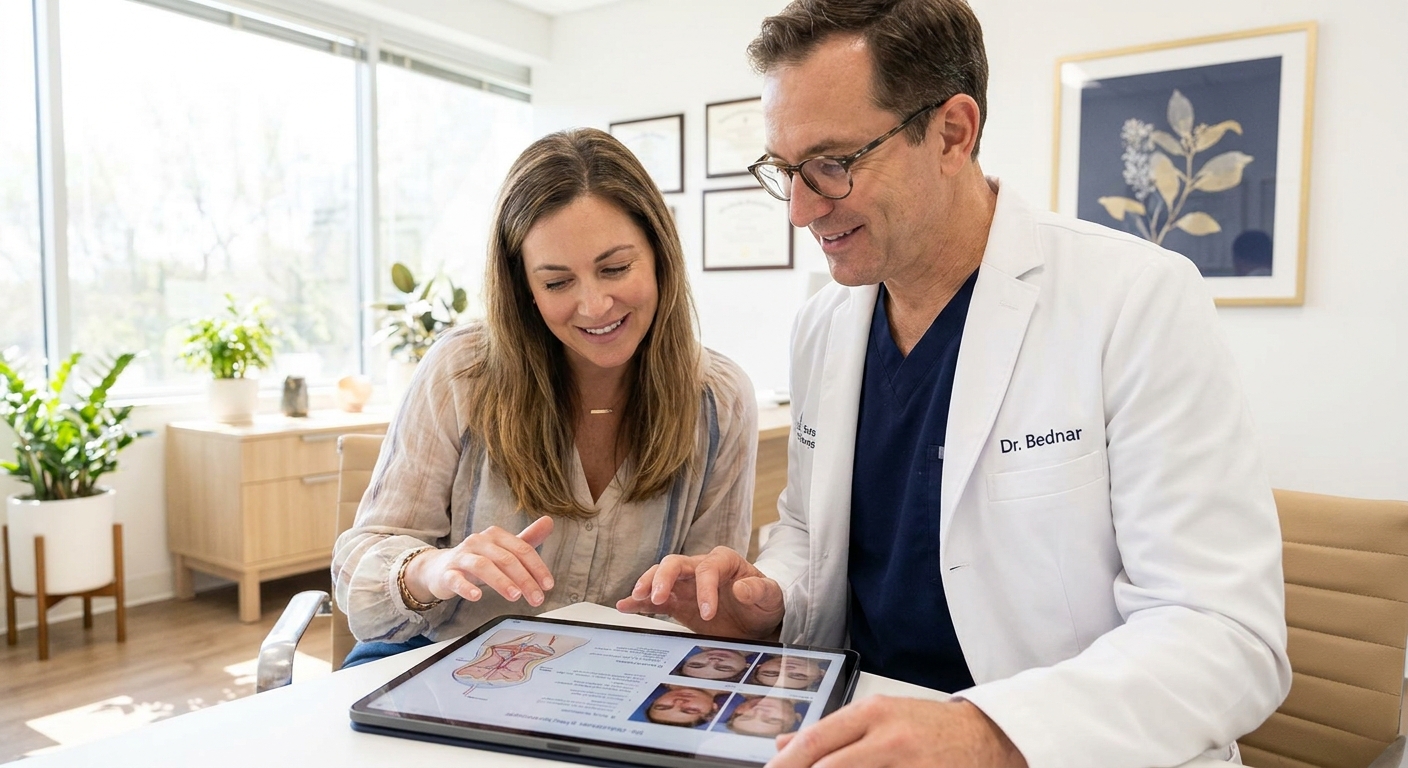
Ready to explore your own donor fat filler restoration journey? Contact Dr. Bednar’s office to arrange a consultation. You’ll receive a personalized treatment plan, answers to all your questions, and clear guidance on how to prepare for a safe, successful procedure.
Embrace the confidence of natural enhancement—harness your body’s own tissue for transformation that lasts.