

How ipl photofacial treatment works
If you are exploring non surgical options to refresh your skin, ipl photofacial treatment is one of the most versatile tools available. Intense pulsed light therapy uses controlled flashes of broad spectrum light to target unwanted pigment and redness in your skin while also stimulating collagen for smoother texture.
Unlike a traditional laser that delivers a single, focused wavelength, IPL uses multiple wavelengths filtered to reach specific chromophores such as melanin and hemoglobin. This allows one treatment to address brown spots, broken capillaries, and overall tone in a single session with minimal downtime [1].
The basics of IPL technology
During an IPL photofacial, a handheld device delivers pulses of light to your skin. That light energy is converted into heat within target cells, such as:
- Pigment cells that create brown spots and sun damage
- Dilated blood vessels that contribute to redness and visible capillaries
The heat breaks these cells down into tiny fragments that your body naturally clears or sheds over time, leading to a more even complexion [2]. At the same time, controlled thermal energy stimulates collagen production in the dermis, which gradually softens fine lines and improves firmness [3].
How IPL differs from lasers and other treatments
IPL photofacial therapy is considered a non ablative treatment, meaning it does not remove the top layer of skin. This is one reason downtime is relatively minimal compared with more aggressive resurfacing.
-
Compared with laser resurfacing: Fractional lasers such as Fraxel use a single wavelength and often require more recovery, with several days of visible peeling or crusting. IPL uses a broad spectrum of light and typically allows you to resume normal activities more quickly [4]. For deeper wrinkles or etched in lines, a laser skin resurfacing facial or other skin resurfacing and restoration option may be recommended instead of or in combination with IPL.
-
Compared with peels and facials: A medical grade chemical peel treatment and chemical peel for acne scars can be very effective for texture and pigment at the surface. IPL works from within the skin, targeting color irregularities and vascular changes. Hydrating treatments such as hydrafacial brightening treatment or oxygen facial for skin renewal can complement IPL by improving glow and barrier health.
-
Compared with collagen focused therapies: If your primary concern is laxity rather than discoloration, treatments focused on tightening and collagen, such as radiofrequency skin tightening treatment and skin tightening without surgery, or microneedling with prp therapy and other collagen stimulating facial therapies, may be integrated with or used instead of IPL.
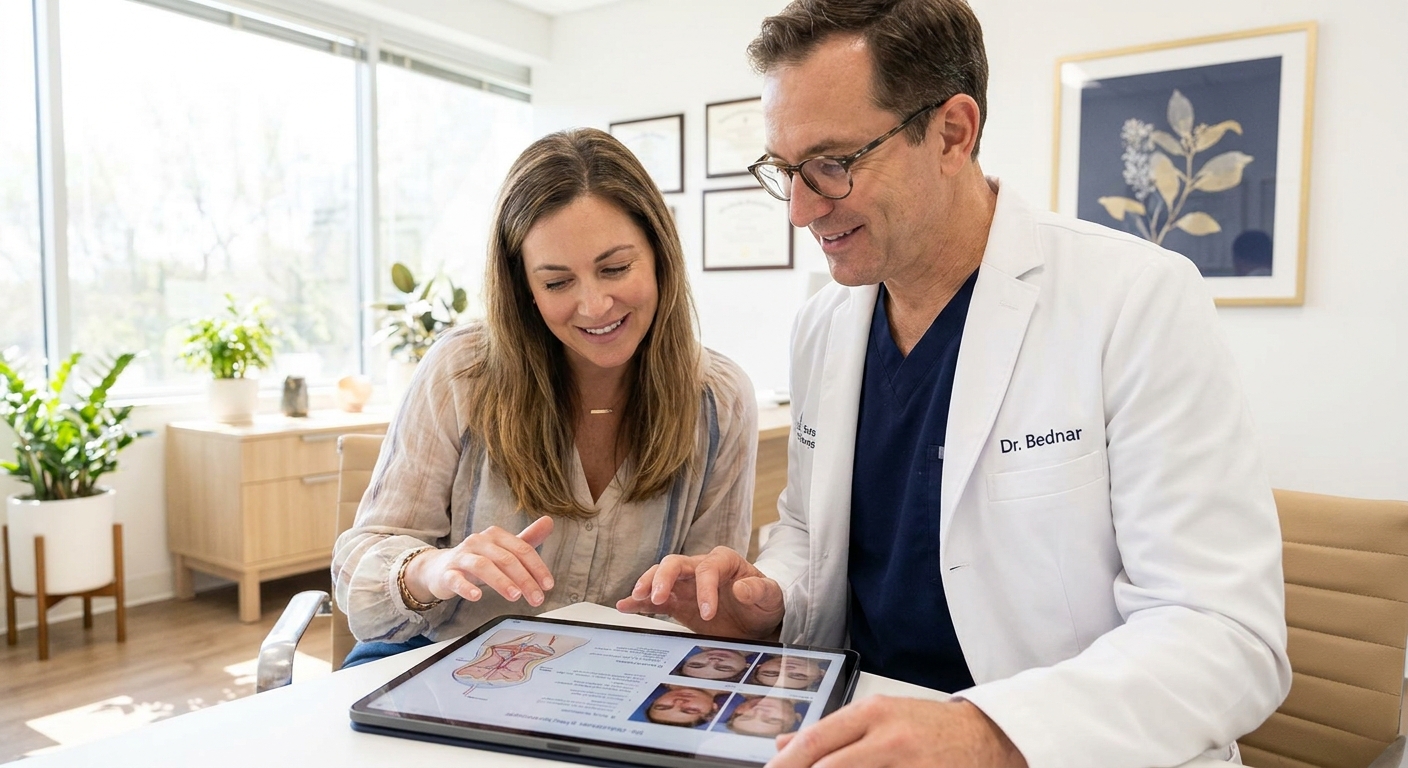
At Dr. Bednar’s medspa division, IPL is often combined thoughtfully with other advanced skincare aesthetic services to enhance or maintain surgical results and to provide a comprehensive custom facial rejuvenation program.
Skin concerns ipl photofacial treatment can improve
You might be considering IPL because you notice your skin looks uneven or older than you feel. IPL photofacial treatment is particularly effective for damage related to chronic sun exposure, also known as photoaging.
According to clinical experience and published guidance, IPL can help with a wide range of concerns [5].
Pigment and color irregularities
IPL targets pigment inside the skin, which makes it a strong option if you are bothered by:
- Sun spots, age spots, and lentigines
- Freckles that have darkened over time
- General mottled discoloration on the face, neck, chest, or hands
By heating melanin in these spots, the treatment breaks pigment into small particles that your body gradually eliminates. Brown patches often look darker for several days as they rise to the surface and then flake or fade over about one week [2].
Redness, vessels, and rosacea related changes
If you struggle with persistent facial redness, flushing, or visible vessels around your nose, cheeks, or chin, IPL can target the hemoglobin within those small blood vessels. Over a series of treatments, this can:
- Reduce background redness
- Minimize visible broken capillaries
- Improve rosacea related facial discoloration
IPL will not cure rosacea, but it can lessen symptoms and visible redness by strengthening the skin and reducing the appearance of dilated vessels [3].
Texture, fine lines, and early aging
Because IPL stimulates collagen in the dermis, it can modestly improve:
- Fine lines and early wrinkles
- Mild roughness or crepey texture
- Overall dullness associated with photoaging
If your main priority is deeper lines or structural changes, combining IPL with a non surgical facial rejuvenation plan, such as facial contouring non surgical options and anti aging medspa services, can produce more comprehensive results.
Acne and post inflammatory marks
Multiple IPL sessions can improve some acne related issues by reducing redness and pigment leftover from healed blemishes. In certain protocols, IPL has also been shown to significantly improve active acne by targeting bacteria and inflammation [1]. For more pronounced acne scarring or textural change, your provider may recommend pairing IPL with treatments like microneedling with prp therapy or a targeted skin resurfacing and restoration approach.
Ideal candidacy for IPL photofacial treatment
Not every skin type responds to IPL in the same way. Being a good candidate is one of the most important predictors of a safe, satisfying outcome.
Skin tone and type
IPL is best suited for lighter complexions, generally Fitzpatrick skin types I through III, and in some cases type IV. In these skin tones, there is enough contrast between the unwanted pigment or redness and your baseline skin tone to target chromophores safely [6].
Multiple expert sources caution that IPL is usually not recommended if you have:
- Darker skin tones (deeper Fitzpatrick IV, V, or VI)
- A history of melasma or significant post inflammatory hyperpigmentation
In these situations, there is a higher risk of unwanted darkening or hypopigmentation because the treatment light also interacts with normal surrounding melanin [7]. If this describes your skin, your provider may guide you toward alternative options, such as a carefully tailored medical grade chemical peel treatment, dermaplaning and exfoliation service, or skin renewal and hydration facial.
Skin health and medical history
You are more likely to be a good candidate if:
- Your skin is generally healthy, without active infection, open wounds, or severe eczema in the treatment area
- You are not currently using photosensitizing medications that significantly increase light sensitivity
- You are not pregnant and you do not have an uncontrolled medical condition that would interfere with healing
Conditions such as a history of keloids, very recent tanning, or certain pigment disorders may shift your treatment plan. A board certified facial plastic surgeon or experienced aesthetic provider should carefully evaluate your skin, review your medications, and take a detailed history before recommending IPL [8].
Timing with surgery and other procedures
If you are planning or have already undergone cosmetic surgery, IPL can be used strategically to maintain and refine your results. Many patients choose to:
- Undergo IPL before surgery to clear surface discoloration and optimize skin quality
- Schedule IPL in the months after surgery, once healing is complete, to address lingering redness or sun damage and to support a comprehensive rejuvenation plan
Dr. Bednar’s integrated medspa model allows your surgical and non surgical care to be coordinated so your non surgical facial rejuvenation treatments align with long term goals.
What to expect during an IPL photofacial
Understanding the treatment experience can help you feel more confident and prepared.
Before your session
You will typically be asked to:
- Avoid tanning and self tanners for several weeks prior to treatment
- Pause retinoids, glycolic acids, or other strong exfoliants according to your provider’s instructions
- Apply daily broad spectrum SPF and limit sun exposure
At your appointment, your provider will cleanse the area and may apply a cooling gel. You will wear eye protection throughout the procedure to shield your eyes from the light.
During treatment
A typical IPL photofacial session lasts about 20 to 30 minutes, depending on the size of the area treated [9].
You can expect:
- A series of bright flashes as the device moves across your skin
- Sensations often described as a warm snap or quick rubber band flick
- Occasional areas of increased sensitivity, especially near bony structures
Most patients find the treatment very tolerable. If you are concerned about discomfort, a topical anesthetic or additional cooling can be discussed.
After your session
Right after treatment, you may notice:
- Redness similar to a mild sunburn
- Slight swelling or warmth in the treated areas
These effects are usually mild and resolve within hours to 48 hours [10]. Brown spots might darken and feel slightly rough before flaking off over about a week, which is a normal part of the process [2].
Most people are comfortable applying makeup the next day and returning to work and social activities promptly [11].
Treatment course, results, and longevity
IPL results build gradually. A single session can create a visible difference, but a series is usually needed for best outcomes.
How many sessions you may need
Several reputable sources recommend a series of treatments:
- WebMD notes that 3 to 7 treatments spaced 2 to 4 weeks apart are typical [1]
- Other practices find that at least 3 sessions about 4 weeks apart provide optimal improvement [12]
The exact number will depend on your concerns, baseline skin, and how your skin responds to each treatment.
When you see changes
You may notice early brightening and mild tone improvement within several days. Pigmented lesions generally darken then peel or fade within the first week. More global improvements in redness, tone, and fine lines usually become more apparent over several weeks and after multiple sessions.
Peak aesthetic results are often observed about two weeks after the final session in a treatment series [2].
How long results last
Results from IPL are long lasting but not permanent, because your skin continues to age and is exposed to new sun damage over time.
- Many patients enjoy improvements for 6 to 12 months, particularly with diligent sun protection [13]
- Maintenance treatments once or twice a year are commonly recommended to preserve clarity and address new pigment or vessels as they develop [11]
In an integrated program, maintenance IPL can be paired with periodic skin renewal and hydration facial, hydrafacial brightening treatment, or collagen stimulating facial therapies to support long term skin health.
IPL does not stop aging. Instead, it resets visible damage from the past and gives you a healthier baseline to maintain with daily care and periodic professional treatments.
Risks, side effects, and how to minimize them
Any energy based procedure carries some risk, but in skilled hands IPL photofacial treatment has a strong safety profile and serious complications are rare.
Common, expected effects
Short term side effects that most patients experience to some degree include:
- Redness that resembles a mild sunburn
- Temporary swelling or tenderness
- Darkening and flaking of brown spots
- Mild bruising in certain vascular areas
These usually resolve within a few days and are often considered a sign that the treatment targeted pigment or vessels effectively [14].
Less common but more serious risks
More significant issues are uncommon but can include:
- Blistering or superficial burns
- Infection
- Persistent redness or sensitivity
- Scarring
- Hyperpigmentation or hypopigmentation, especially in darker skin tones or recently tanned skin [15]
Long term side effects are considered rare. When they do occur, they are often linked to improper device settings, lack of adequate training, or failure to follow aftercare recommendations [8].
Protective aftercare
Your aftercare choices play a major role in risk reduction. To support safe healing, you will typically be advised to:
- Avoid direct sun exposure and tanning beds
- Use broad spectrum sunscreen SPF 30 or higher daily, and reapply as needed
- Wear hats and protective clothing when outdoors
- Avoid harsh scrubs, retinoids, and strong acids until cleared by your provider
- Keep your skin moisturized and avoid picking or scratching flaking pigment
- Stay hydrated, prioritize sleep, and follow a nutrient rich diet that supports skin healing [8]
Your provider will give you specific instructions tailored to your skin, and following them closely significantly reduces the likelihood of complications.
Cost considerations and value
If you are evaluating IPL alongside other medspa services, it helps to understand typical cost ranges and how IPL fits into an overall plan.
Typical price range
Pricing depends on geographic region, provider expertise, device quality, and whether you purchase single sessions or packages. Reported figures include:
- Approximately 150 to 600 dollars per session in the United States, with regional variation [16]
- Many medical practices and salons charging 300 to 600 dollars per photofacial, which is generally higher than IPL for hair removal due to the broader rejuvenation benefits [17]
Packages of 3 to 7 sessions can range from 600 to 3,000 dollars, often with discounted per session rates [16].
IPL for cosmetic rejuvenation is usually considered elective and therefore not covered by insurance, unless it is being used for a clearly medically necessary indication [16].
In office versus at home devices
At home IPL devices are marketed primarily for hair removal and often cost a few hundred dollars or less, sometimes starting around 189 dollars [17]. However, they generally do not deliver the same intensity, precision, or customization as professional grade IPL used by dermatologists or medspas for photofacials.
For true pigment, redness, and rejuvenation goals, expert evaluation, medical grade equipment, and tailored settings are important for both safety and results.
Evaluating whether IPL is “worth it”
For appropriate candidates, IPL is considered a safe and effective way to address several concerns at once, including sun damage, redness, and early texture change [17]. If you value:
- Minimally invasive treatment with brief sessions
- Little to no social downtime
- Improvements across multiple aspects of skin quality
then IPL can provide strong value, particularly when integrated into a broader plan that may include non surgical body contouring, anti aging medspa services, and a custom facial rejuvenation program.
How IPL fits into your overall skin strategy
Whether you are preparing for a surgical procedure, maintaining results after surgery, or simply seeking non surgical refinement, IPL is one piece of a comprehensive approach.
If your main goals center on:
- Color and clarity: IPL combined with hydrafacial brightening treatment and oxygen facial for skin renewal can support clear, luminous skin.
- Texture and scars: IPL may be blended with microneedling with prp therapy, skin resurfacing and restoration, or a well designed chemical peel for acne scars.
- Firmness and contour: Collagen focused therapies, such as radiofrequency skin tightening treatment, skin tightening without surgery, and facial contouring non surgical options, can be alternated with IPL to address tone and structure together.
A personalized consultation allows you to clarify your priorities, timeline, and budget so your IPL photofacial treatment is selected and sequenced appropriately with other advanced skincare aesthetic services.
By understanding what IPL can and cannot do, who it is best suited for, and how it integrates with complementary procedures, you can decide whether it aligns with your specific skin goals and long term rejuvenation plan.
References
- (WebMD)
- (Soul and Beauty Med X)
- (Seamless Skin M.D.)
- (VIVAA)
- (WebMD, DinaMD, Seamless Skin M.D.)
- (VIVAA, UT Southwestern Medical Center)
- (Soul and Beauty Med X, Schrader Plastic Surgery)
- (Schrader Plastic Surgery)
- (WebMD, VIVAA, UT Southwestern Medical Center)
- (VIVAA, Schrader Plastic Surgery)
- (DinaMD)
- (VIVAA, Soul and Beauty Med X, UT Southwestern Medical Center)
- (WebMD, VIVAA, TryNood)
- (VIVAA, Soul and Beauty Med X)
- (WebMD, Schrader Plastic Surgery)
- (Reddit)
- (TryNood)