Fat grafting gives you something no filler can replicate: living tissue that becomes part of your face. But knowing how to slow aging after fat grafting is what separates patients who maintain their results for a decade from those who lose volume and wonder what went wrong. This guide covers the biology, the evidence, and the specific habits that protect your investment over time.
What you’ll learn:
- How transferred fat integrates and what survives long-term
- Which aging mechanisms work against your results
- The highest-return daily habits for preserving volume and skin quality
- Which professional treatments support your results and which to avoid
- When a touch-up makes sense
What Fat Grafting Actually Does to Your Face Over Time
Transferred fat is not inert filler. Once harvested, processed, and injected, those fat cells begin establishing a blood supply through a process called angiogenesis. Within weeks, surviving cells integrate into the surrounding tissue and behave exactly like native fat: they respond to metabolic signals, they age alongside the rest of your face, and they occupy structural space that gives the overlying skin its lift and contour.
A 2016 review published in the Aesthetic Surgery Journal found that long-term graft survival rates across facial fat transfer studies ranged from 40% to 80%, depending on technique, recipient site, and patient factors. That wide range is not a sign of an unpredictable procedure. It reflects variables that are, in large part, within your control after surgery.
Why Some Transferred Fat Disappears in the First Six Months
Early reabsorption is not a complication. It is expected physiology. In the first one to six months post-procedure, a portion of transferred fat cells that did not establish adequate blood supply will be reabsorbed by the body. This is precisely why experienced surgeons overfill by a calculated margin during the procedure: they account for this predictable loss upfront.
A 2013 study in Plastic and Reconstructive Surgery tracked graft retention using MRI volumetric analysis and found that most reabsorption occurs within the first three months, after which volume stabilizes significantly. What remains after that window is vascularized, living tissue.
What Remains at the Five-Year Mark
At the multi-year mark, stabilized grafts behave like the fat that was always there. The cheeks, temples, and tear trough regions tend to hold volume most consistently because they have dense, well-vascularized tissue beds that support engraftment. A 2015 long-term outcomes study published in Aesthetic Plastic Surgery followed patients for five or more years and found that the majority maintained satisfactory volume retention in the midface, with the most durable results in patients who maintained stable body weight and followed consistent sun protection protocols.
Understanding what affects fat transfer longevity beyond the surgical technique itself helps set realistic expectations and gives you a roadmap for what to do next.
How Skin Aging Works Against Your Grafting Results
Fat grafting restores volume. It does not pause your skin’s biology. Collagen loss, UV-induced laxity, and gravitational tissue descent continue regardless of what was transferred. Think of it this way: the fat is the foundation, but the envelope around it keeps changing. Even perfectly retained grafts can look diminished if the skin covering them loses structural integrity.
A 2012 study in the Journal of Investigative Dermatology found that after age 40, skin loses roughly 1% of its collagen per year. Over a decade, that adds up to visible thinning, laxity, and a change in how light reflects off the face, all of which affect how your results read to others.
The Specific Aging Mechanisms That Erode Results
Four processes work against fat grafting outcomes over time. UV-induced collagen breakdown is the most preventable: solar radiation degrades the dermal matrix that gives transferred fat its structural context, creating a looser, less supportive environment. Skeletal resorption, the gradual thinning of facial bones with age, shifts the underlying scaffold and changes how soft tissue sits. Gravity-driven tissue descent pulls structures downward steadily over years, particularly in the lower face and jowl region. Finally, lifestyle-accelerated oxidative stress, driven by smoking, poor nutrition, and chronic inflammation, degrades tissue quality at the cellular level, affecting both the skin envelope and the adipose tissue beneath it.
Each of these is manageable. None of them are inevitable at the rate most people assume.
Sun Protection Is the Single Highest-Return Habit
A 2013 study published in Annals of Internal Medicine examined identical twins and sun exposure patterns over time. The twin with higher cumulative UV exposure showed measurably greater skin aging across every metric: wrinkling, laxity, pigmentation, and texture. The difference was visible and significant, and it was driven almost entirely by sun behavior, not genetics.
For fat grafting patients specifically, UV damage does more than age the surface. It degrades the collagen and elastin matrix that supports transferred fat, effectively destabilizing the structural environment your graft lives in. The result is an earlier-looking loss of volume and contour, even when the fat itself is intact.
The action is specific: SPF 30 minimum, broad-spectrum, applied every morning as the last step in your skincare routine. If you are outdoors, reapply every two hours. This is not a summer-only habit. UVA radiation penetrates clouds and glass year-round, and it is UVA, not UVB, that drives the collagen breakdown most relevant to your results. Understanding how sun exposure affects grafting outcomes in detail is worth your time if you want the science behind this recommendation.
Stabilize Your Weight to Protect What Was Transferred
A 2011 study in Aesthetic Surgery Journal examined fat graft outcomes in patients who experienced weight fluctuation post-procedure. Patients who gained or lost more than 10% of body weight showed measurable changes in graft volume, proportional to the degree of fluctuation.
The mechanism is straightforward. Transferred fat cells are metabolically active. They expand when caloric surplus increases adipose volume and shrink when caloric restriction reduces it, exactly the way native fat does. This is not a flaw in the procedure. It is the nature of living tissue. The problem is that expansion and contraction in grafted zones does not always mirror natural distribution patterns, which means significant weight swings can create asymmetry or uneven contour changes in treated areas.
The practical target: keep weight fluctuations within a 10 to 15 pound window. Sustainable weight management, not extreme restriction or aggressive cycling, is the standard that protects your results. For patients interested in how this connects to longer-term changes in body contouring outcomes, the principles are consistent across procedure types.
Skincare That Actively Supports Long-Term Results
Topical skincare cannot preserve the fat itself. What it can do is preserve the quality of the skin surrounding the graft, which is exactly what determines how your results look day to day. The three evidence-backed categories that matter here are retinoids, vitamin C, and broad-spectrum SPF. SPF has already been covered. The other two deserve detail.
Retinoids: The One Topical with the Most Evidence
A 2007 study published in Archives of Dermatology followed 204 participants using topical tretinoin over 24 weeks. Investigators found statistically significant improvement in fine lines, skin texture, and collagen density compared to placebo. The mechanism: retinoids upregulate fibroblast activity and stimulate new collagen synthesis, effectively rebuilding the matrix that gives transferred fat a firm, well-organized structure to sit within.
For building a long-term skincare approach after fat transfer surgery, retinoids are the non-negotiable starting point. The practical step is to start prescription tretinoin if your provider can prescribe it, or begin an over-the-counter retinol at 0.5% and use it three nights per week. Start low, increase gradually, and do not skip SPF the following morning.
Antioxidants and Collagen Support
Topical vitamin C serves two functions relevant to fat grafting maintenance. First, it is required for collagen synthesis at the cellular level: without adequate vitamin C, fibroblasts cannot complete the hydroxylation step that stabilizes collagen strands. Second, it neutralizes free radicals generated by UV exposure before they can degrade the dermal matrix.
A 2017 study in the Journal of Clinical and Aesthetic Dermatology found that participants using a 10% L-ascorbic acid serum daily showed significant reduction in UV-induced oxidative damage markers compared to control. The action is straightforward: apply a stabilized vitamin C serum every morning before your SPF. Look for L-ascorbic acid at 10% to 20% concentration, stabilized at a low pH.
Nutrition and Hydration: What the Research Actually Says
A 2020 study in the Journal of the American Academy of Dermatology analyzed dietary patterns in 2,753 adults and found that diets high in refined carbohydrates and saturated fats were independently associated with accelerated skin aging, controlling for age, BMI, and UV exposure. Conversely, higher intake of omega-3 fatty acids and vitamin C correlated with less skin wrinkling and better structural integrity.
The mechanisms connect directly to fat grafting outcomes. Omega-3 fatty acids reduce chronic low-grade inflammation in adipose tissue, which supports healthier graft integration over time. Vitamin C, as noted above, is required for collagen synthesis. Adequate dietary protein provides the amino acid building blocks for tissue maintenance and repair. Hydration affects skin plumpness and barrier function, both of which influence how grafted volume reads at the surface.
The single dietary shift with the most leverage: add one serving of fatty fish per week and increase whole food vitamin C sources such as citrus, bell peppers, and kiwi. Start there before adding supplements.
How Stress and Sleep Accelerate Post-Procedure Aging
A 2014 study published in Biological Psychiatry measured cortisol levels and skin aging markers in 169 premenopausal women. Higher perceived stress scores correlated with shorter telomere length and elevated markers of cellular aging in skin tissue, independent of chronological age. The mechanism is direct: cortisol suppresses fibroblast activity and accelerates collagen breakdown, which degrades both skin quality and the structural environment supporting transferred fat.
Sleep compounds this further. A 2015 study in Clinical and Experimental Dermatology assessed skin aging across 60 women and found that poor sleepers showed significantly higher rates of intrinsic skin aging, reduced barrier recovery, and lower satisfaction with facial appearance compared to good sleepers. Tissue repair, collagen production, and cellular regeneration are predominantly nocturnal processes.
The action: treat seven to nine hours of sleep as a maintenance protocol, not a preference. This is one of the most direct things you can do to support the structural tissue surrounding your graft. Chronic stress reduction matters equally; even basic practices like consistent sleep and rest schedules measurably reduce baseline cortisol over time.
Smoking and Alcohol: The Evidence Is Unambiguous
A 2007 study in the Archives of Dermatology found that smokers showed significantly greater facial wrinkling than non-smokers matched for age, UV exposure, and skin tone. The mechanisms are threefold: vasoconstriction reduces blood flow to the dermis and to grafted tissue, nicotine directly inhibits collagen synthesis, and the oxidative stress load from cigarette smoke accelerates collagen degradation throughout the face. For fat grafting patients, impaired microcirculation is particularly consequential because transferred fat depends on sustained blood supply for long-term survival.
Alcohol presents a distinct but overlapping problem. Chronic alcohol intake dehydrates the skin, elevates systemic inflammation, and depletes antioxidant reserves that would otherwise buffer UV and oxidative damage. The result is accelerated laxity and poorer skin quality in the tissue surrounding grafts.
Both undermine graft longevity. If you smoke, cessation is the single most impactful change you can make for long-term results, outpacing any skincare product or professional treatment.
Professional Treatments That Complement and Protect Fat Grafting
Certain in-office treatments address the skin environment directly and extend the overall quality of your results without touching the graft itself. The categories with the strongest evidence are radiofrequency microneedling for collagen stimulation, laser resurfacing for skin texture and quality, and platelet-rich plasma (PRP) for tissue regeneration and microvascular support.
A 2020 study in the Journal of Cosmetic Dermatology found that RF microneedling produced significant increases in dermal collagen density over a 12-week treatment course, with results that persisted at six-month follow-up. For fat grafting patients, this translates to a better structural environment for retained fat and improved skin tone in treated zones.
Exploring medspa treatments that support surgical outcomes is a natural next step after your initial recovery period. These treatments work best when introduced at the right time post-procedure and in coordination with your original surgeon.
Which Treatments to Avoid After Fat Grafting
Aggressive heat-based energy devices applied directly over grafted areas too soon after surgery carry real risk. High-intensity focused ultrasound and aggressive monopolar radiofrequency, when applied at depth over fresh grafts, can thermally damage newly vascularized fat cells before the blood supply is fully mature. The same concern applies to deep chemical peels on recently treated skin.
The mechanism matters here: the problem is not energy devices categorically, but thermal energy at depth in a tissue environment that is still establishing its vascularity. Timing and device selection make the difference. The rule is non-negotiable: consult your surgeon before adding any energy-based treatment to your maintenance routine, and do not assume that a treatment appropriate for general facial use is automatically appropriate for grafted zones.
When to Consider a Touch-Up
Normal aging after fat grafting looks like gradual, symmetric softening over many years. What warrants attention is asymmetry that develops distinctly in a specific zone, volume loss in one area that outpaces the rest of the face, or a meaningful shift in your aesthetic goals that the original result no longer addresses.
A 2018 review in Plastic and Reconstructive Surgery found that secondary fat grafting procedures showed comparable or improved graft survival rates relative to primary procedures, with patient satisfaction ratings consistently high. The tissue environment established by the first procedure actually supports subsequent grafting in many cases.
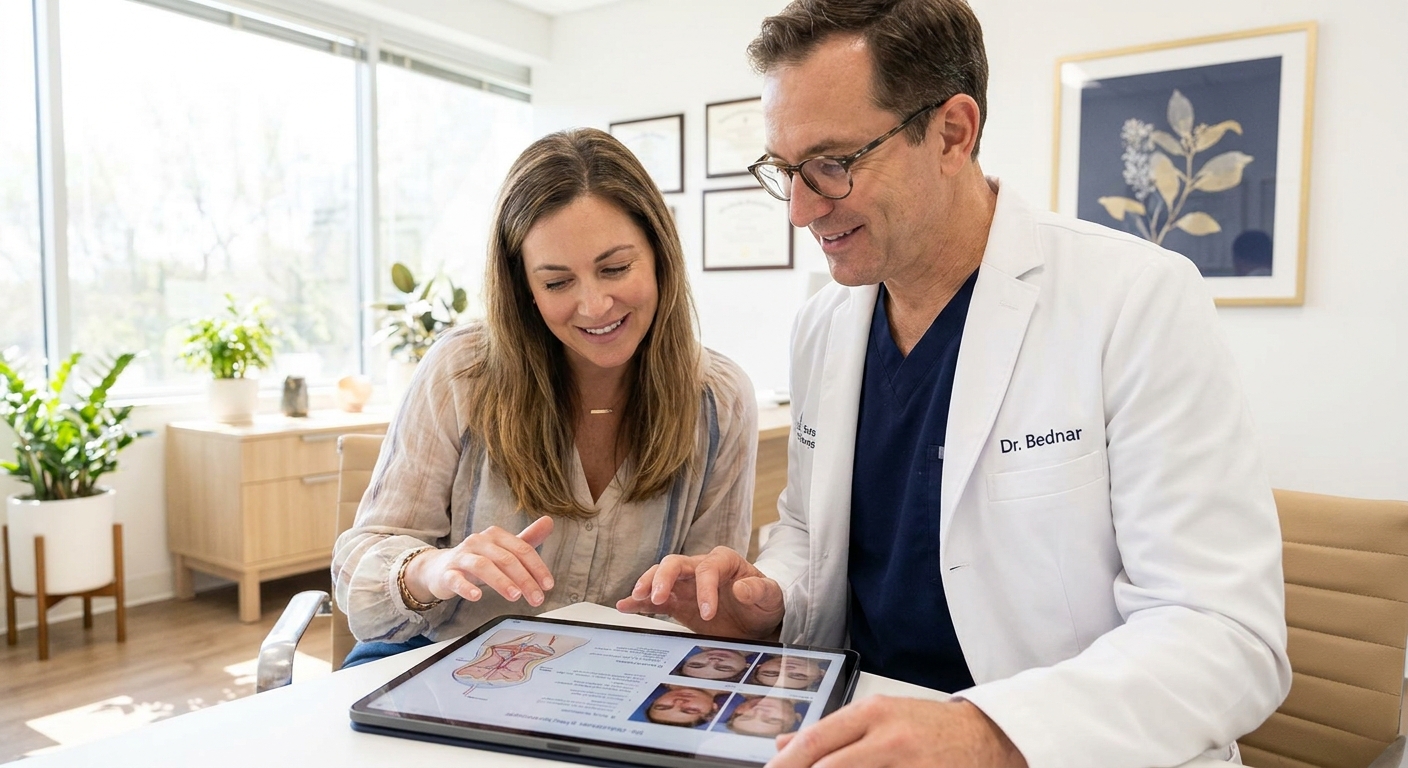
The practical guidance: do not wait until you feel significant change has already occurred. Schedule a follow-up consultation with your surgeon at the one-year mark and annually after that. This is also a good time to review how your results are evolving over time and whether adjunct treatments are appropriate for your current stage.
What to Do This Week
Of every habit covered in this guide, daily SPF is the one to start immediately if you are not already consistent. Everything else, retinoids, nutrition, sleep quality, professional treatments, compounds on that foundation. UV protection is both the highest-return single action and the most commonly skipped.
Beyond SPF, building a sustainable post-procedure maintenance plan tailored to your specific procedure, timeline, and skin type is the most productive next step. Book a follow-up appointment with your surgeon now, before you feel like anything has changed. That proactive window is where the best long-term outcomes are protected.