Fat grafting for breast implant correction offers a natural alternative to traditional implant revision, using your own tissue to refine shape, address irregularities and enhance breast contour. By harvesting fat from donor areas such as the abdomen or thighs and reinjecting it into the breasts, you achieve a softer, more natural feel without introducing artificial materials. This approach not only corrects issues like rippling, asymmetry or contour deformities after implant removal but also improves donor sites through body contouring benefits.
In this article, you will learn how fat grafting works, whether you are an ideal candidate, how to prepare, what to expect during surgery, how to manage recovery, and how to maximize long-term results. You will also see how regenerative fat transfer can support scar revision, post-surgical contouring and breast reconstruction goals. Throughout the discussion, you will find links to related procedures like breast fat grafting for symmetry and post implant removal fat transfer, helping you explore options tailored to your needs.
Understanding fat grafting
What is fat grafting?
Fat grafting, also called autologous fat transfer or lipofilling, moves fat cells from one part of your body to another. In breast implant correction, your surgeon uses liposuction to remove fat from donor areas—commonly the belly, hips, back, thighs or arms—and then purifies and injects that fat into the breasts to improve volume, shape and symmetry. This technique avoids foreign implants, relying on your own tissue for a more natural outcome.
How fat transfer works
- Liposuction harvests fat under local or general anesthesia.
- Processing methods such as centrifugation or filtration separate viable fat cells from fluids and debris.
- Microdroplet injections deposit purified fat in layers, promoting graft survival as new blood vessels develop around transferred cells.
- Excess fluid and nonviable cells are reabsorbed, leaving lasting volume as surviving fat integrates with native breast tissue.
Evolution of the technique
Over the past two decades, fat grafting has evolved from minor contour corrections to comprehensive breast reconstruction and augmentation. Early concerns about fat necrosis and imaging changes have largely been addressed through refined harvesting, processing and injection protocols. Studies now report stable long-term results, making fat grafting a mainstream option for implant revision and natural breast enhancement.
Identifying ideal candidates
Who benefits most
You may be an ideal candidate if you:
- Seek natural enhancement without implants
- Want to correct rippling, asymmetry or contour deformities after implant removal
- Plan minor volume adjustments rather than dramatic cup size increases
- Desire combined body contouring and breast refinement
Women considering natural breast augmentation fat transfer after pregnancy or those pursuing fat transfer for breast reconstruction will find fat grafting especially appealing for its regenerative benefits.
Contraindications and limitations
Fat grafting may not be suitable if you:
- Have insufficient donor fat due to low body weight or athletic build
- Experience significant weight fluctuations
- Smoke or have uncontrolled health conditions that impair healing
According to the Cleveland Clinic, candidates with stable weight and healthy lifestyle habits see the best outcomes [1].
Preoperative considerations
Before surgery, you and your surgeon will:
- Review medical history, including any previous breast surgeries
- Discuss goals, volume expectations and realistic outcomes
- Plan donor sites based on your body shape and available fat
- Order imaging studies if needed to ensure breast health
This thorough evaluation helps tailor your procedure and minimizes risks.
Planning your procedure
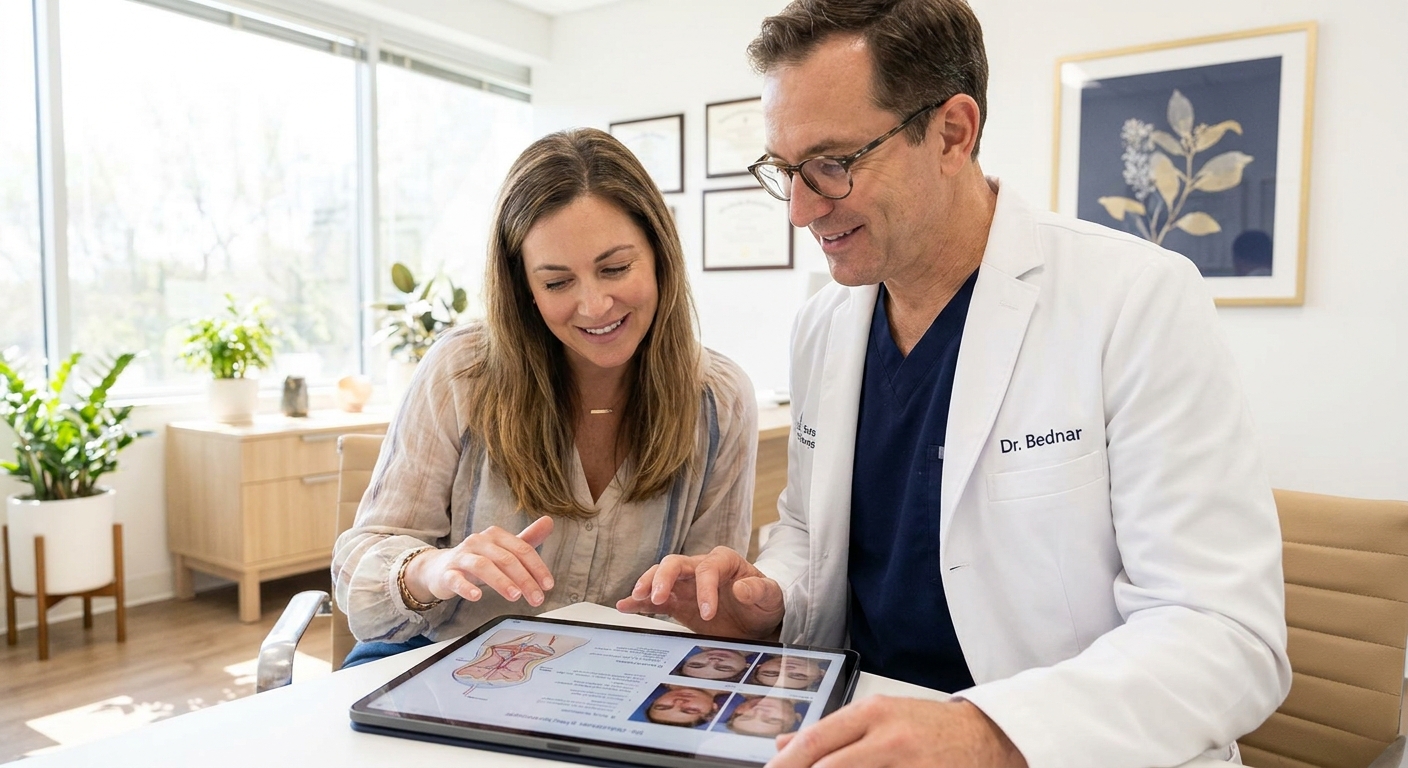
Consultation and goal setting
During your initial consultation, you will:
- Examine before-and-after photos to define your desired look
- Discuss whether to combine fat grafting with other procedures
- Review surgical plans, timelines and recovery expectations
Combining complementary procedures
You may choose to address multiple concerns in one session by adding:
- Scar revision using fat grafting to soften incision lines
- Breast lift with fat transfer support for mild sagging
- Post implant removal fat transfer to restore volume after explantation
- Breast contour restoration without implants for reshaping
These combinations enhance overall symmetry and contour while reducing total recovery time.
Preoperative imaging and devices
Some surgeons recommend the Brava device, an external expander that gently stretches breast tissue before and after grafting to improve fat uptake. Although not universally used, Brava may boost volume gains in select cases [2].
Performing the surgery
Harvesting donor fat
Your surgeon will choose donor areas based on fat availability and desired body contouring. Common sites include:
- Abdomen
- Flanks (love handles)
- Thighs
- Back
- Arms
Tumescent liposuction techniques, often using devices like Bodyjet in the BEAULI™ protocol, minimize trauma and preserve fat cell integrity.
Processing and purification
After harvesting, fat undergoes gentle processing:
- Sedimentation or centrifugation separates viable fat from oils, blood and fluids.
- Filtration systems like the Lipo Collector™ ensure a pure fat graft.
- Some protocols add platelet-rich plasma (PRP) for regenerative support.
The goal is to maximize viable cells and reduce inflammation at the graft site.
Injecting fat
Microdroplet injection techniques deposit small volumes of fat in multiple layers. This approach:
- Encourages rapid revascularization
- Minimizes the risk of fat necrosis lumps
- Promotes a smooth, natural contour
The BEAULI™ protocol reports sustained volume increases—jugulum nipple distance rose by 1.8 cm (9.5 percent) and breast circumference by 4.4 cm (24 percent) over five years in German patients [3].
Surgeon selection
Choose a board-certified plastic surgeon with extensive fat grafting experience. Review published outcomes, complication rates and patient testimonials to ensure optimal results.
Managing your recovery
Immediate postoperative care
In the first days after surgery:
- Wear supportive garments on donor and breast sites
- Take prescribed pain medications as directed
- Avoid pressure on grafted areas
Swelling and bruising are normal; you may see initial overcorrection that settles over weeks.
Follow-up visits
Your surgeon will:
- Monitor graft take and overall healing
- Assess donor site recovery
- Schedule imaging if microcalcifications appear
Approximately 16.4 percent of patients require additional radiologic imaging to rule out malignancy, with 3.2 percent referred for biopsy, reflecting cautious screening practices [4].
Returning to activities
Most patients can:
- Resume light daily activities within one week
- Avoid strenuous exercise and heavy lifting for four to six weeks
- Return to full exercise gradually under medical guidance
Strict adherence to postoperative instructions improves graft survival and overall comfort.
Evaluating risks and benefits
Key benefits
- Natural feel and appearance, since grafted tissue integrates seamlessly
- Minimal scarring compared to repeat implant incisions
- Dual body contouring benefit from donor site liposuction
- No foreign materials, reducing risks of capsular contracture or implant rupture
Potential risks
| Complication | Incidence | Management |
|---|---|---|
| Hematoma | 0.5% | Observation or aspiration |
| Infection | 0.6% | Antibiotics |
| Seroma | 0.1% | Aspiration |
| Palpable cysts | 2.0% | Aspiration in 67% of cases |
| Oil cysts (imaging) | 6.5% | Monitoring |
| Calcifications (imaging) | 4.5% | Additional imaging or biopsy |
| Fat necrosis | 1.2% | Observation |
These low complication rates support fat grafting as a safe alternative to implant revision [4].
Fat survival and sessions
Survival rates of transferred fat range from 55 to 80 percent, directly influencing aesthetic success [5]. You may require touch-up sessions to achieve your ideal volume, especially if you have less donor fat.
Cancer risk and imaging
Fat grafting does not increase breast cancer risk or compromise mammogram effectiveness. However, microcalcifications can mimic signs of ductal carcinoma in situ, prompting ultrasound, MRI or biopsy for clarification [1].
Optimizing lasting results
Maintain stable weight
Fluctuations in your weight can affect grafted fat volume. Aim for a consistent weight through balanced nutrition and moderate exercise.
Follow a healthy lifestyle
Smoking cessation, good hydration and a nutrient-rich diet support long-term graft survival. Antioxidant-rich foods may aid healing.
Plan touch-up sessions
Discuss expectations for possible secondary fat transfers. In some cases, a second fat grafting session refines shape and compensates for initial reabsorption.
Review long-term outcomes
Patients treated with the BEAULI™ protocol reported 92.9 percent satisfaction and strong willingness to recommend or repeat the treatment after five years [3]. Your surgeon can share similar long-term data from their practice.
Continue breast care
Keep up with routine breast exams and mammograms. Inform your radiologist of your fat grafting history to interpret imaging markers accurately.
Fat grafting for breast implant correction combines cosmetic refinement with regenerative benefits. By choosing this approach, you leverage your body’s own tissue for natural aesthetics, minimized scarring and sustainable contour improvement. Consult an experienced plastic surgeon to discuss how fat grafting can help you achieve your personal goals and restore confidence in your silhouette.