Understanding fat grafting
What is fat grafting
Fat grafting, also known as autologous fat transfer, is a procedure that uses your own fat cells to restore and enhance breast contour. During the process, a surgeon harvests fat from donor areas via liposuction, purifies the tissue and reinjects it into targeted regions of your breasts. Because the tissue comes from your body, the results tend to look and feel more natural compared to synthetic implants. Key steps include:
- Harvesting: gentle liposuction from areas such as the abdomen, hips, thighs or back
- Processing: centrifugation or washing to remove blood, oil and debris
- Injection: multilayered placement to promote robust blood supply and seamless integration
By selecting specific layers and volumes for injection, a skilled surgeon can address volume deficiencies, smooth irregularities and improve overall symmetry.
Evolution in breast reconstruction
Over the past two decades, fat grafting has evolved from a technique for minor contour corrections into a standalone method for whole breast reconstruction. As of 2020:
- Autologous fat grafting can achieve natural breast shape and size after mastectomy and lumpectomy [1]
- Combined with implant-based procedures, fat transfer can mask rippling, improve the skin envelope and boost patient satisfaction scores [1]
- It requires external expansion for 6 to 12 hours per day over a two-month period
- Multiple transfer sessions spaced three to six months apart yield around 60 percent volume retention per session, with desired outcomes usually achieved after five or six treatments
Studies confirm a favorable safety profile without increased oncologic risk or interference in tumor surveillance. For more on reconstructive protocols, see our fat transfer for breast reconstruction resource.
Exploring implant-free options
Fat transfer breast augmentation
Fat transfer breast augmentation uses your own fat cells to modestly increase breast volume while refining your body shape. First a surgeon harvests fat from donor areas like the stomach, hips or thighs. The fat is then purified and injected into your breasts to provide natural-looking fullness and an improved silhouette in both donor and recipient zones [2]. Because some fat cells do not survive the transfer, providers often inject 20 to 30 percent more fat than the target volume. It can take up to six months for the final results to become visible as tissues settle. Compared to traditional implants, this technique carries fewer risks of capsular contracture, implant rupture and long-term complications. You should keep in mind:
- Typical volume gain is one-half to one cup size per session
- Multiple sessions may be needed for larger increases
- Donor sites also benefit from reduction and improved contour
By using your own tissue, you maintain a natural feel and reduce concerns about foreign materials in your body. Explore our natural breast augmentation fat transfer options to learn more.
Auto augmentation breast lift
If you want both lift and volume restoration without implants, auto augmentation mastopexy may be the ideal solution. In this procedure your surgeon repositions dermoglandular flaps internally to simulate implant fullness and elevate the nipple complex. Some surgeons enhance the technique by adding fat grafting as a secondary step or by using a bioabsorbable mesh scaffold for internal support that dissolves over about a year [3]. Benefits of this approach include:
- Natural tissue support and avoidance of implant-related risks
- Internal redistribution of your own breast tissue for lasting lift
- Option to combine with fat grafting for enhanced upper-pole fullness
Recovery typically involves 48 to 72 hours of downtime, a return to work within a few days, and avoidance of heavy lifting for at least four weeks. Final breast shape and position usually settle over six months to a year. Learn more about combining lift and volume in our breast lift with fat transfer support guide.
Nonsurgical lift alternatives
If you prefer to avoid incisions and general anesthesia, nonsurgical breast-lift options can offer mild contour improvement with minimal downtime. Below is an overview of popular treatments and their characteristics [4].
| Technique | Mechanism | Duration of results | Average cost |
|---|---|---|---|
| Aptos threading | Barbed threads lift tissue | Up to 2 years | $2,250 |
| Thermage | Radiofrequency tightening | Several months | $1,802 |
| Renuvion/J-Plasma | Cold plasma contraction | One treatment | $3,000–15,000 |
| Vampire breast lift | PRP injections | 1–2 years | $1,700 |
These treatments can stimulate collagen production and provide subtle lifting effects, but they do not match the dramatic results of surgical mastopexy or fat grafting. You may experience some redness, swelling or mild discomfort for a few days after treatment. Nonsurgical options are best suited for early signs of laxity and when you want a maintenance boost between surgical treatments. If you are looking for comprehensive rejuvenation without implants, also consider implant-free breast rejuvenation programs that combine energy-based devices with injectables for holistic chest enhancement.
Evaluating your candidacy
Ideal candidate profile
Not everyone is a suitable candidate for implant-free breast contour restoration. If you have sufficient donor fat, good skin quality and realistic expectations, you may be an ideal match for fat grafting or auto augmentation. On the other hand, women with very low body fat, significant weight fluctuations or tobacco and nicotine use may not achieve optimal results because fat harvesting and graft survival depend on healthy adipose tissue [2]. Good candidates often meet these criteria:
- Stable body weight for at least six months prior to treatment
- Non-smoker and free of nicotine or marijuana for six weeks before and after surgery
- No active infections or poorly controlled medical conditions
- Realistic goals about the subtlety of augmentation and potential need for multiple sessions
For post-pregnancy restoration, you should be at or near your goal weight and free of major health issues. Learn more about hormone and tissue changes after childbirth in our natural enhancement after pregnancy guide.
Factors affecting success
Several factors influence the volume retention and aesthetic outcome of fat grafting procedures:
- Retention rate: On average, about 60 percent of transferred fat survives each session, so you may need two to six treatments to reach your desired volume [1]
- External expansion: If you are undergoing whole-breast reconstruction, devices such as BRAVA can prepare the skin envelope to accept higher volumes more safely and comfortably
- Skin elasticity and quality: Firmer, more elastic skin supports a uniform contour and better graft survival
- Injection technique: Small-volume, multilayered injections help establish a robust blood supply and reduce risk of fat necrosis
- Overall health: A balanced diet, good circulation and non-smoking status contribute significantly to healing and fat survival
By discussing these factors with your surgeon, you can set realistic expectations and plan a treatment course tailored to your individual needs.
Planning your procedure
Preoperative considerations
Before undergoing implant-free breast contouring, you should:
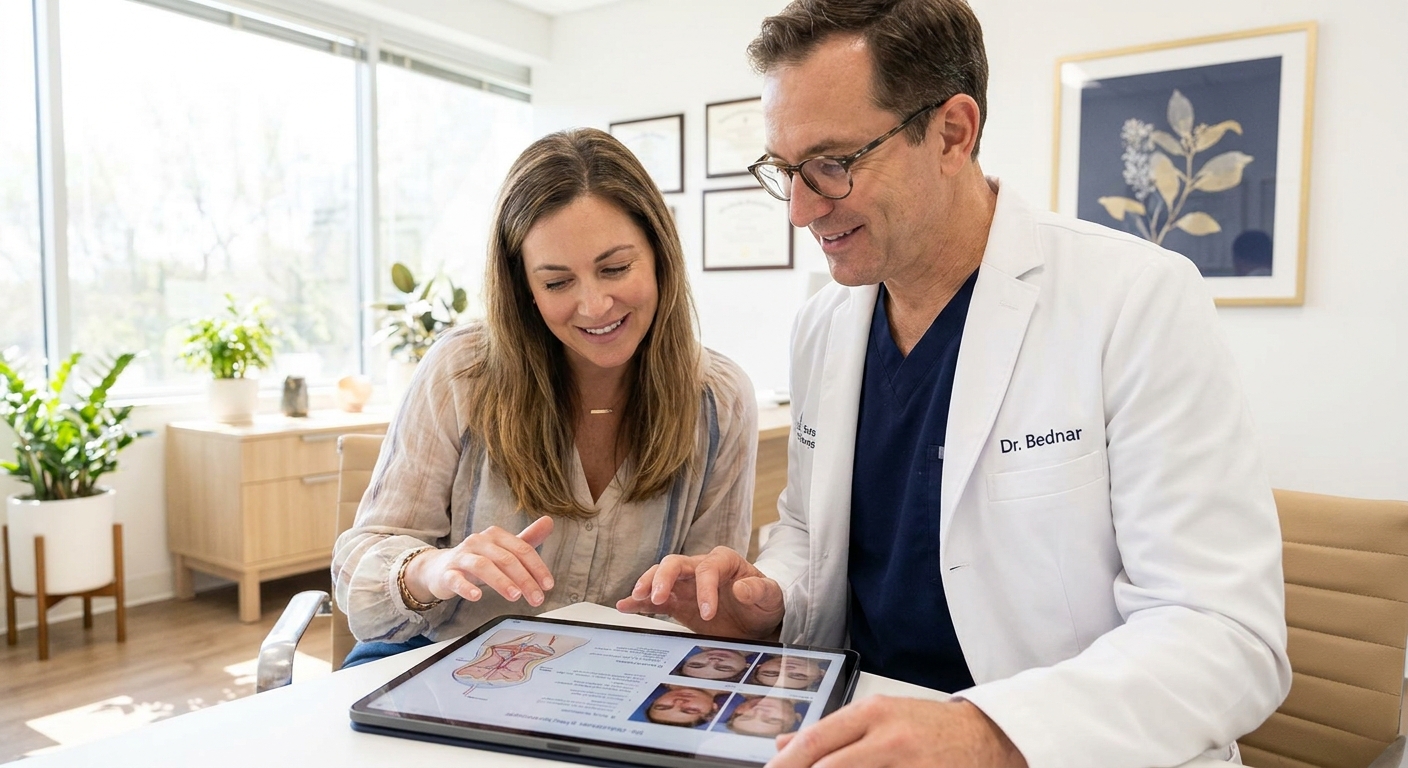
- Schedule a comprehensive consultation that covers your medical history, aesthetic goals and lifestyle factors
- Obtain preoperative imaging or lab work to rule out contraindications
- Cease nicotine and recreational cannabinoid use at least six weeks pre- and post-procedure to support healing
- Arrange for external expansion device fitting if you are pursuing large-volume reconstruction, and review device fitting and care
- Prepare a recovery plan that includes assistance with daily tasks, transportation and child care if needed
- Review before-and-after galleries to understand potential outcomes and ask to speak with past patients when possible
Clear communication with your surgical team and realistic goals will help ensure your treatment aligns with your expectations.
Surgical steps
While techniques vary by provider and patient needs, the core steps of a fat grafting procedure include:
- Anesthesia: Your surgeon will choose local anesthesia with sedation or general anesthesia based on the extent of fat harvesting and transfer
- Liposuction harvest: Fat is gently removed from donor sites such as the abdomen, flanks, thighs or back using small cannulas to minimize trauma
- Fat processing: Harvested fat is purified by centrifugation or low-pressure washing to separate viable adipocytes from blood, oil and excess fluid
- Fat injection: Purified fat is reinjected into the breast in multiple layers, using a 14-gauge cannula to deposit small aliquots. This multilayered approach improves blood supply integration and overall retention
- Closure and dressing: Liposuction incisions are closed or allowed to heal naturally, and compression garments are applied to both donor and recipient sites
Surgical times can range from under one hour for minor contouring to up to five hours for full reconstruction, depending on your treatment plan [5]. To learn about advanced regenerative approaches, see our regenerative breast contour procedure overview.
Adjunctive techniques
In addition to fat grafting, your surgeon may recommend:
- Bioabsorbable mesh scaffolding, such as P4HB, to support tissue structure during the first year after surgery
- Stem cell enrichment or platelet-rich plasma (PRP) injections to potentially boost graft survival and healing
- Combination treatments like lipofilling plus external radiofrequency or ultrasound to tighten the skin envelope and enhance contour
- Laser-assisted fat harvesting for more precise graft collection
- Adjunctive liposuction for donor-site sculpting and overall torso contouring
These options can be customized to your specific anatomy and goals, and they may result in smoother contours and longer-lasting outcomes.
Managing recovery process
Expected downtime
Recovery timelines vary based on procedure complexity, but you can expect:
- 48 to 72 hours of primary rest for minor fat grafting sessions, with light mobility encouraged to reduce the risk of blood clots
- One to two weeks of gentle activities, including daily walking, to promote circulation and reduce swelling
- Avoidance of heavy lifting and vigorous exercise for four to six weeks, depending on the volume transferred and ancillary procedures
- Scheduled follow-up visits at one week, one month and three months to monitor graft survival and wound healing
- Breast swelling that typically subsides within three weeks and donor-site swelling that may take up to six months to fully resolve
If you had fat grafting for implant correction, your recovery plan is similar to standard fat transfer procedures. For more details on combined procedures, refer to our fat grafting for breast implant correction guidelines.
Tips for optimal healing
To maximize your results and comfort during recovery:
- Wear compression garments as instructed to support your breasts and donor areas and minimize fluid buildup
- Maintain a balanced diet rich in protein, vitamins and healthy fats to nourish healing tissues
- Stay well hydrated to support circulation and lymphatic function
- Follow gentle breast massage protocols if recommended to evenly distribute grafted fat and improve contour
- Keep incisions clean and dry to reduce the risk of infection and attend all scheduled follow-up appointments
- Avoid smoking, vaping and alcohol consumption for at least six weeks to support optimal tissue repair
- Monitor your incisions and contact your surgeon if you notice excessive redness, warmth or drainage
Adhering to these guidelines can improve fat graft survival and reduce the risk of complications, paving the way for a smooth recovery and durable results.
Assessing benefits and risks
Aesthetic benefits
By choosing an implant-free approach you can enjoy:
- A natural look and feel as the transferred fat integrates seamlessly with your existing breast tissue
- Dual-site transformation with slimmer, more sculpted donor areas and enhanced breast contour
- Scar improvement and soft tissue quality enhancement, which can benefit scar revision procedures [6]
- Improved symmetry, especially when combined with targeted fat grafting for asymmetries and contour defects
- Regenerative benefits as your own cells can improve skin texture and vascularity over time
These advantages make fat grafting an attractive option if you value subtle enhancement and long-lasting, natural results.
Potential complications
As with any surgical procedure, fat grafting carries some risks and potential complications:
- Uneven or unpredictable fat resorption leading to asymmetry, which may require touch-up sessions
- Benign calcifications detectable on mammograms and small fat necrosis nodules in rare cases
- Mild bruising, swelling and temporary numbness at donor and recipient sites, typically resolving within weeks
- Very low risk of infection, seroma or hematoma if postoperative guidelines are not followed
- Minimal scarring at liposuction and injection entry points
In a study of 105 patients, mild complications such as benign calcifications and small nodules occurred in fewer than 5 percent of cases, highlighting the overall safety of the technique [7]. Discuss these considerations with your surgeon and weigh them against the expected benefits.
Long-term outcomes
Longitudinal studies comparing autologous and implant-based reconstruction reveal that:
- Autologous flap and fat-transfer techniques yield higher patient satisfaction with breast contour, psychosocial well-being and sexual well-being at two years post-surgery [8]
- Implant recipients may see declining satisfaction over time due to implant rippling, displacement or capsular contracture requiring replacement or removal
- Fat grafting outcomes remain stable when proper technique and postoperative care are followed, with minimal maintenance beyond routine health habits
- Because fat grafts are placed close to a reliable blood supply, they can survive long term and age naturally with your body
These findings support fat-based approaches for achieving durable, natural-feeling breast contour without the risks associated with implants.
Comparing implant-based techniques
Patient satisfaction studies
When you compare implant-based augmentation and autologous enhancement, research shows that adjunctive fat grafting can significantly improve patient satisfaction. In tissue expander-implant reconstruction, adding fat transfer helps mask rippling and step-off deformities, leading to smoother skin, a more natural contour and higher satisfaction scores than implants alone [1]. Surveys indicate that women appreciate the dual benefit of breast enhancement and donor-site contouring. Additionally, fat-based reconstruction techniques yield greater satisfaction with psychosocial outcomes, likely due to the natural feel and reduced concerns about future implant-related complications.
Oncologic safety and surveillance
For women undergoing reconstruction after breast cancer, preserving safety is paramount. Multiple studies up to 2020 confirm that fat grafting does not increase the risk of cancer recurrence or interfere with imaging surveillance such as mammography and MRI [1]. The absence of foreign bodies simplifies follow-up exams and minimizes artifacts that can obscure scans. If you are concerned about long-term safety and monitoring, implant-free approaches offer a reliable solution without compromising oncologic care.
Cost considerations
The cost of implant-free breast contour restoration can vary widely based on the complexity of treatment, geographic location and the number of sessions required. As a general guideline:
- Fat transfer breast augmentation: $6,000 to $12,000 per session, depending on anesthesia choice and donor-site areas
- Auto augmentation mastopexy (implant-free breast lift): $8,000 to $15,000, factoring in tissue rearrangement and any mesh scaffolding
- Reconstruction with multiple fat-transfer sessions and external expansion: $10,000 to $25,000, influenced by device rentals and operative time
- Nonsurgical lift alternatives: $1,700 to $15,000, varying by technique and number of treatments
Insurance coverage may apply for reconstructive procedures after mastectomy, but rarely covers cosmetic augmentation or lifts. Be sure to review fee structures, financing options and potential out-of-pocket expenses during your consultation.
Choosing a qualified provider
Questions to ask
When selecting a surgeon for your implant-free breast contour restoration, make sure you:
- Ask about the number of fat-grafting and non-implant breast procedures they perform annually
- Inquire about their specific retention rates and the average number of sessions required for typical patients
- Request before-and-after portfolios showcasing cases similar to your anatomy, goals and ethnic background
- Clarify the full fee breakdown, including preoperative imaging, facility fees, anesthesia charges and device rentals
- Confirm whether the surgeon performs lymphatic-sparing liposuction and uses low-pressure harvesting techniques
- Discuss contingency plans for touch-up sessions if volume retention falls below expectations
- Query whether lymphedema screening is available if you have a history of lymph node removal
- Ask about financing options or payment plans for multi-session treatments
Credentials and experience
To ensure quality care, verify that your surgeon:
- Is board certified in plastic and reconstructive surgery by recognized boards such as the American Board of Plastic Surgery
- Holds memberships in professional societies like the American Society of Plastic Surgeons and the American Society for Aesthetic Plastic Surgery
- Maintains hospital privileges for both cosmetic and reconstructive breast surgery
- Demonstrates ongoing training in regenerative techniques, mesh scaffolding and stem-cell-enriched grafting
- Has positive patient reviews highlighting natural results, safety, clear communication and post-op support
- Uses advanced imaging tools such as ultrasound or 3D photography to plan and assess fat graft distribution
- Offers multidisciplinary care teams, including physical therapists and nutritionists, for comprehensive pre- and postoperative support