
Most patients focus intensely on fat transfer recovery in the first few weeks, then assume the hard work is done. The truth is that long-term skincare after cosmetic fat transfer is what separates results that look exceptional at five years from those that fade quietly into something less than expected. This guide covers what actually drives longevity, what you need to do starting now, and how to protect what you’ve invested.
What you’ll learn in this guide:
- How transferred fat behaves biologically over months and years
- What realistic volume retention looks like at one, three, and five-plus years
- The daily skincare steps that protect your results
- How aging, weight, and lifestyle interact with grafted tissue
- When a touch-up makes sense and how to recognize the right time
What Fat Transfer Actually Does to Your Skin Long-Term
A 2020 study published in Plastic and Reconstructive Surgery analyzing 672 fat grafting patients found that transferred fat cells surviving the initial engraftment phase behave identically to native adipose tissue. They develop a blood supply, respond to hormonal signals, and integrate into the surrounding anatomy as permanent residents rather than temporary fillers.
What this means in practice: the skin overlying a successful fat graft benefits from genuine volumetric support beneath it. Collagen production in the dermis responds to that mechanical support, and skin quality in the treated area often improves over the first year. But here’s the important distinction. Long-term outcomes depend on two separate variables: how well the graft survives the early phase, and how consistently you care for the skin above it after that. The graft does its job; your skincare routine determines whether the results stay visible and healthy for years.
How Long Fat Transfer Results Actually Last
A longitudinal review published in Aesthetic Surgery Journal tracked volume retention across 148 facial fat grafting patients at one, three, and five-year intervals. At one year, patients who received structured aftercare retained approximately 60 to 70 percent of the original transferred volume. At five years, stable patients retained close to 55 to 65 percent, with the most significant attrition occurring in the first six months.
For a fuller picture of what retention timelines actually look like, the window between three and six months post-procedure is when the outcome essentially locks in. Fat cells that establish a blood supply during this phase become permanent. Those that don’t are reabsorbed. By month six, the volume you see is largely the volume you keep, adjusted for normal aging.
At the one-year mark, the realistic expectation is a natural, settled result. Swelling is gone. The graft has matured. What you see in the mirror reflects actual tissue, not post-operative inflammation.
Why Some Volume Loss Is Normal, and What Isn’t
Surgeons intentionally overfill the treatment area at the time of fat transfer, typically by 20 to 30 percent above the desired final volume. This accounts for predictable early reabsorption. So the slightly fuller appearance in the first four to eight weeks post-procedure is by design, not error.
Expected change looks gradual and symmetric. Both sides of the face or treated area settle at a similar rate, and the result still looks balanced and natural at month three. What warrants a call to your provider: sudden asymmetry, a firm or irregular nodule that develops after the first few weeks, or volume loss that feels disproportionate to one specific zone rather than distributed evenly across the treatment area. These are not panic signals, but they are worth documenting and discussing.
How Weight Fluctuations Affect Grafted Fat
A 2019 study in the Journal of Plastic, Reconstructive and Aesthetic Surgery confirmed what surgeons observe clinically: grafted fat cells respond to systemic metabolic signals the same way native fat tissue does. Weight gain expands them; significant weight loss contracts them. This is not a design flaw; it’s the reason fat transfer produces results that age naturally with the body.
The practical consequence is straightforward. Fluctuations of more than 10 to 15 pounds in either direction post-procedure will visibly affect grafted volume. Maintaining a stable weight within a consistent range is the single most controllable variable in preserving your grafted volume over time. This doesn’t mean achieving a specific number on the scale; it means avoiding significant swings in either direction.
The Skincare Routine That Protects Your Investment
A 2022 study published in the Journal of the American Academy of Dermatology quantified UV-induced collagen degradation across 1,200 participants over a five-year period. Patients with consistent daily sun protection retained measurably denser dermal collagen and significantly less skin laxity than those who did not use SPF regularly. The skin overlying your fat graft is subject to exactly the same degradation process.
Three daily steps are non-negotiable: SPF 30 or higher applied every morning, an antioxidant serum applied before SPF, and a barrier-supporting moisturizer morning and evening. These aren’t optional enhancements. For a specific breakdown of building the right daily regimen, think of this as the maintenance layer that keeps your results visible. The graft provides the structure; your skin is the surface that people actually see. The action to take this week: add SPF to your morning routine before anything else.
Retinoids After Fat Transfer: When to Start and What Strength
Retinoids are the most evidence-supported topical ingredient for improving skin texture, stimulating collagen synthesis, and increasing dermal thickness. A landmark 2016 clinical trial published in JAMA Dermatology demonstrated measurable collagen density improvement in participants using 0.025 percent tretinoin over 24 weeks. For fat transfer patients, the timing of introduction matters.
The standard guidance among board-certified providers is to wait until the treatment area is fully healed, typically six to eight weeks post-procedure, before introducing any retinoid. Begin at the lowest available strength, either a 0.25 percent retinol or a prescription 0.025 percent tretinoin, applied two to three nights per week. Introduce it gradually to avoid disrupting the skin barrier while the graft area is still consolidating. The goal is improving the skin quality that frames your results, not accelerating healing.
Ingredients That Support Grafted Tissue
A 2021 study in Dermatologic Surgery tracked 84 patients using topical vitamin C formulations after facial procedures. Participants showed statistically significant improvements in collagen synthesis markers at 12 weeks compared to controls. Vitamin C applied consistently after fat transfer doesn’t influence the graft directly, but it improves the skin quality above it, which is the surface that shapes how your results appear.
Beyond vitamin C, hyaluronic acid serums address surface hydration and prevent the dull, dehydrated texture that can make even well-volumized skin look tired. Peptides support skin integrity by stimulating collagen and elastin production at a cellular level. The practical bridge here is simple: these ingredients work on the dermis and epidermis, while the graft lives in the deeper subcutaneous layer. Supporting collagen production at the skin level is how you ensure the results visible at the surface remain sharp and defined over time.
How Skin Aging Interacts With Fat Transfer Results at 5+ Years
A 2018 longitudinal imaging study published in Aesthetic Plastic Surgery tracked facial anatomy in 90 patients across a decade. The findings confirmed that skeletal resorption in the midface and jaw, combined with progressive skin laxity, continues on its independent trajectory regardless of what volume exists in the soft tissue above it.
This is the nuance most patients aren’t told clearly enough. Fat transfer doesn’t pause aging; it addresses deflation at a specific point in time. At year one, the result looks exceptional because the graft is adding volume where the face has lost it. At year five or beyond, the underlying anatomy continues to shift. Understanding how natural aging interacts with your results helps set realistic long-term expectations and informs when complementary interventions become worth discussing. The takeaway: fat transfer buys time and quality, but skin aging doesn’t stop around the graft.
Fat Transfer vs. Dermal Fillers: What the Long-Term Data Shows
A 2021 systematic review in Aesthetic Surgery Journal compared outcomes across 14 studies of facial fat grafting versus hyaluronic acid filler at the one, two, and five-year marks. Filler patients required repeat treatment at an average interval of 9 to 18 months. Fat transfer patients demonstrated stable volume in the majority of cases beyond three years, with a subset maintaining results at five-plus years without intervention.
The three dimensions worth understanding before your next consultation: fat transfer lasts significantly longer than any injectable filler, often by years; both options age naturally with the face, but fat integrates more seamlessly with surrounding tissue over time; and maintenance for fat transfer patients involves skincare and lifestyle rather than scheduled injection appointments. Bring this framing to your next provider visit and ask specifically how each option would interact with your anatomy at a five-year horizon.
When to Consider a Touch-Up or Combining Procedures
A 2020 retrospective study in Plastic and Reconstructive Surgery analyzed 320 patients who underwent fat transfer with and without adjunctive procedures. Patients who combined fat transfer with laser resurfacing or neurotoxin showed statistically higher satisfaction scores at two years than those who received fat transfer alone. The clinical logic is straightforward: volume restoration addresses deflation, but it doesn’t treat skin texture, superficial sun damage, or dynamic wrinkles. Those require different tools.
The most common long-term pairings are skin resurfacing (laser or radiofrequency) to address texture and collagen stimulation, neurotoxin for dynamic lines that fat transfer doesn’t affect, and PRP as a complement to both grafting and resurfacing for tissue quality. At your next annual follow-up, ask your provider specifically which combination, if any, aligns with where your anatomy is heading.
Signs Your Results May Benefit From a Touch-Up
The markers worth tracking are concrete. Visible asymmetry that wasn’t present at your one-year mark, significant volume loss concentrated in a single zone rather than distributed evenly across the treatment area, or persistent palpable firmness in an isolated spot are all signals to bring to a provider conversation.
Retention data suggests that most patients who request touch-ups do so between years two and four. This is not a failure of the original procedure; it reflects normal graft attrition over time, combined with ongoing aging. A touch-up addresses specific deficits precisely, and it requires far less volume than the original transfer because the foundational result is still largely intact.
The Lifestyle Factors That Determine 10-Year Outcomes
A 2019 study published in JAMA Dermatology followed 1,000 adults over ten years and found that UV exposure and smoking were the two lifestyle variables with the strongest independent association with accelerated skin aging and reduced collagen density. Smoking, specifically, impairs microvascular blood flow, which directly affects the health of fat grafts that depend on a stable local blood supply.
Of all the adjustments available to you, UV protection delivers the highest return on a fat transfer investment. It addresses collagen loss, skin laxity, and surface texture simultaneously. For a complete look at the habits that actually extend cosmetic results, UV protection and avoiding tobacco are the non-negotiables. Every other lifestyle variable matters, but these two have the clearest, most consistent evidence. The action: wear SPF daily and treat that habit as non-optional, not situational.
Book a Skincare Audit This Month
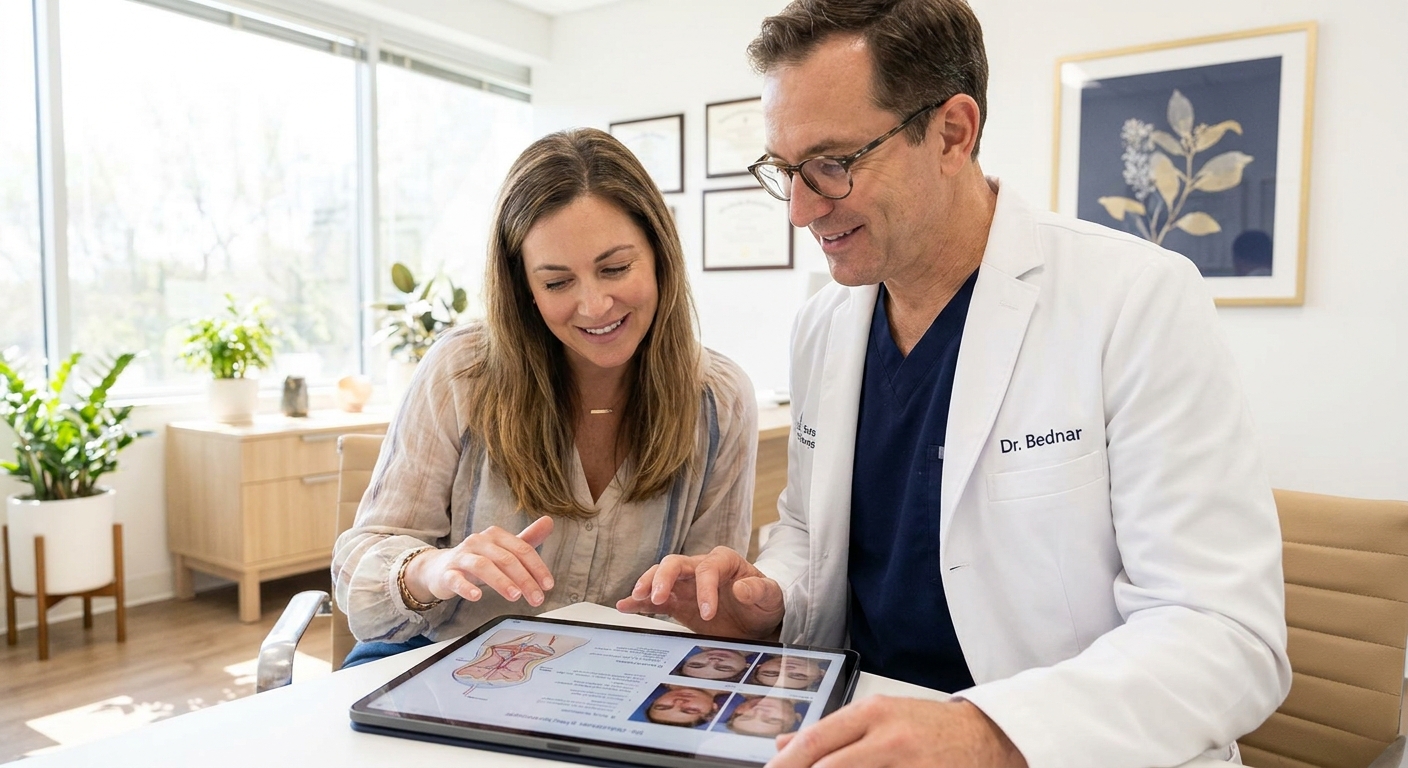
The highest-value next step is a short appointment, not a major intervention. Schedule a skincare audit with your board-certified provider or a dermatologist to assess whether your current routine is actively supporting your fat transfer results or working against them. The output of that appointment should be a written protocol you follow for the next 12 months: specific products, application timing, and a note on when to re-evaluate. Outcome stewardship is a continuation of the treatment relationship, and a 30-minute conversation now can meaningfully change what your results look like at year five.