

Maintaining facial fat grafting results over time isn’t passive , the fat cells that survive the engraftment window behave like native facial fat for the rest of your life, which means they respond to the same variables that affect any living tissue: weight, sun, collagen, and skin quality. This guide covers each of those variables in detail, with the research behind them and one concrete action per section.
Here’s what you’ll learn:
- What determines whether grafted fat survives the first critical weeks
- How weight stability protects volume at every stage
- Why skin quality is inseparable from graft appearance
- What to expect at the 5-year mark and beyond
- When a touch-up makes sense and how to recognize the signs
What Facial Fat Grafting Results Actually Depend On
A 2021 systematic review published in the Aesthetic Surgery Journal, analyzing outcomes across 28 clinical studies, found that long-term fat graft retention rates ranged from 40% to 80% depending on technique, placement depth, and post-operative patient variables. That wide range tells an important story: the procedure establishes the foundation, but what happens afterward determines how that foundation holds.
The fat cells that survive the first three to six months become permanent residents of your face. They integrate with local blood supply, behave like native adipose tissue, and respond to the same inputs , weight changes, collagen levels, hormonal shifts, and sun exposure. What affects fat transfer longevity is therefore less about the surgery itself and more about the environment those cells live in for years afterward. The rest of this guide is organized around the variables you actually control.
How Fat Cells Survive , and Why Some Don’t
A 2019 study in Plastic and Reconstructive Surgery tracked graft viability across 312 facial fat transfer patients and found that the majority of reabsorption occurs within the first six weeks, with final retention volumes stabilizing by month four. The mechanism is straightforward: fat cells need to establish vascularization (new blood supply) to survive. Cells placed in viable tissue beds with minimal trauma during harvest have the highest survival rates. Cells placed in areas of poor circulation, or damaged during the lipoaspirate processing, are reabsorbed by the body.
This is why overfilling is standard practice , surgeons account for predictable early reabsorption by transferring slightly more volume than the final target. What this means in practice: the early recovery period is the single most important window for graft survival. Avoid direct pressure on treated areas, stay off your face during sleep, and skip strenuous exercise for the first two weeks. Elevated heart rate and localized pressure both disrupt the fragile vascularization process before it completes. Protecting this window isn’t optional; it directly sets your long-term retention ceiling.
Weight Stability Is the Biggest Long-Term Variable
A 2020 study in the Journal of Plastic, Reconstructive and Aesthetic Surgery followed 180 facial fat graft patients over three years and found that patients who experienced weight fluctuations greater than 10% of body weight showed significantly altered contour results compared to weight-stable patients. The mechanism mirrors what happens with native facial fat: grafted fat cells expand with weight gain and contract with weight loss, because they retain normal adipocyte function.
The specific risk isn’t gaining or losing weight per se , it’s the swing. How weight changes affect facial volume is a direct relationship: significant loss after grafting reduces volume in treated areas, while substantial gain can distort contour in ways that are difficult to predict. The protective behavior isn’t about staying at a particular size; it’s about staying consistent. Maintaining a stable caloric baseline, within roughly 5-10 pounds of your post-procedure weight, is the single most protective long-term habit for preserving your results.
Sun Exposure Degrades Results Faster Than Aging Does
A landmark 2013 study published in Clinical, Cosmetic and Investigational Dermatology followed 231 identical twin pairs over an average of 4.4 years and found that the twin with higher sun exposure showed measurably greater skin laxity, deeper folds, and more volume displacement , independent of age. The mechanism directly affects fat graft appearance: grafted fat relies on the overlying skin layer to look smooth and full. UV damage breaks down collagen and elastin in that layer, causing skin to thin and loosen, which makes well-maintained fat grafts look less defined even when the volume itself is intact.
Daily broad-spectrum SPF 30 or higher isn’t skin hygiene, it’s graft maintenance. Dermatology data from a 2016 randomized trial in Annals of Internal Medicine showed that participants who applied SPF 30 sunscreen daily for 4.5 years had 24% less skin aging than controls. How UV exposure undermines graft outcomes is a direct, measurable pathway. Start now if you haven’t already, and apply it regardless of season or cloud cover.
The Skincare Routine That Protects Your Investment
A 2016 study in the Journal of Drugs in Dermatology found that tretinoin use over 12 weeks measurably increased dermal thickness by stimulating fibroblast activity and collagen synthesis. Thicker, denser dermis provides better structural support for the fat layer beneath it , which is directly relevant to how grafted fat looks on the surface. This isn’t cosmetic maintenance in a general sense; it’s targeted support for the tissue layer sitting immediately above your grafts.
The three ingredients with the strongest evidence are retinol or prescription tretinoin (for dermal thickness and cell turnover), topical vitamin C (for collagen synthesis and photoprotection), and SPF (already addressed above). Think of it as a sequenced routine: vitamin C in the morning under SPF, retinoid at night. Building a structured skincare routine after fat transfer doesn’t require a full overhaul , the move that works is adding a retinoid if you’re not already using one, starting three months post-procedure when the skin barrier has fully healed.
When to Reintroduce Active Skincare After the Procedure
Plastic surgery recovery literature consistently supports a 6-to-8-week window before reintroducing active ingredients like retinoids, acids, or high-concentration vitamin C. The skin barrier over the treatment area is compromised during early healing, and introducing actives before it closes risks irritation that impairs the graft site. At three months, the healing is complete and the tissue is stable. That is the correct starting point for a retinoid. Starting earlier doesn’t accelerate results , it creates setbacks.
How Aging Affects Results at the 5-Year Mark
A 2018 longitudinal study in Aesthetic Plastic Surgery tracked 94 facial fat graft patients at 3 and 7 years post-procedure and found that the majority retained meaningful volume in treated areas, though results were influenced by continued facial aging in surrounding tissue. The grafted fat doesn’t disappear on a fixed schedule; it ages naturally alongside the rest of the face.
What typically changes at five years is less about volume loss in the grafted areas and more about the surrounding structural changes: bone resorption, skin laxity, and soft tissue descent that alter the overall facial context. How the aging process reshapes fat graft outcomes is a nuanced topic, but the confident takeaway is this: well-placed, well-maintained grafts retain recognizable volume for most patients past the five-year mark. The expectation to set is not “will my results last” but “how will they age” , and the answer is: naturally, and manageably.
Touch-Ups and Combination Treatments That Extend Results
A 2022 study in Facial Plastic Surgery and Aesthetic Medicine evaluated outcomes in patients who combined fat grafting with PRP (platelet-rich plasma) and found improved graft retention rates compared to fat grafting alone, attributed to growth factor support during the engraftment window. Medspa treatments, including laser resurfacing and PRP, don’t compete with grafted fat , they address the skin and collagen layer that determines how results look over time. Treating these layers separately and consistently extends the lifespan of the result.
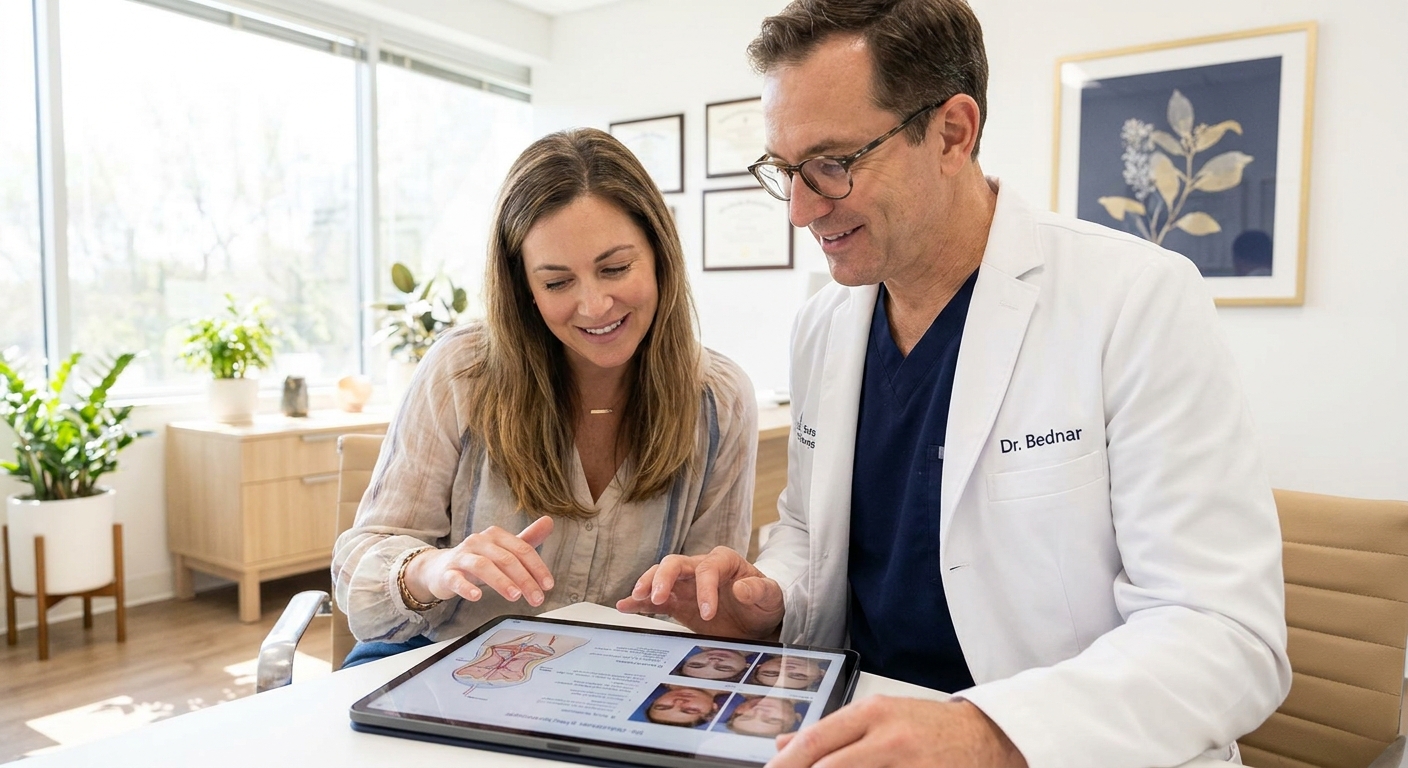
A touch-up at three to five years is not a sign that the original procedure failed. It’s maintenance, the same way a professional cleaning extends the life of a dental restoration. How complementary treatments preserve your results longer is worth discussing at any follow-up visit. The concrete action: schedule a follow-up consultation at the two-year mark to assess volume retention. Catching modest loss early means a smaller secondary graft, not a full revision.
Signs It’s Time for a Touch-Up
The visual cues worth watching for are specific. Hollowing that returns under the eyes or along the temples, a softening of cheekbone definition that wasn’t there a year ago, or a sense that the face looks “deflated” despite stable weight , these are meaningful signals. Skin laxity alone isn’t a graft issue; it’s a skin issue addressed separately. If volume loss is localized to the treated areas and has progressed over six to twelve months, that’s the consultation trigger.
What to Do This Week
If it’s been more than 18 months since your procedure and you haven’t had a follow-up assessment, book one. That single appointment gives you an accurate read on retention, identifies any early volume loss before it becomes significant, and opens a conversation about whether a skin-support treatment , laser, PRP, or medical-grade skincare adjustment , makes sense right now. If you’re still in recovery, confirm two things before this week ends: that SPF is in your daily routine and that your weight is stabilizing. Those two habits, started early and kept consistent, do more for long-term outcome stewardship than any single treatment added later.