
If you’re exploring volume restoration with natural fat, you’re looking for a safe, implant-free solution to enhance or restore your breasts. This autologous fat transfer procedure, also known as fat grafting or lipofilling, involves removing excess fat from donor sites such as the abdomen, thighs, or flanks, purifying it, and precisely injecting it into the breasts to achieve a soft, natural contour. Whether your goal is augmentation with autologous fat, implant-free breast rejuvenation, or regenerative chest sculpting technique, understanding the science, safety, and potential of fat grafting empowers you to make an informed choice.
According to the Cleveland Clinic, fat transfer harnesses stem cells and growth factors in your fat tissue to improve skin quality, making this approach both volumizing and regenerative [1]. Unlike synthetic implants, transferred fat integrates permanently once it establishes its own blood supply, offering enduring volume and a rejuvenated appearance. In this comprehensive guide, you’ll explore candidacy criteria, procedural steps, recovery protocols, outcome optimization, and provider selection to ensure lasting, natural-looking enhancement.
Understanding fat transfer
Fat transfer for volume restoration with natural fat relies on three core phases: harvesting, purification, and grafting. By using your own adipose tissue, you minimize the risk of rejection, reduce foreign-body complications, and gain the added benefit of body contouring at the donor site.
What is autologous fat transfer
During autologous fat transfer, your surgeon performs a gentle liposuction procedure to remove fat from areas with excess volume. A tumescent solution is injected to minimize bleeding and facilitate fat removal with low-trauma cannulas. Extracted fat is processed—usually by centrifugation or filtration—to concentrate healthy adipocytes and discard excess fluid, oil, and debris. Finally, the purified fat is carefully injected into the breast tissue in multiple microdroplet layers to promote even distribution and vascularization.
Why choose your own fat
Opting for your own fat offers distinct benefits:
- Biocompatibility that eliminates implant-related reactions
- Natural feel and movement that mimic healthy breast tissue
- Reduced scarring due to small incision sites
- Dual-sculpting effect: donor-area contouring and breast enhancement
- Avoidance of long-term implant maintenance or replacement
This technique supports a more subtle, personalized result compared to silicone or saline implants.
Regenerative benefits
Beyond volume, fat grafts deliver regenerative properties. Adipose-derived stem cells and growth factors in grafted tissue stimulate collagen production, enhance skin tone, and improve elasticity. Studies have shown sustained improvements in tissue quality months after the procedure [2]. While much of the research has focused on facial fat grafting, these regenerative effects apply equally to breast and chest tissues, contributing to firmer, healthier skin over time.
Assessing your candidacy
Choosing fat grafting for breast enhancement requires a personalized evaluation to ensure optimal outcomes. In consultation, you and your surgeon will review medical history, aesthetic goals, and physical factors affecting graft survival.
Ideal candidates
You may be well suited for fat transfer if you:
- Seek a modest to moderate increase in breast volume (up to one cup size per session)
- Have sufficient donor fat in the abdomen, flanks, or thighs
- Wish to correct asymmetry through breast fat grafting for symmetry
- Desire scar revision using fat grafting to smooth post-surgical indentations
- Prefer an implant-free breast rejuvenation approach
- Maintain a stable weight and healthy lifestyle
Fat transfer also serves reconstructive purposes, such as fat transfer for breast reconstruction after lumpectomy and fat transfer for post mastectomy recovery. For postpartum restoration, natural enhancement after pregnancy can address volume loss and tissue laxity.
Contraindications and limitations
Fat grafting may not be suitable if you:
- Require significant size increase (more than one to two cup sizes)
- Have minimal donor fat available
- Are an active smoker, as nicotine impedes graft take
- Possess uncontrolled medical conditions (e.g., diabetes, clotting disorders)
- Haven’t completed breast cancer treatment without clearance for grafting
In cases where extensive volume is needed, combining fat transfer with implant-based techniques or opting for breast contour restoration without implants should be discussed.
Preparing for procedure
A successful fat transfer begins with careful planning and patient preparation. Your preoperative phase sets the stage for optimal graft survival and smooth recovery.
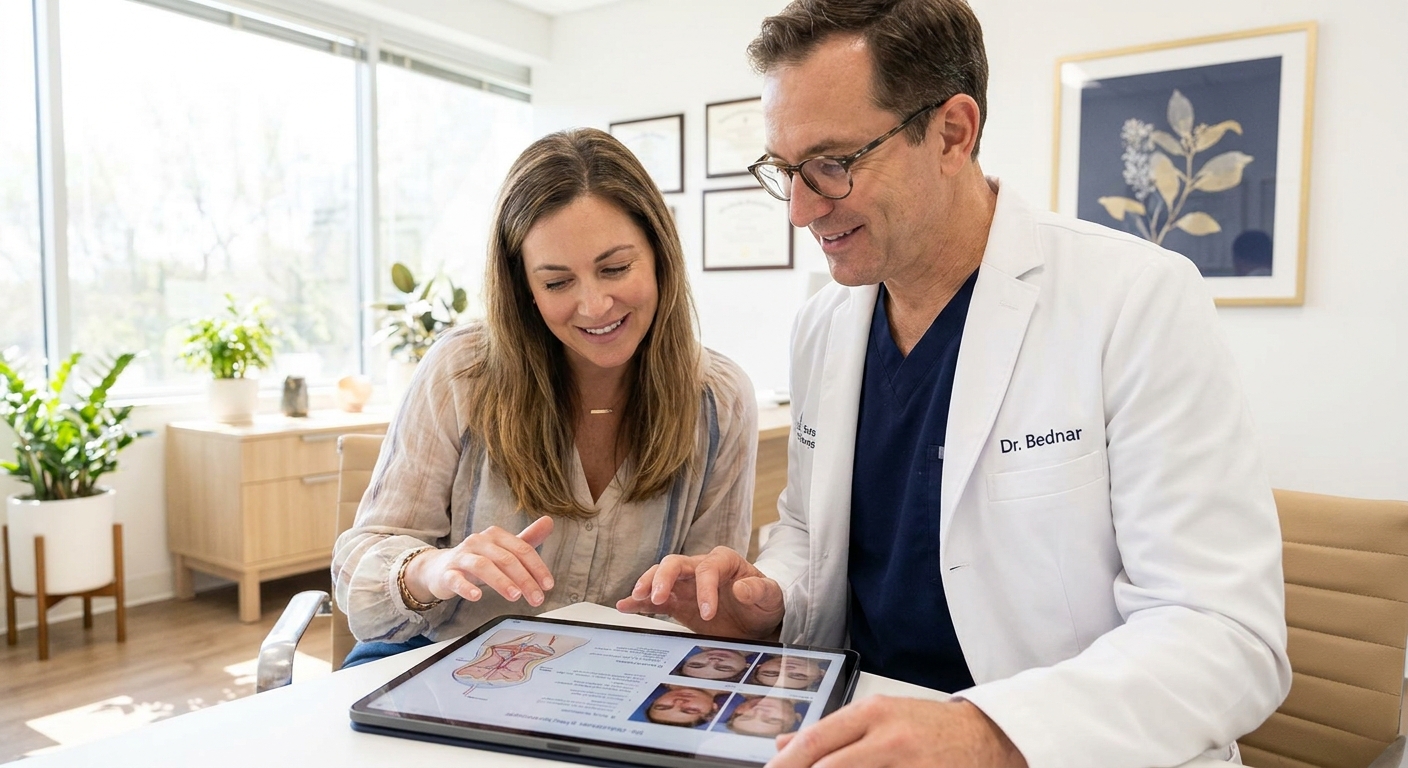
Consultation and planning
At your consultation, expect the following steps:
- Detailed health assessment, including blood work and imaging if needed.
- Three-dimensional breast imaging to simulate potential results.
- Examination of donor sites to determine harvest zones.
- Discussion of surgical plan, anesthesia options, and potential staging.
- Review of gallery photos for similar patient outcomes.
- Development of a personalized timeline, including the number of sessions.
Your surgeon may also introduce you to regenerative breast contour procedure protocols that combine fat grafting with advanced tissue therapies.
Preoperative instructions
To prepare effectively:
- Stop smoking at least four weeks before surgery
- Discontinue blood thinners, anti-inflammatory medications, and certain supplements
- Maintain a balanced diet rich in protein, vitamins, and hydration
- Arrange for postoperative support and restrictive garment fitting
- Keep your weight stable; significant fluctuations can impact graft retention
- Complete any required mammograms or diagnostic tests in advance
Adhering to these guidelines reduces complications and maximizes graft viability.
Performing the transfer
Your fat transfer procedure typically takes two to four hours under sedation or general anesthesia, depending on the volume and complexity.
Harvesting and processing
The harvest phase uses low-trauma liposuction to preserve fat cell integrity:
- Tumescent fluid is infiltrated into donor areas.
- A cannula connected to gentle suction extracts fat.
- The aspirate is spun in a centrifuge (around 3,000 rpm for three minutes) or passed through a closed filtration system.
- Oil, blood, and fluids are discarded, leaving purified adipose for grafting.
Injection and shaping
With purified fat ready, your surgeon:
- Makes tiny incisions in the breast, typically under the fold or near the areola.
- Uses microcannulas to inject fat in multiple layers, advancing slowly to deposit droplets.
- Sculptures the breast contour, addressing hollows and asymmetry.
- Checks symmetry visually and with palpation, making micro-adjustments as needed.
Microdroplet injection promotes rapid revascularization, improving long-term graft survival and reducing the risk of fat necrosis.
Recovering after surgery
Understanding the recovery process helps you prepare mentally and physically for each phase of healing.
Postoperative care timeline
- Days 1–3: Swelling peaks; bruising appears. You’ll wear compression garments on donor sites and a supportive bra to optimize graft integration.
- Week 1: Most patients resume light daily activities. Swelling begins to subside; initial graft integration occurs.
- Weeks 2–4: Tenderness diminishes. Continue wearing support garments and avoid pressure on the breasts.
- Months 1–3: Vascularization of grafted fat completes. Expect gradual softening and settling of tissue.
- Month 6: Final volume stabilizes once surviving fat cells establish permanent blood supply.
Managing discomfort
To ease recovery:
- Apply cold compresses to minimize swelling and bruising
- Take prescribed analgesics and antibiotics as directed
- Perform gentle lymphatic drainage massage to support fluid clearance
- Sleep with upper body elevated on pillows
- Avoid strenuous exercise, heavy lifting, and direct pressure on the breasts for at least six weeks
Donor sites may also be tender; maintaining compression and following drain instructions preserves contour and minimizes fluid buildup.
Maximizing treatment outcomes
Strategic planning and follow-up care play crucial roles in achieving balanced, long-lasting results.
Achieving symmetry
Even with precise injection techniques, minor asymmetries can arise. To optimize symmetry:
- Utilize three-dimensional imaging for preoperative planning
- Consider staged touch-up sessions for fine adjustments
- Address scar irregularities through targeted scar revision using fat grafting
- Work with a surgeon experienced in chest contouring for female patients to refine shape and projection
Combining with lifts
If sagging accompanies volume loss, combining fat grafting with a breast lift can:
- Elevate and reshape breast tissue for youthful positioning
- Fill upper-pole volume deficits without implants
- Minimize overall scarring compared to separate procedures
- Enhance projection and cleavage naturally
Discuss a breast lift with fat transfer support to tailor a comprehensive approach.
Ensuring lasting results
Maintaining your new contour requires attention to lifestyle and an understanding of retention dynamics.
Research on retention
Clinical data indicate that each fat graft session yields a retention rate of 47 to 65 percent in the breast [3]. A large retrospective review of nearly 400 patients found an overall complication rate of 27.8 percent, with major complications (hematoma, infection) at 10.9 percent and asymmetry as the most common minor issue at 14.4 percent. The BEAULI protocol further demonstrated stable long-term breast contour improvements over five years [4].
| Outcome | Rate | Source |
|---|---|---|
| Fat retention in breasts | 47–65% | NCBI PMC |
| Major complications | 10.9% | NCBI PMC |
| Minor complications (asymmetry) | 14.4% | NCBI PMC |
Long-term maintenance
To preserve results:
- Keep your weight within a stable range; dramatic weight loss or gain affects grafted fat
- Maintain a nutrient-rich diet, high in protein and vitamins C and E for tissue health
- Attend regular follow-up visits and imaging assessments
- Consider non-invasive skin-tightening modalities to support tissue firmness
- Plan touch-up sessions if minor volume loss occurs over time
Choosing your provider
Selecting the right surgeon and facility is essential for safe, satisfactory outcomes.
Credentials and expertise
Look for a board-certified plastic surgeon with:
- Fellowship training in aesthetic or reconstructive breast surgery
- Extensive experience in breast reduction with sculpting and fat grafting for breast implant correction
- Operating privileges at an accredited surgical facility (e.g., AAAASF, AAAHC)
- A proven portfolio of before-and-after photos and patient testimonials
Questions for your surgeon
Before committing, ask:
- How many autologous fat transfer procedures have you performed?
- What is your personal complication and revision rate?
- Which fat processing method do you use, and why?
- How do you manage donor-site contour and patient comfort?
- What follow-up care and imaging protocols do you offer?
Taking the next step
Volume restoration with natural fat presents a versatile, minimally invasive path to achieving the contours you desire. Whether you’re exploring post implant removal fat transfer, addressing reconstructive needs through fat transfer for breast reconstruction, or enhancing your physique after pregnancy, partnering with an experienced specialist ensures your goals are met. Schedule a consultation to discuss personalized options, review realistic outcomes, and embark on your journey to natural-looking, lasting breast enhancement.