You may notice volume loss and contour changes after breast implant removal. Post implant removal fat transfer uses your own fat to restore shape, add natural volume, and refine breast aesthetics without new implants. In this article you’ll learn how post implant removal fat transfer works, whether you’re a good candidate, what to expect during surgery, and how to choose the right provider.
Understanding fat grafting
Definition and purpose
Fat grafting, also called autologous fat transfer or lipoaugmentation, harvests fat from one part of your body—typically the abdomen, flanks, or thighs—and injects it into your breasts. Because it uses your own tissue, fat grafting offers a natural feel, avoids foreign materials, and supports regenerative breast contour improvements Cleveland Clinic. This minimally invasive technique can complement scar revision using fat grafting and serve as a regenerative breast contour procedure.
Context after implant removal
When you remove implants, your breasts may appear deflated, asymmetrical, or concave. Fat transfer fills those voids and sculpts your breast mounds in the same surgery, avoiding large incisions or a separate mastopexy [1]. A retrospective review at the University of Alabama at Birmingham found that patients receiving fat grafting after explantation saw good results with no one requesting another enhancement session. On average, surgeons transferred about 140.6 ± 93.97 grams of fat per breast, with a major complication rate of 10.9 percent and no life-threatening events NCBI. Many minor effects like asymmetry (20.4 percent) and fat necrosis resolved over time. By choosing this approach, you can achieve tailored contouring and breast fat grafting for symmetry without implants.
Assessing your candidacy
Ideal candidates
You’re an excellent candidate if you have stable body weight, sufficient donor fat, and realistic expectations about subtle to moderate volume gains. Fat grafting suits women who want natural results—whether you’re restoring shape after pregnancy [2], correcting implant-related complications, or seeking reconstruction [3]. Very thin patients may need multiple sessions or alternative techniques due to limited fat reserves Dr. Sajjadian.
Health considerations
- Non-smoking status and good overall health reduce risk of infection and enhance healing [4].
- Stable weight for at least six months ensures long-term consistency of transferred fat cells.
- No uncontrolled chronic conditions, such as diabetes or bleeding disorders, which could complicate surgery or recovery.
- Realistic expectations about final size, since fat transfer generally adds small to moderate volume compared to implants.
Aesthetic goals
Clarify whether you want full restoration of pre-implant volume, minor contour refinement, or enhanced cleavage. Your surgeon will tailor fat volumes and injection patterns accordingly, often combining grafting with a lift or other body contouring for optimal shape.
Exploring procedure steps
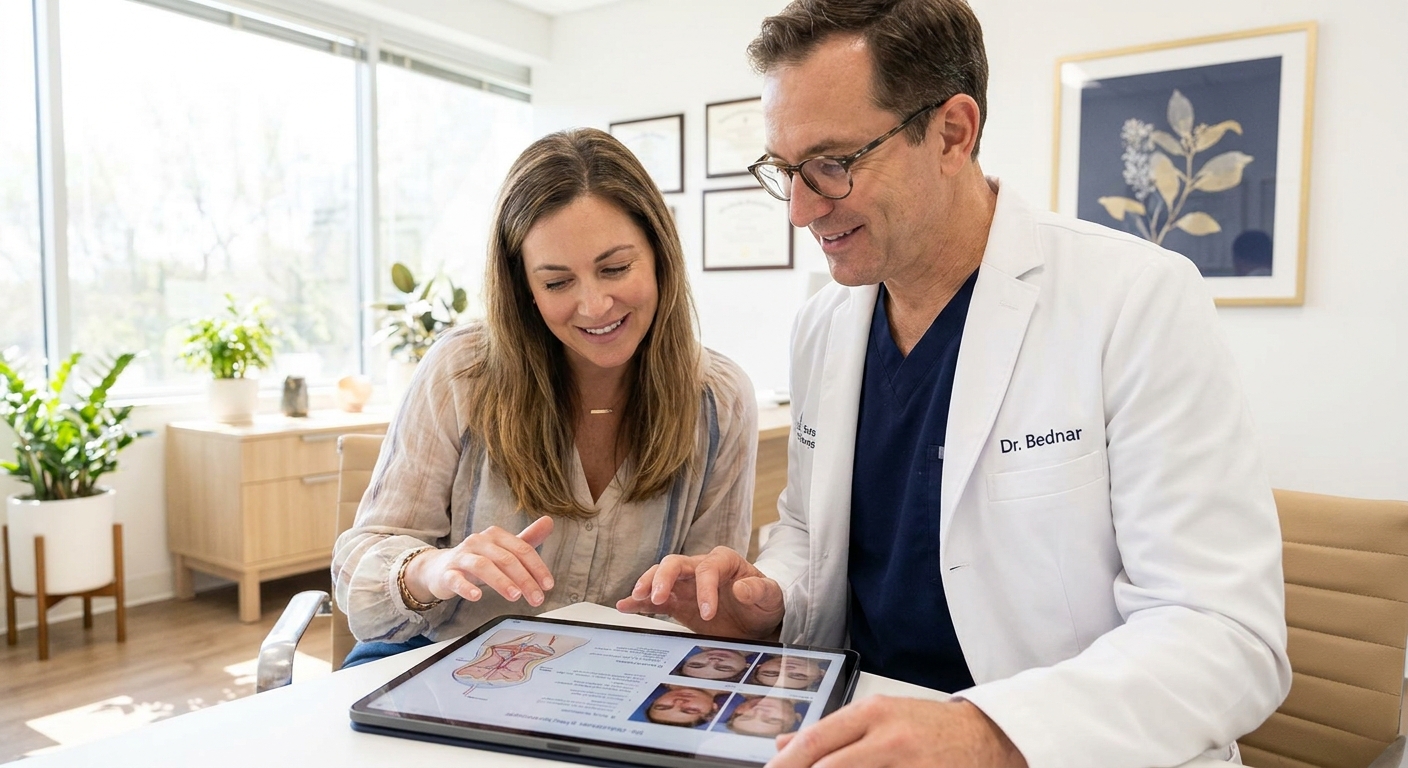
Initial consultation
During your visit you will:
- Review medical history, goals, and imaging to plan harvest and graft sites
- Discuss anesthesia options and surgical setting (outpatient vs. same-day discharge)
- Learn about potential risks, recovery timeline, and costs
- View before-and-after photos, including cases of implant-free breast rejuvenation
Fat harvesting and processing
Your surgeon harvests fat via gentle liposuction from donor areas (abdomen, hips, thighs). The lipoaspirate is then purified—often by centrifugation or filtration—to isolate viable adipocytes. This step maximizes graft survival and reduces debris or excess fluid before injection, following protocols outlined by Scultura Plastic Surgery Scultura Plastic Surgery.
Grafting and contouring
Purified fat is precisely injected in small aliquots throughout your breast tissue. Layering the graft allows even integration, builds natural projection, and refines shape. Your surgeon may use microcannulas and advanced mapping to sculpt each breast, improving symmetry and fullness. This technique supports breast contour restoration without implants.
Combining with lift or reduction
In many cases you can combine fat transfer with a breast lift to reposition sagging tissue [5]. If you require volume reduction plus contouring, a breast reduction with sculpting approach merges tissue excision and autologous fat grafting [6].
Evaluating benefits and risks
Natural look and permanence
Transferred fat integrates with your native tissue, creating a soft, natural feel and avoiding implant-related issues. Fat cells that establish blood supply can last a lifetime, provided your weight remains stable Syplastic Surgery. This makes post implant removal fat transfer a compelling option for long-term results.
Common side effects
- Swelling and bruising at donor and recipient sites, resolving over weeks
- Tenderness or mild discomfort, managed with pain medication
- Asymmetry or uneven fat resorption in some cases (20.4 percent in bilateral grafts) NCBI
- Fat necrosis or small palpable nodules, often resolving without intervention
- Rare infection or dermatitis/cellulitis, typically treatable with antibiotics
Risk mitigation
Opt for a board-certified plastic surgeon experienced in fat grafting techniques. Strict aseptic protocols and careful patient selection minimize complications. Maintaining a stable weight and following post-op instructions support even fat survival.
Preparing for recovery
Immediate post-op care
After surgery you’ll wear a compressive garment or surgical bra to support grafted areas and minimize swelling. Pain, bruising, and discomfort are managed with prescribed medications. Your surgeon may advise antibiotics to prevent infection Andres Plastic Surgery.
Timeline to normal activities
- Return to work: around 5 days post-op
- Light exercise: after 2 weeks, avoiding direct pressure on graft sites
- Full recovery: 4–6 weeks for most activities; final breast shape may take 3–6 months as swelling subsides and fat stabilizes Cleveland Clinic
Weight management
Since fat grafting relies on your own cells, fluctuations in body weight can alter graft volume. Aim to keep your weight within a few pounds of your pre-surgery baseline for consistent results Syplastic Surgery.
Choosing your provider
Surgeon qualifications
Look for a board-certified plastic surgeon with extensive experience in fat grafting and post explant procedures. Membership in professional societies (eg, American Society of Plastic Surgeons) indicates commitment to ongoing training and safety standards.
Facility accreditation
Ensure procedures occur in an accredited surgical facility or hospital. Accredited centers follow strict safety protocols, have emergency equipment on site, and adhere to recognized sterility guidelines.
Key questions to ask
- How many post implant removal fat transfer procedures have you performed?
- What techniques do you use to maximize fat survival and minimize complications?
- Can you show before-and-after photos of cases similar to mine?
- What is your major and minor complication rate, based on your own data?
- How do you coordinate post-op care and follow-up to ensure optimal results?
By understanding post implant removal fat transfer, assessing your candidacy, and partnering with a qualified surgeon, you can achieve natural breast contour restoration and enjoy lasting, implant-free enhancement.