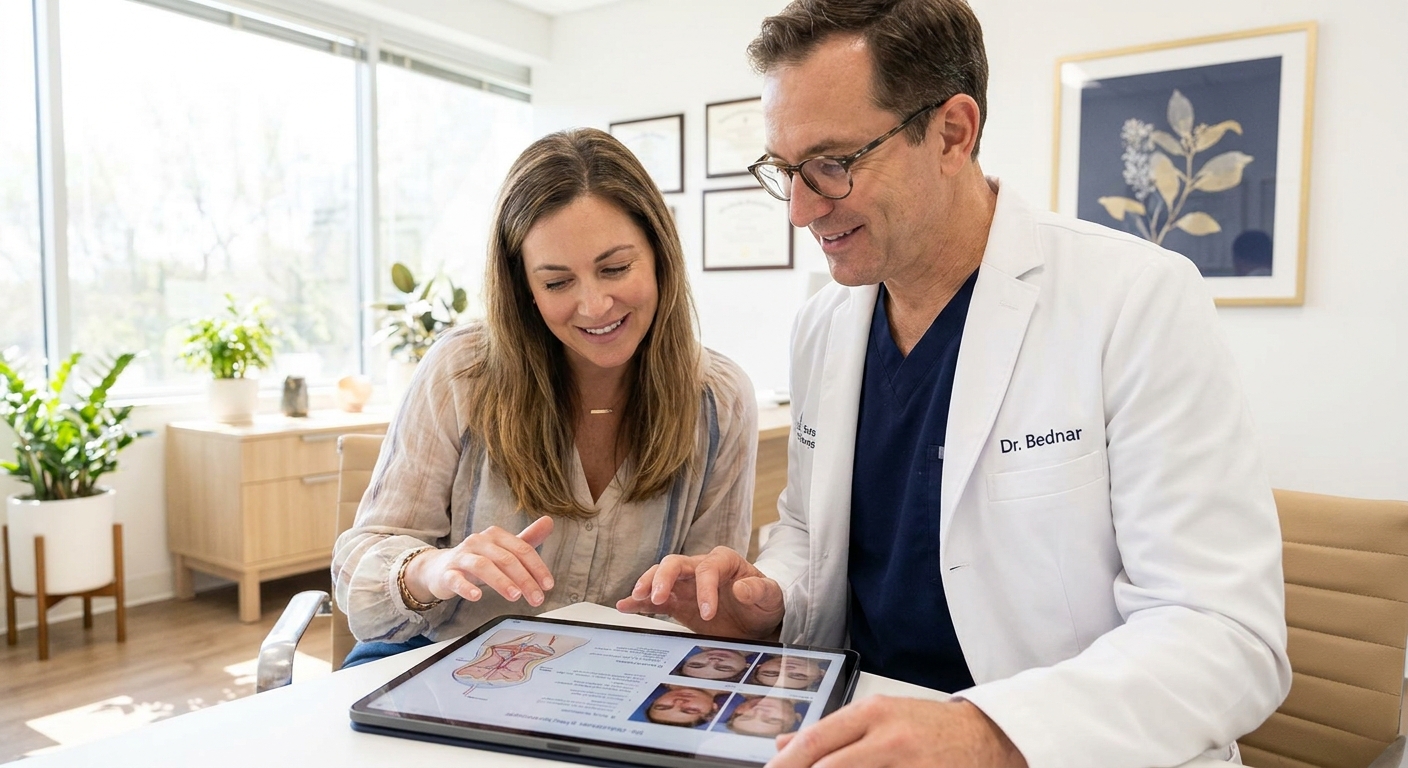


You might be considering a more natural alternative to implants or synthetic fillers when addressing facial volume loss. Autologous facial fat restoration offers a biocompatible, long-lasting solution by using your own tissue to rejuvenate contours and improve skin quality. In this procedure, excess fat is gently harvested from areas like the abdomen or thighs, purified, and reinjected into facial zones that have hollowed with age or weight loss. Under the guidance of Dr. Bednar—one of the field’s pioneers in regenerative restoration—AlloClae has refined proprietary techniques that maximize fat survival and provide subtle, natural-looking results from day one.
Understanding autologous facial fat restoration
Autologous facial fat restoration, often called fat grafting or fat injection, is a minimally invasive cosmetic procedure that leverages your own adipose tissue for facial rejuvenation. Rather than relying on synthetic fillers, this method uses biocompatible material that carries a lower risk of allergic reaction and offers the potential for permanent volume enhancement.
Key points about the procedure
- Source of material: Fat is typically harvested from the abdomen, inner thighs, or flanks using small-volume liposuction techniques.
- Purification: The harvested fat is processed to remove oil, blood, and damaged cells, ensuring only healthy adipocytes remain.
- Injection: Purified fat is injected into targeted facial compartments—such as the cheeks, temples, or tear troughs—in small aliquots to promote graft survival.
Because the tissue comes from your own body, you gain a dual benefit: volume restoration in the face plus subtle contouring at the donor site. For a detailed overview of each step, see our guide to autologous fat transfer procedure.
Exploring benefits of fat grafting
When you choose a fat-based approach, you tap into multiple advantages over traditional fillers or implants:
Natural biocompatibility
Your immune system recognizes the transferred fat as native tissue, reducing the risk of rejection or adverse reaction. Unlike synthetic fillers, autologous fat grafts integrate with your existing facial architecture for a soft, natural feel.
Longevity of results
Studies indicate that 50–70% of transferred fat can survive long-term, with some techniques achieving up to 80% retention depending on individual factors [1]. Once the grafted fat establishes a blood supply, those cells can endure for years—often providing results that outlast the 12–18-month lifespan of most dermal fillers.
Versatile applications
Beyond restoring cheek volume or smoothing nasolabial folds, you can leverage fat grafting for:
- Tear trough correction and under-eye hollows
- Lip augmentation and contouring
- Chin and jawline definition
- Treatment of depressed acne scars
AlloClae’s regenerative methods also translate to non-facial uses, from natural lip enhancement with fat transfer to fat transfer for scar repair and even natural body contouring with fat grafting.
Detailing the restoration process
Your treatment journey unfolds in four core stages, each refined by AlloClae’s expertise:
- Harvesting and processing
- Tumescent solution is infiltrated into the donor area to minimize discomfort and bleeding.
- Fat is extracted via gentle liposuction cannulas.
- Lipoaspirate is centrifuged or filtered to isolate viable fat cells.
- Advanced injection techniques
- Using multiple 1 mL syringes, your surgeon deposits micro-aliquots into specific fat compartments beneath the skin.
- Slow, withdrawing injections prevent intravascular placement and ensure even distribution of cells.
- Overcorrection by 10–20% anticipates natural resorption, optimizing final volume.
- AlloClae’s proprietary approach
- Platelet-rich plasma (PRP) may be added to boost graft survival and enhance skin quality.
- Customized cannulas and precision mapping software guide fat placement for harmonious, age-appropriate contours.
- Proprietary cell-activation protocols improve tissue integration and lasting results.
- Touch-up and refinement
- About 6–12 months after your initial treatment, a minor touch-up can address any residual asymmetries or volume deficits [1].
To explore each step in greater depth, visit our regenerative fat transfer procedure overview.
Managing recovery and downtime
Your body needs time to settle and integrate the transferred cells. While individual experiences vary, here is a general recovery timeline:
| Timeframe | What to expect | Recommendations |
|---|---|---|
| Days 1–3 | Swelling, bruising, mild discomfort | Apply cool compresses, rest with head elevated |
| Days 4–14 | Bruising fades, initial contours emerge | Resume light activities, avoid strenuous exercise |
| Weeks 3–6 | Swelling subsides, final shape develops | Maintain stable weight, follow nutrition plan |
| Month 6+ | Evaluate graft survival; consider touch-up | Consult your surgeon for any refinements |
Key post-op tips
- Sleep with extra head support for 1–2 weeks
- Avoid heavy lifting (>10 lb) for 6 weeks [2]
- Stay well-hydrated and consume enough calories to support graft take
- Follow all wound-care and activity guidelines provided by your surgeon
For a comprehensive guide, see insights on fat cell transfer cosmetic surgery.
Considering risks and safety
Even minimally invasive procedures carry potential complications. Choosing a board-certified facial cosmetic surgeon and accredited surgical facility is your best safeguard.
| Complication | Severity | Region | Notes | Source |
|---|---|---|---|---|
| Bruising | Mild | Donor/recipient | Common, resolves in 1–2 weeks | NCBI |
| Infection | Mild to moderate | Liposuction sites | Treatable with antibiotics | American Board of Facial Cosmetic Surgery |
| Hemiplegia | Severe/permanent | Forehead/temporal | Extremely rare (n = 11 cases) | NCBI |
| Loss of vision | Severe/permanent | Forehead/temporal | Rare (n = 7 cases) | NCBI |
| Skin necrosis | Severe/permanent | Various | Rare (n = 3 cases) | NCBI |
Minimizing risks
- Confirm your surgeon’s certification and facility accreditation
- Discuss anatomical safety zones and technique modifications
- Follow pre-op and post-op instructions precisely
- Report any unusual symptoms—such as severe pain or vision changes—immediately
Comparing with dermal fillers
If you’re weighing your options, consider how fat grafting stacks up:
| Feature | Fat grafting | Dermal fillers |
|---|---|---|
| Source | Your own tissue, 100% biocompatible | Synthetic or animal-derived compounds |
| Longevity | Often permanent once established | 12–18 months before touch-up needed [3] |
| Downtime | 1–2 weeks | Minimal to none |
| Volume customization | Unlimited transfer volume | Limited to vial amounts |
| Skin quality benefits | Improves tone and texture | Doesn’t address skin quality |
Choose fat grafting if you value permanence and natural tissue integration. For feature-specific sculpting, fillers may still play a complementary role.
Selecting the right provider
Your results depend as much on who performs the procedure as on the technique itself.
Credentials and facility
- Verify board certification in facial cosmetic surgery
- Ensure the operating room meets accredited surgical standards
- Review before-and-after portfolios of actual patients
Consultation checklist
- Ask about the surgeon’s fat-grafting experience and case volume
- Inquire how they optimize graft survival and minimize complications
- Discuss AlloClae’s proprietary protocols, including PRP enrichment and precision mapping
- Clarify total costs: surgeon’s fees, facility fees, anesthesia, lab work
- Confirm financing or payment-plan options if needed
A thorough consultation sets realistic expectations and builds trust.
Planning your treatment journey
- Research your options and gather questions in advance
- Schedule a consultation with an AlloClae specialist
- Follow pre-surgery guidelines: avoid certain medications, maintain stable weight
- Arrange for transportation and aftercare support
- Commit to post-op follow-up visits to monitor graft integration
By understanding each phase— from initial assessment through long-term maintenance—you can make informed decisions and achieve facial rejuvenation that feels authentically you. To learn more about our full suite of regenerative solutions, visit Alloclae facial rejuvenation procedure or explore how we approach precision fat grafting for volume loss.
Ready to rediscover youthful contours with your own tissue? Contact AlloClae today to schedule your personalized consultation and begin your journey toward natural, lasting facial rejuvenation.