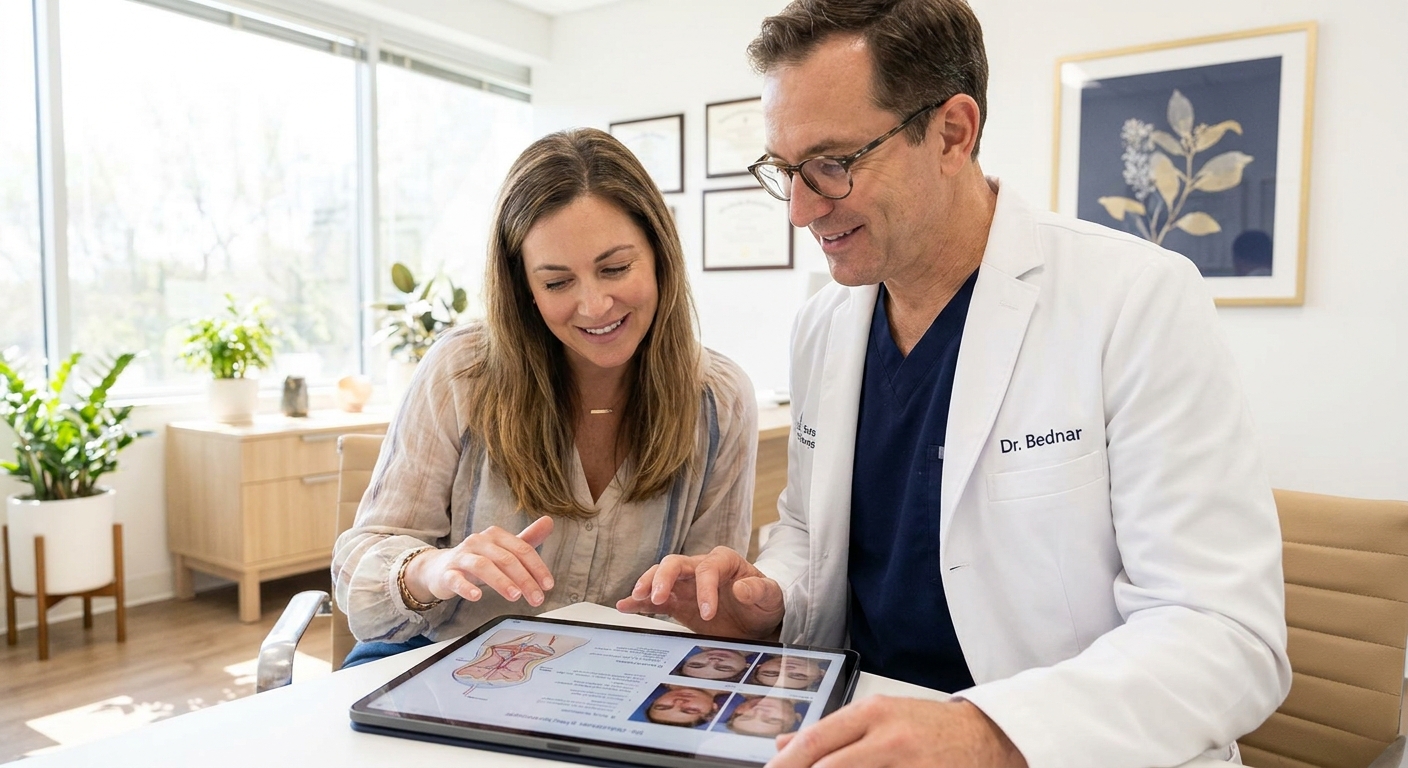

Fat transfer results don’t take care of themselves. Once the procedure is done, the choices you make in the weeks and months that follow determine how much of that result you actually keep, and for how long. Understanding how to extend the results of autologous fat transfer means understanding the biology at work underneath your skin , and acting on it with precision.
Here’s what this guide covers:
- What fat transfer actually does at the cellular level
- Why survival rates vary so dramatically between patients
- The early post-op window where your behavior matters most
- Nutrition and weight stability as long-term longevity tools
- Skincare and sun protection for surface-level preservation
- When a touch-up is a planned strategy, not a setback
What Autologous Fat Transfer Actually Does
Autologous fat transfer is the process of harvesting fat from one area of your body , typically the abdomen, flanks, or thighs , and reinjecting it into areas where volume has been lost or is desired: the face, breasts, buttocks, or hands. The key distinction from synthetic fillers is biological. The transferred material contains living adipocytes (fat cells), along with stromal vascular fraction and stem-cell-rich components that, once vascularized, behave exactly like your native tissue. A 2020 review published in the Aesthetic Surgery Journal confirmed that successfully engrafted fat cells integrate into the recipient site and respond to the body’s normal physiological cues , including hormonal changes and weight fluctuations , just as original fat would.
That integration is the source of both fat transfer’s greatest advantage and its primary variable. Because the result is living tissue, maintaining it requires understanding what keeps living tissue healthy.
How Much Transferred Fat Survives , and Why
The most widely cited figure in clinical literature puts fat graft retention at 40 to 80 percent, a range wide enough to raise a reasonable question: what determines where you land in it? A 2018 meta-analysis in the Journal of Plastic, Reconstructive and Aesthetic Surgery reviewed 29 studies involving over 1,400 patients and confirmed that retention rates cluster around 50 to 60 percent for most sites, with facial grafts trending higher and larger-volume transfers trending lower.
The mechanism is straightforward. Transferred fat cells need to establish a blood supply , vascularization , within the first few days to weeks after injection. Cells that successfully connect to the capillary network survive and integrate. Cells that don’t are reabsorbed by the body. That reabsorption isn’t a complication; it’s a normal physiological process. The first three to six months are the window where graft fate is decided.
Why Survival Rates Vary So Much Between Patients
The variables that drive this variation fall into two categories: surgical and patient-controlled. On the surgical side, harvesting technique, processing method (centrifugation versus washing), and injection volume per pass all affect how many viable cells are delivered and how evenly they’re distributed. A 2017 study in Plastic and Reconstructive Surgery found that low-speed centrifugation preserved significantly more viable adipocytes than high-speed processing , making the surgeon’s technique a meaningful factor in your outcome before you’ve left the operating table.
On the patient side, smoking, metabolic health, and tissue quality at the recipient site all influence how well new vasculature forms. Smoking is the most documented: nicotine impairs angiogenesis (new blood vessel formation), directly reducing take rate. Several of the factors that ultimately determine fat transfer longevity are within your control from day one.
What “Settled Results” Actually Looks Like
The visual timeline of fat transfer results is not linear. Immediately post-procedure, swelling creates a temporarily fuller appearance. Over the first four to eight weeks, reabsorption of non-surviving fat cells reduces volume , often noticeably. Patients who aren’t prepared for this phase sometimes interpret normal reabsorption as a failed procedure. It isn’t.
A 2021 clinical review in Clinics in Plastic Surgery described the stabilization timeline as follows: volume continues to shift through the third month, then progressively stabilizes between months three and six. What you see at six months is substantially what you keep. Setting this expectation before surgery, rather than after, protects you from unnecessary anxiety during the reabsorption dip.
The Weeks Right After Surgery Are the Results You Keep
A 2019 study published in Aesthetic Plastic Surgery followed 84 fat grafting patients and found that adherence to post-operative protocols in the first four weeks was the strongest behavioral predictor of graft retention at six months. The mechanism is direct: during the first two to four weeks, transferred fat cells are establishing new capillary connections. Anything that compresses, traumatizes, or disrupts blood flow to the grafted area during that window reduces the number of cells that successfully vascularize.
This is the highest-leverage period in your entire fat transfer journey. Surgery delivers the cells. The weeks immediately after determine how many of those cells survive.
How to Protect the Grafted Area From Pressure
Pressure on a freshly grafted site compresses the fragile new capillary network and mechanically disrupts cell integration. The specific risk varies by procedure site. After facial fat transfer, sleeping with your face pressed against a pillow is the primary concern , back sleeping with head elevation is the standard protocol for the first three to four weeks. After buttock fat transfer (Brazilian butt lift), sitting directly on the treated area creates sustained compression that directly reduces take rate; specialized cushions that offload pressure to the thighs are typically prescribed. After breast fat transfer, sleeping on your stomach is contraindicated for the same reason.
The single action to take before your procedure: identify your primary pressure risk based on your treatment site and set up your recovery environment to eliminate it. Buy the wedge pillow. Set up the recovery chair. Make it logistically impossible to compromise the graft accidentally during sleep or rest.
Why Compression Garments at the Donor Site Actually Help Longevity
The compression garment prescribed for your liposuction donor site serves two functions that directly support long-term outcomes. First, it reduces post-harvest swelling, which accelerates healing at the donor site. Second, and less discussed, it preserves the structural integrity of remaining fat tissue , relevant if a touch-up procedure is needed later and additional fat must be harvested from the same area.
A 2020 study in Dermatologic Surgery found that patients who wore compression garments for the full prescribed duration (typically four to six weeks) after liposuction had significantly better contour outcomes and reduced fibrosis compared to those who stopped early once swelling subsided. The garment can feel unnecessary by week three. Wear it anyway.
Nutrition That Directly Supports Fat Cell Survival
A 2022 review in Nutrients examined the relationship between micronutrient status and soft tissue healing across surgical populations and found that deficiencies in protein, vitamin C, and zinc were associated with slower wound closure and reduced collagen matrix formation. For fat transfer patients, this matters because transferred fat cells don’t survive in isolation , they depend on a collagen scaffold and adequate vascularization, both of which require these same nutrients to build.
The take period is metabolically demanding. Your body is doing the cellular-level work of integrating foreign tissue into a new site. Giving it inadequate building materials slows that process. Supporting collagen synthesis after surgery isn’t supplementary care , it’s part of the procedure’s success.
Protein Intake in the First Six Weeks
The American Society for Enhanced Recovery (ASER) clinical guidelines recommend 1.5 to 2.0 grams of protein per kilogram of body weight per day during surgical recovery , roughly double the standard dietary recommendation for sedentary adults. A 2016 study in Surgery tracked protein intake against wound healing velocity in 120 post-surgical patients and found a direct correlation: patients meeting the higher protein threshold healed measurably faster.
For a 140-pound patient, that target is approximately 95 to 127 grams of protein per day. Audit one day of your current diet before your procedure. Most people discover their breakfast and lunch fall significantly short, with protein concentrated at dinner. Redistributing intake across three meals , rather than trying to hit your entire target in one sitting , is the most practical adjustment.
What to Avoid Eating During the Take Period
Alcohol is the first category to eliminate. Beyond its systemic effects, alcohol causes vasodilation that can increase bruising and swelling, and it interferes with the cellular repair cascade. Excessive sodium is the second: it worsens edema, which impairs circulation and slows the vascularization process at the graft site. Highly processed foods , particularly those high in refined carbohydrates and industrial seed oils , carry an inflammatory load that competes directly with the healing environment you’re trying to create.
A 2021 study in Wound Repair and Regeneration found that systemic inflammation, measured via C-reactive protein, was inversely correlated with fat graft retention in a cohort of 60 patients. Remove one of these categories from your diet during the six-week take period. Don’t try to overhaul everything at once , pick the category that currently represents the most frequent exposure and cut it.
How Weight Stability Determines Long-Term Results
A 2019 study in Plastic and Reconstructive Surgery tracked 118 fat grafting patients over 24 months and found that patients with weight fluctuations greater than 10 pounds showed measurable volume changes in grafted areas , both with gain and with loss. The mechanism is simple physiology: transferred fat cells, once integrated, behave like native fat. They respond to caloric surplus by expanding and to caloric deficit by shrinking. How those weight changes ultimately affect your grafting results depends almost entirely on how stable your baseline weight remains.
This isn’t a complication. It’s the normal behavior of living tissue. But it means that maintaining your result requires maintaining your weight.
The Target Weight Window and Why It Matters
Clinical guidance from multiple board-certified plastic surgery societies consistently recommends that fat transfer candidates undergo the procedure at or near their stable, maintainable weight , not at a temporary low achieved through crash dieting or extreme restriction. The reason is straightforward: if you gain weight after grafting, the treated area gains proportionally. If you lose, the result diminishes.
If you’re currently in a period of active weight change, that conversation belongs in your initial consultation. Timing the procedure to coincide with genuine weight stability produces a more predictable and longer-lasting outcome than timing it to a number on the scale that your body isn’t naturally inclined to hold.
How GLP-1 Medications Like Ozempic Affect Fat Graft Results
Patients on semaglutide (Ozempic, Wegovy) and similar GLP-1 receptor agonists experience accelerated, sometimes rapid fat loss across the body , including in areas that have received fat grafts. A 2024 commentary in Aesthetic Surgery Journal highlighted this as an emerging concern in body contouring: patients who continue GLP-1 therapy after fat transfer risk significant volume reduction in the treated area, often within months.
The practical guidance is direct. Disclose all medications, including GLP-1 agonists, at your consultation. Your surgeon needs to build a weight stability plan into your pre- and post-operative protocol before the procedure moves forward. Grafting into a body that is actively shedding fat produces a predictably short-lived result.
Skincare and Sun Protection That Preserve Surface Results
A 2023 study in Photodermatology, Photoimmunology and Photomedicine confirmed that chronic UV exposure accelerates collagen degradation in facial skin, reducing tissue quality and the structural support that makes volume restoration visible. For facial fat transfer specifically, the overlying skin is the display medium for your result. A volume outcome that would look excellent on healthy, well-maintained skin shows differently on skin with texture breakdown, UV damage, or significant laxity.
Daily SPF 30 or higher is non-negotiable. Beyond sun protection, retinoids and topical vitamin C have the strongest evidence base for stimulating collagen synthesis and improving skin quality over time. A consistent skincare routine that supports your results after surgery doesn’t preserve the graft itself , it preserves the tissue that showcases it. The distinction matters because many patients focus entirely on the procedure and treat skincare as optional. It isn’t.
For a broader look at how UV exposure interacts with grafting outcomes, the research is more specific than most patients expect.
When a Touch-Up Is the Right Move , Not a Sign of Failure
A 2020 study in the Aesthetic Surgery Journal compared single-session versus multi-session fat grafting protocols in 92 facial rejuvenation patients. The multi-session group , those who underwent a planned touch-up after initial settling , achieved higher overall satisfaction scores and more durable volume outcomes at the 18-month follow-up. The researchers noted that planning for a secondary session from the outset changes both surgical strategy and patient expectations in productive ways.
Touch-up procedures are a standard part of many fat grafting protocols, not evidence that the first procedure failed. Because graft retention varies, a conservative first session followed by a targeted touch-up often produces a more precise result than attempting to overfill initially. The ideal timing for a touch-up is after full settling, typically between six and twelve months post-procedure.
The action to take: raise the subject of touch-up candidacy during your initial consultation, not after the fact. When it’s part of the plan from the beginning, it’s a strategic tool. When it’s a surprise conversation at month four, it feels like a setback.
What to Try This Week
If your surgery is complete and you haven’t yet confirmed your six-week and six-month follow-up appointments, do that today. Post-operative monitoring is the highest-leverage action available to you right now. Surgeon oversight at these intervals catches reabsorption patterns early, guides touch-up timing, and keeps the full protocol on track rather than leaving you to interpret the settling process alone.
Follow-up isn’t administrative housekeeping. It’s where the result gets refined. Showing up for those appointments, with accurate information about your weight, medications, and any concerns you’ve noticed, is the most concrete thing you can do to protect the investment you’ve already made. For patients thinking longer-term, building a sustainable maintenance plan after surgery extends the value of that investment well beyond the initial recovery window.