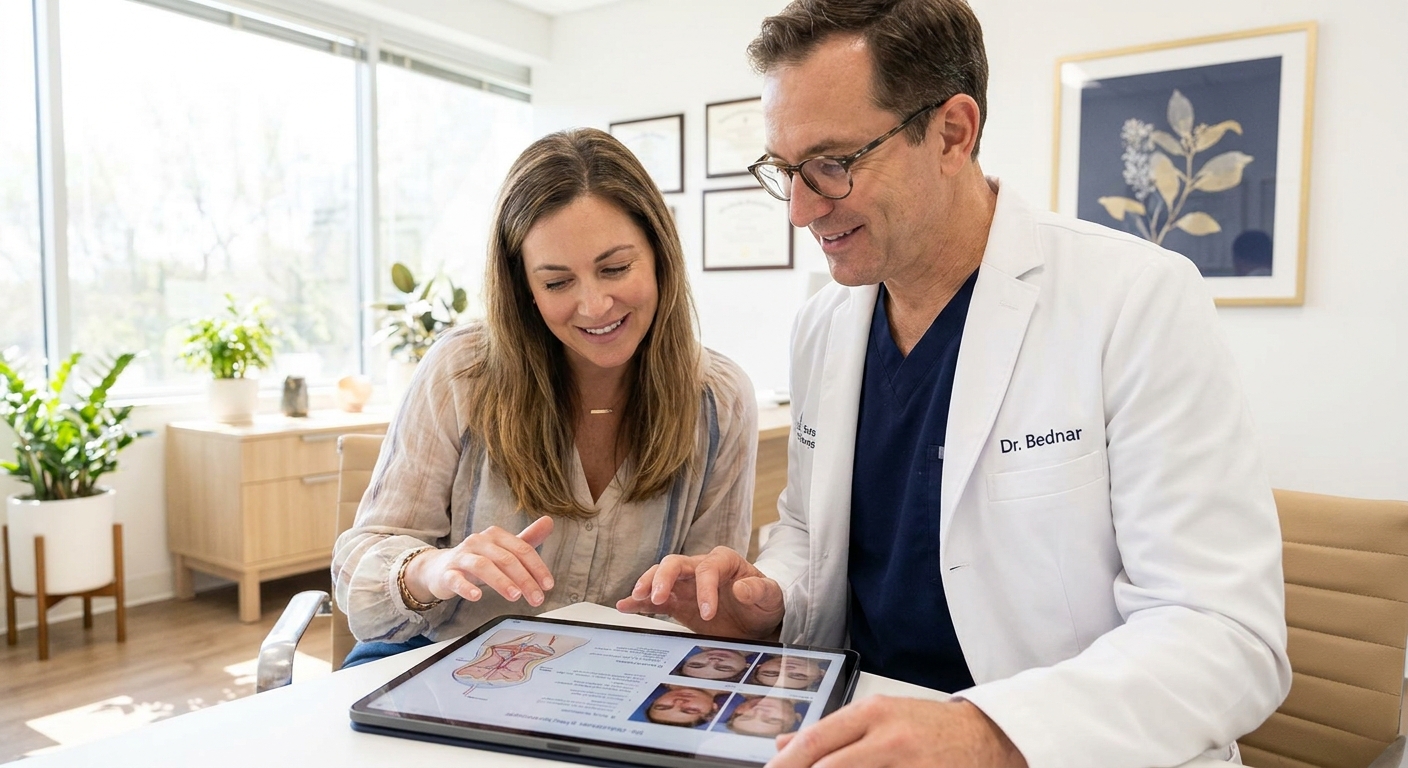


Fat grafting for hands and décolletage has emerged as a natural, long-lasting alternative to synthetic fillers and implants. By using your own fat cells, autologous transfer restores youthful volume, smooths wrinkles, and conceals veins and tendons with minimal risk of allergic reaction. If you’re seeking a regenerative approach that delivers subtle enhancement and enduring results, this technique—pioneered by Dr. Bednar and refined through AlloClae’s proprietary methods—may be the ideal solution for your hands and chest area.
Understanding fat grafting
Autologous fat transfer, also known as microlipoinjection, repurposes fat from one part of your body to rejuvenate another. In the case of hands and décolletage, small volumes of purified fat are injected to restore lost volume, soften creases, and achieve a smoother, more youthful appearance.
Key benefits include:
- Natural look and feel, using your own tissue
- Minimal risk of allergic reaction or rejection
- Long-term improvement as fat cells integrate permanently
- Dual benefit of body contouring at liposuction donor sites
According to the American Society for Dermatologic Surgery, fat transfers for aging hands involve processing and injecting your own fat under topical and local anesthesia [1]. This office-based procedure typically takes under an hour for hands and décolletage combined, with no visible scars after healing.
Assessing your candidacy
Not everyone is an ideal candidate for fat grafting. During your consultation, you and Dr. Bednar will review factors such as:
- Age and skin quality
- Degree of volume loss in hands or décolletage
- Availability of donor fat, typically from abdomen, thighs, or flanks
- Overall health and lifestyle, including smoking status
- Realistic expectations regarding outcomes and recovery
You’re more likely to achieve optimal results if you maintain a stable weight for at least six months before and after the procedure. Those with bleeding disorders or unrealistic goals may be advised to consider alternatives such as dermal fillers or a combination approach—explore options like alloclae regenerative filler treatment or fat cell transfer cosmetic surgery for broader context.
Exploring procedural steps
Harvesting donor fat
Fat grafting begins with gentle liposuction to harvest adipose tissue from donor sites. Procedures may employ:
- Tumescent liposuction, which infuses a saline-anesthetic solution to minimize discomfort
- Water-assisted liposuction, a gentler method that enhances fat survival
Sessions generally last 1–4 hours, depending on the areas treated and volume required [2]. You’ll rest comfortably under local or light sedation while the team ensures precise fat removal.
Processing and purifying fat
Once harvested, your fat is processed to isolate healthy fat cells and stromal vascular fraction. AlloClae employs a closed-loop purification system that:
- Filters and washes the aspirate
- Removes blood, oil, and debris
- Preserves regenerative cells for enhanced integration
This advanced approach, combined with Dr. Bednar’s proprietary protocols, maximizes graft viability and supports natural tissue restoration.
Injecting into target areas
After purification, microdroplets of fat are strategically placed into the dorsal hands and décolletage using blunt cannulas. This layered technique:
- Conceals veins and tendons on hands for a fuller look
- Smooths chest lines and restores gentle contour on décolletage
- Ensures even distribution, reducing the risk of lumps or irregularities
Dr. Bednar’s artistic eye and AlloClae’s regenerative platform ensure each injection enhances your unique anatomy. For other applications, you might explore fat grafting surgery for face or breast contouring with fat grafting to understand the broader versatility of this modality.
Managing recovery and aftercare
Immediate post-op care
Following your procedure, you’ll experience some redness, bruising, and mild swelling at injection sites and donor areas. To support recovery:
- Apply cold compresses as instructed
- Avoid firm pressure on hands and chest for at least three weeks
- Wear any recommended compression garments at donor sites
- Keep treated areas elevated when possible
Most side effects subside within 7–10 days [3]. Prescription pain relief and topical ointments can help manage discomfort.
Long-term maintenance
Your final results emerge gradually as transplanted fat cells establish blood supply. Expect:
- 6–12 weeks for initial shaping as swelling resolves
- 3–6 months for full volume and contour to materialize ([CREO Clinic])
- Stable weight to preserve graft survival—avoid significant weight loss or gain during the first six months [4].
Periodic follow-up visits ensure your recovery stays on track and allow for touch-ups if minor volume adjustments are needed.
Considering risks and complications
While fat grafting is generally safe, you should be aware of potential issues:
Table 1. Fat transfer retention and complication rates
| Issue | Details | Management |
|---|---|---|
| Fat retention variability | 30–50% of injected fat may resorb; surgeons account for this during planning ([CREO Clinic]) | Secondary grafting or overcorrection strategy |
| Asymmetry and irregularities | Differences in tissue or skeletal structure can lead to uneven volume | Careful injection technique or touch-up |
| Oil cyst formation | Dead fat cells may form cysts requiring aspiration or surgical removal | Early detection, aspiration if needed |
| Fat embolism (rare) | Fat entering bloodstream can cause serious complications | Strict injection protocols to minimize risk |
| Prolonged redness/discoloration | Skin may show yellow or red hues up to 3 months post-treatment [5] | Expectant management; camouflage if desired |
Anthony MacQuillan reports survival rates of approximately 25% for the lower face and hands, compared to higher rates in other areas [5]. Dr. Bednar’s refined AlloClae technique aims to maximize graft take and minimize complications through precise microdroplet injection.
Comparing available options
When considering hand and décolletage rejuvenation, it helps to weigh fat grafting against other modalities:
Table 2. Treatment comparison
| Feature | Fat grafting | Dermal fillers | Synthetic implants |
|---|---|---|---|
| Material source | Your own fat cells | Hyaluronic acid or biopolymers | Silicone, PMMA beads |
| Longevity | Permanent once cells integrate | 6–18 months | Permanent but may require removal |
| Allergic/rejection risk | Minimal | Low-moderate | Moderate |
| Natural texture and movement | Highly natural | Good but can feel firm | Varies; may feel rigid |
| Downtime | Moderate (bruising, swelling) | Minimal | Significant (surgery) |
| Risk of complications | Low (oil cysts, asymmetry) | Low (nodules, migration) | Higher (capsular contracture) |
Dermal fillers offer immediate smoothing, but for a regenerative solution, you may explore alloclae facial rejuvenation procedure. If you’re interested in body area enhancements, our autologous fat transfer procedure guide covers broader applications.
Making your decision
Choosing fat grafting for your hands and décolletage involves balancing your goals, budget, and tolerance for downtime. Consider:
- Natural vs synthetic: Do you prefer your own tissue over fillers?
- Longevity: Are you seeking a one-and-done solution?
- Downtime: Can you accommodate a week of visible recovery?
- Artistry and safety: Do you want a surgeon with pioneering expertise?
Dr. Bednar’s leadership in regenerative restoration and AlloClae’s proprietary methods ensure your treatment is safe, artistic, and aligned with your aesthetic vision. To explore whether this approach is right for you, schedule a personalized consultation and discover our alloclae body contouring solution.
With comprehensive care—from donor fat harvest to final contour—you’re empowered to achieve natural, lasting rejuvenation for your hands and décolletage.